• 文献检索
  • 文档翻译
  • 深度研究
  • 学术资讯
  • Suppr Zotero 插件Zotero 插件
  • 邀请有礼
  • 套餐&价格
  • 历史记录
应用&插件
Suppr Zotero 插件Zotero 插件浏览器插件Mac 客户端Windows 客户端微信小程序
定价
高级版会员购买积分包购买API积分包
服务
文献检索文档翻译深度研究API 文档MCP 服务
关于我们
关于 Suppr公司介绍联系我们用户协议隐私条款
关注我们

Suppr 超能文献

核心技术专利:CN118964589B侵权必究
粤ICP备2023148730 号-1Suppr @ 2026

文献检索

告别复杂PubMed语法,用中文像聊天一样搜索,搜遍4000万医学文献。AI智能推荐,让科研检索更轻松。

立即免费搜索

文件翻译

保留排版,准确专业,支持PDF/Word/PPT等文件格式,支持 12+语言互译。

免费翻译文档

深度研究

AI帮你快速写综述,25分钟生成高质量综述,智能提取关键信息,辅助科研写作。

立即免费体验

基于全基因组序列预测抗菌药物耐药性的机器学习模型评估

Evaluation of Machine Learning Models for Predicting Antimicrobial Resistance of From Whole Genome Sequences.

作者信息

Liu Zhichang, Deng Dun, Lu Huijie, Sun Jian, Lv Luchao, Li Shuhong, Peng Guanghui, Ma Xianyong, Li Jiazhou, Li Zhenming, Rong Ting, Wang Gang

机构信息

Institute of Animal Science, Guangdong Academy of Agricultural Sciences, Guangzhou, China.

State Key Laboratory of Livestock and Poultry Breeding, Guangzhou, China.

出版信息

Front Microbiol. 2020 Feb 6;11:48. doi: 10.3389/fmicb.2020.00048. eCollection 2020.

DOI:10.3389/fmicb.2020.00048
PMID:32117101
原文链接:https://pmc.ncbi.nlm.nih.gov/articles/PMC7016212/
Abstract

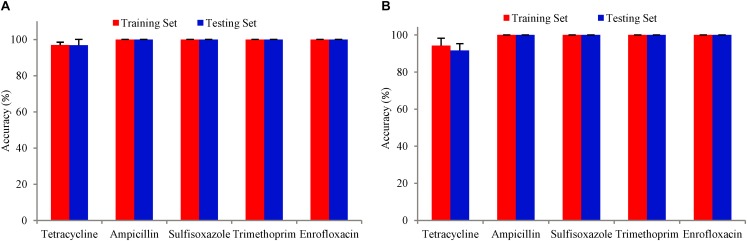
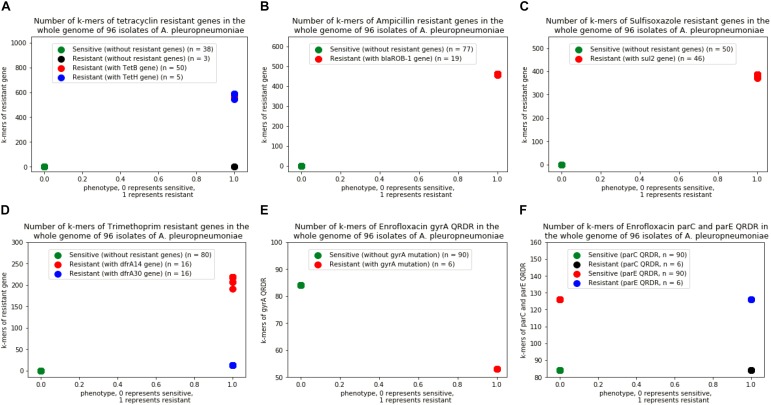
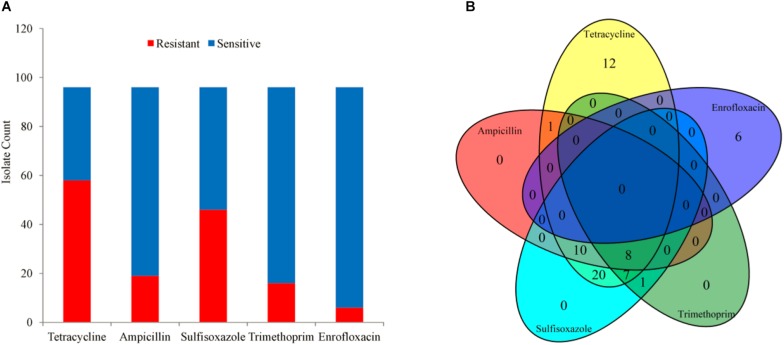
Antimicrobial resistance (AMR) is becoming a huge problem in countries all over the world, and new approaches to identifying strains resistant or susceptible to certain antibiotics are essential in fighting against antibiotic-resistant pathogens. Genotype-based machine learning methods showed great promise as a diagnostic tool, due to the increasing availability of genomic datasets and AST phenotypes. In this article, Support Vector Machine (SVM) and Set Covering Machine (SCM) models were used to learn and predict the resistance of the five drugs (Tetracycline, Ampicillin, Sulfisoxazole, Trimethoprim, and Enrofloxacin). The SVM model used the number of co-occurring k-mers between the genome of the isolates and the reference genes to learn and predict the phenotypes of the bacteria to a specific antimicrobial, while the SCM model uses a greedy approach to construct conjunction or disjunction of Boolean functions to find the most concise set of k-mers that allows for accurate prediction of the phenotype. Five-fold cross-validation was performed on the training set of the SVM and SCM model to select the best hyperparameter values to avoid model overfitting. The training accuracy (mean cross-validation score) and the testing accuracy of SVM and SCM models of five drugs were above 90% regardless of the resistant mechanism of which were acquired resistant or point mutation in the chromosome. The results of correlation between the phenotype and the model predictions of the five drugs indicated that both SVM and SCM models could significantly classify the resistant isolates from the sensitive isolates of the bacteria ( < 0.01), and would be used as potential tools in antimicrobial resistance surveillance and clinical diagnosis in veterinary medicine.

摘要

抗菌药物耐药性(AMR)在世界各国正成为一个巨大问题,而识别对某些抗生素耐药或敏感菌株的新方法对于对抗耐药病原体至关重要。基于基因型的机器学习方法由于基因组数据集和抗菌药物敏感性试验(AST)表型的可用性不断增加,显示出作为诊断工具的巨大潜力。在本文中,支持向量机(SVM)和集合覆盖机(SCM)模型被用于学习和预测五种药物(四环素、氨苄青霉素、磺胺异恶唑、甲氧苄啶和恩诺沙星)的耐药性。SVM模型利用分离株基因组与参考基因之间共现k-mer的数量来学习和预测细菌对特定抗菌药物的表型,而SCM模型采用贪心方法构建布尔函数的合取或析取,以找到能够准确预测表型的最简洁k-mer集合。对SVM和SCM模型的训练集进行五折交叉验证,以选择最佳超参数值,避免模型过拟合。无论耐药机制是获得性耐药还是染色体上的点突变,五种药物的SVM和SCM模型的训练准确率(平均交叉验证分数)和测试准确率均高于90%。五种药物的表型与模型预测之间的相关性结果表明,SVM和SCM模型均可显著区分细菌的耐药分离株和敏感分离株(<0.01),并将作为兽医学抗菌药物耐药性监测和临床诊断的潜在工具。
https://cdn.ncbi.nlm.nih.gov/pmc/blobs/f334/7016212/287868f57380/fmicb-11-00048-g003.jpg
https://cdn.ncbi.nlm.nih.gov/pmc/blobs/f334/7016212/5d4bebd90682/fmicb-11-00048-g001.jpg
https://cdn.ncbi.nlm.nih.gov/pmc/blobs/f334/7016212/6dec7f3afd07/fmicb-11-00048-g002.jpg
https://cdn.ncbi.nlm.nih.gov/pmc/blobs/f334/7016212/287868f57380/fmicb-11-00048-g003.jpg
https://cdn.ncbi.nlm.nih.gov/pmc/blobs/f334/7016212/5d4bebd90682/fmicb-11-00048-g001.jpg
https://cdn.ncbi.nlm.nih.gov/pmc/blobs/f334/7016212/6dec7f3afd07/fmicb-11-00048-g002.jpg
https://cdn.ncbi.nlm.nih.gov/pmc/blobs/f334/7016212/287868f57380/fmicb-11-00048-g003.jpg

相似文献

1
Evaluation of Machine Learning Models for Predicting Antimicrobial Resistance of From Whole Genome Sequences.基于全基因组序列预测抗菌药物耐药性的机器学习模型评估
Front Microbiol. 2020 Feb 6;11:48. doi: 10.3389/fmicb.2020.00048. eCollection 2020.
2
Identification of Primary Antimicrobial Resistance Drivers in Agricultural Nontyphoidal Salmonella enterica Serovars by Using Machine Learning.利用机器学习识别农业非伤寒型肠炎沙门氏菌血清型中的主要抗菌药物耐药驱动因素
mSystems. 2019 Aug 6;4(4):e00211-19. doi: 10.1128/mSystems.00211-19.
3
A pan-genome-based machine learning approach for predicting antimicrobial resistance activities of the Escherichia coli strains.基于泛基因组的机器学习方法预测大肠杆菌菌株的抗菌药物抗性活性。
Bioinformatics. 2018 Jul 1;34(13):i89-i95. doi: 10.1093/bioinformatics/bty276.
4
Evaluation of Machine Learning and Rules-Based Approaches for Predicting Antimicrobial Resistance Profiles in Gram-negative Bacilli from Whole Genome Sequence Data.基于全基因组序列数据预测革兰氏阴性杆菌抗菌药物耐药谱的机器学习和基于规则方法的评估
Front Microbiol. 2016 Nov 28;7:1887. doi: 10.3389/fmicb.2016.01887. eCollection 2016.
5
Whole Genome Sequencing for Surveillance of Antimicrobial Resistance in .用于监测……中抗菌药物耐药性的全基因组测序
Front Microbiol. 2017 Mar 6;8:311. doi: 10.3389/fmicb.2017.00311. eCollection 2017.
6
Predicting Antimicrobial Resistance Using Partial Genome Alignments.利用部分基因组比对预测抗菌药物耐药性
mSystems. 2021 Jun 29;6(3):e0018521. doi: 10.1128/mSystems.00185-21. Epub 2021 Jun 15.
7
Beyond multidrug resistance: Leveraging rare variants with machine and statistical learning models in Mycobacterium tuberculosis resistance prediction.超越多药耐药性:利用机器和统计学习模型在结核分枝杆菌耐药性预测中的罕见变异。
EBioMedicine. 2019 May;43:356-369. doi: 10.1016/j.ebiom.2019.04.016. Epub 2019 Apr 29.
8
Learning From Limited Data: Towards Best Practice Techniques for Antimicrobial Resistance Prediction From Whole Genome Sequencing Data.从有限数据中学习:从全基因组测序数据预测抗生素耐药性的最佳实践技术。
Front Cell Infect Microbiol. 2021 Feb 15;11:610348. doi: 10.3389/fcimb.2021.610348. eCollection 2021.
9
VAMPr: VAriant Mapping and Prediction of antibiotic resistance via explainable features and machine learning.VAMPr:通过可解释特征和机器学习对抗生素耐药性进行变异映射和预测。
PLoS Comput Biol. 2020 Jan 13;16(1):e1007511. doi: 10.1371/journal.pcbi.1007511. eCollection 2020 Jan.
10
A machine learning framework to predict antibiotic resistance traits and yet unknown genes underlying resistance to specific antibiotics in bacterial strains.一种机器学习框架,用于预测细菌菌株对抗生素的耐药性状以及特定抗生素耐药性背后未知的基因。
Brief Bioinform. 2021 Nov 5;22(6). doi: 10.1093/bib/bbab179.

引用本文的文献

1
Prediction of antimicrobial resistance in with a machine learning classifier based on WGS data.基于全基因组测序(WGS)数据,利用机器学习分类器预测[具体对象]中的抗菌药物耐药性。 (注:原文中“in with”表述有误,推测可能是“in [具体对象] with”,这里根据可能情况补充完整翻译)
Microbiol Spectr. 2025 Sep 2;13(9):e0006525. doi: 10.1128/spectrum.00065-25. Epub 2025 Aug 5.
2
Artificial intelligence in drug resistance management.人工智能在耐药性管理中的应用
3 Biotech. 2025 May;15(5):126. doi: 10.1007/s13205-025-04282-w. Epub 2025 Apr 14.
3
A comparison of various feature extraction and machine learning methods for antimicrobial resistance prediction in .

本文引用的文献

1
Application of machine learning techniques to tuberculosis drug resistance analysis.机器学习技术在结核病耐药性分析中的应用。
Bioinformatics. 2019 Jul 1;35(13):2276-2282. doi: 10.1093/bioinformatics/bty949.
2
Pharmacokinetic/Pharmacodynamic Integration to Evaluate the Changes in Susceptibility of After Repeated Administration of Danofloxacin.药代动力学/药效学整合以评估达氟沙星重复给药后敏感性的变化。
Front Microbiol. 2018 Oct 10;9:2445. doi: 10.3389/fmicb.2018.02445. eCollection 2018.
3
Predicting bacterial resistance from whole-genome sequences using k-mers and stability selection.
用于抗菌药物耐药性预测的各种特征提取和机器学习方法的比较 。(原文句末不完整,推测补充完整后可能是“在……中的抗菌药物耐药性预测”)
Front Antibiot. 2023 Mar 24;2:1126468. doi: 10.3389/frabi.2023.1126468. eCollection 2023.
4
Artificial intelligence in predicting pathogenic microorganisms' antimicrobial resistance: challenges, progress, and prospects.人工智能在预测病原微生物的抗菌药物耐药性方面的应用:挑战、进展和展望。
Front Cell Infect Microbiol. 2024 Nov 1;14:1482186. doi: 10.3389/fcimb.2024.1482186. eCollection 2024.
5
Using interpretable machine learning to predict bloodstream infection and antimicrobial resistance in patients admitted to ICU: Early alert predictors based on EHR data to guide antimicrobial stewardship.使用可解释的机器学习预测入住重症监护病房患者的血流感染和抗菌药物耐药性:基于电子健康记录数据的早期警报预测指标以指导抗菌药物管理。
PLOS Digit Health. 2024 Oct 16;3(10):e0000641. doi: 10.1371/journal.pdig.0000641. eCollection 2024 Oct.
6
Prediction of antimicrobial resistance of Klebsiella pneumoniae from genomic data through machine learning.基于机器学习的肺炎克雷伯菌的抗菌药物耐药性预测。
PLoS One. 2024 Sep 18;19(9):e0309333. doi: 10.1371/journal.pone.0309333. eCollection 2024.
7
From Data to Decisions: Leveraging Artificial Intelligence and Machine Learning in Combating Antimicrobial Resistance - a Comprehensive Review.从数据到决策:利用人工智能和机器学习对抗抗菌药物耐药性——全面综述
J Med Syst. 2024 Aug 1;48(1):71. doi: 10.1007/s10916-024-02089-5.
8
Assessing computational predictions of antimicrobial resistance phenotypes from microbial genomes.评估微生物基因组中抗菌药物耐药表型的计算预测。
Brief Bioinform. 2024 Mar 27;25(3). doi: 10.1093/bib/bbae206.
9
Predicting over-the-counter antibiotic use in rural Pune, India, using machine learning methods.运用机器学习方法预测印度浦那农村地区的非处方抗生素使用情况。
Epidemiol Health. 2024;46:e2024044. doi: 10.4178/epih.e2024044. Epub 2024 Apr 13.
10
Deciphering complex antibiotic resistance patterns in through whole genome sequencing and machine learning.通过全基因组测序和机器学习解析 中的复杂抗生素耐药模式。
Front Cell Infect Microbiol. 2024 Jan 4;13:1306368. doi: 10.3389/fcimb.2023.1306368. eCollection 2023.
基于 k- -mer 和稳定性选择预测全基因组序列中的细菌耐药性。
BMC Bioinformatics. 2018 Oct 17;19(1):383. doi: 10.1186/s12859-018-2403-z.
4
Phenetic Comparison of Prokaryotic Genomes Using k-mers.使用k-mer对原核生物基因组进行表型比较。
Mol Biol Evol. 2017 Oct 1;34(10):2716-2729. doi: 10.1093/molbev/msx200.
5
Machine learning: novel bioinformatics approaches for combating antimicrobial resistance.机器学习:用于对抗抗菌药物耐药性的新型生物信息学方法。
Curr Opin Infect Dis. 2017 Dec;30(6):511-517. doi: 10.1097/QCO.0000000000000406.
6
Whole Genome Sequencing for Surveillance of Antimicrobial Resistance in .用于监测……中抗菌药物耐药性的全基因组测序
Front Microbiol. 2017 Mar 6;8:311. doi: 10.3389/fmicb.2017.00311. eCollection 2017.
7
Evaluation of Machine Learning and Rules-Based Approaches for Predicting Antimicrobial Resistance Profiles in Gram-negative Bacilli from Whole Genome Sequence Data.基于全基因组序列数据预测革兰氏阴性杆菌抗菌药物耐药谱的机器学习和基于规则方法的评估
Front Microbiol. 2016 Nov 28;7:1887. doi: 10.3389/fmicb.2016.01887. eCollection 2016.
8
Predictive computational phenotyping and biomarker discovery using reference-free genome comparisons.使用无参考基因组比较的预测性计算表型分析和生物标志物发现。
BMC Genomics. 2016 Sep 26;17(1):754. doi: 10.1186/s12864-016-2889-6.
9
Using Support Vector Machine (SVM) for Classification of Selectivity of H1N1 Neuraminidase Inhibitors.使用支持向量机(SVM)对甲型H1N1流感病毒神经氨酸酶抑制剂的选择性进行分类。
Mol Inform. 2016 Apr;35(3-4):116-24. doi: 10.1002/minf.201500107. Epub 2016 Jan 15.
10
Benchmarking of methods for identification of antimicrobial resistance genes in bacterial whole genome data.细菌全基因组数据中抗菌药物耐药基因鉴定方法的基准测试。
J Antimicrob Chemother. 2016 Sep;71(9):2484-8. doi: 10.1093/jac/dkw184. Epub 2016 Jun 30.