Department of Clinical and Toxicological Analyses, School of Pharmaceutical Sciences, University of São Paulo, São Paulo, Brazil.
Laboratório de Virologia Molecular, Instituto Carlos Chagas (ICC/Fiocruz Paraná), Curitiba, Brazil.
Front Immunol. 2020 Feb 11;11:20. doi: 10.3389/fimmu.2020.00020. eCollection 2020.
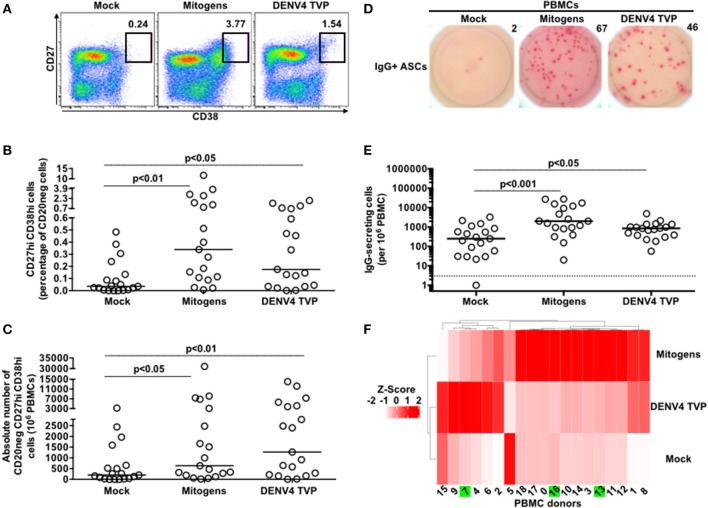
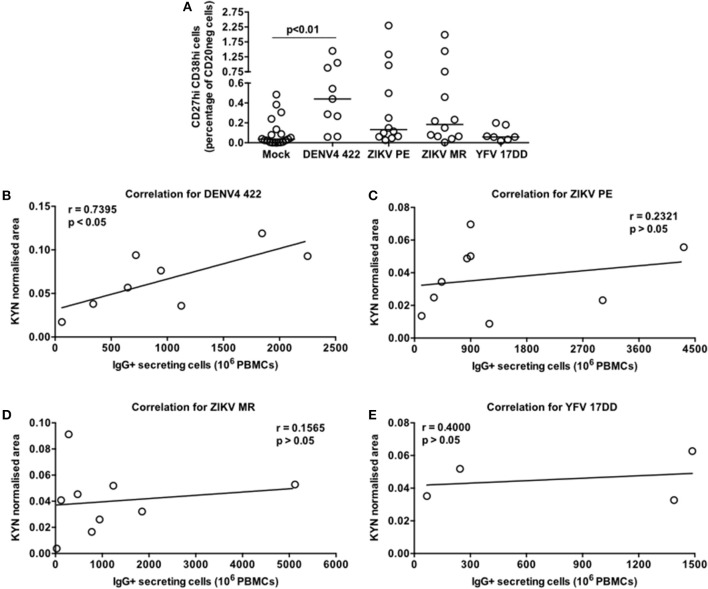
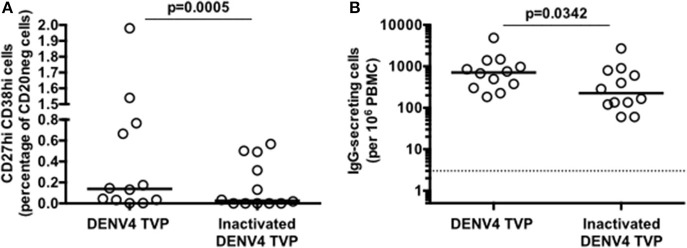
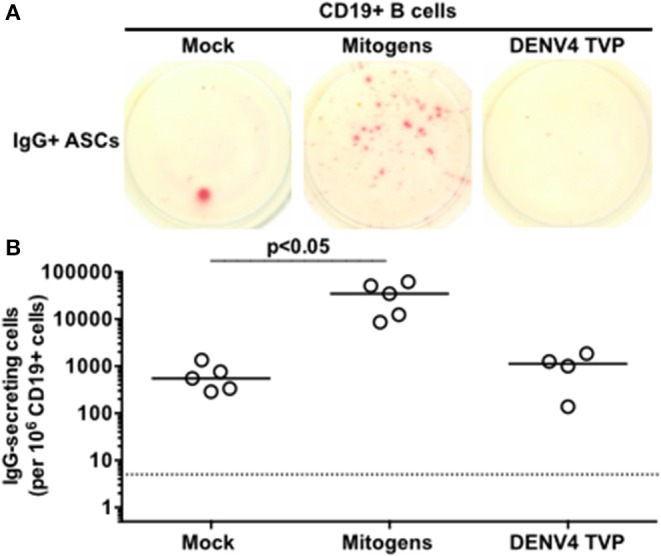
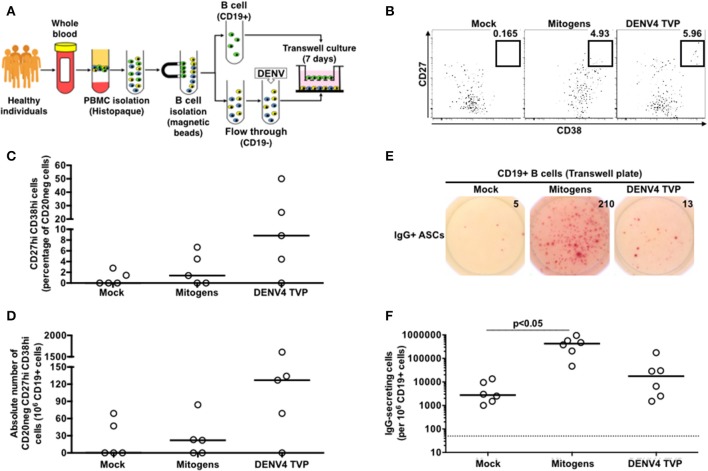
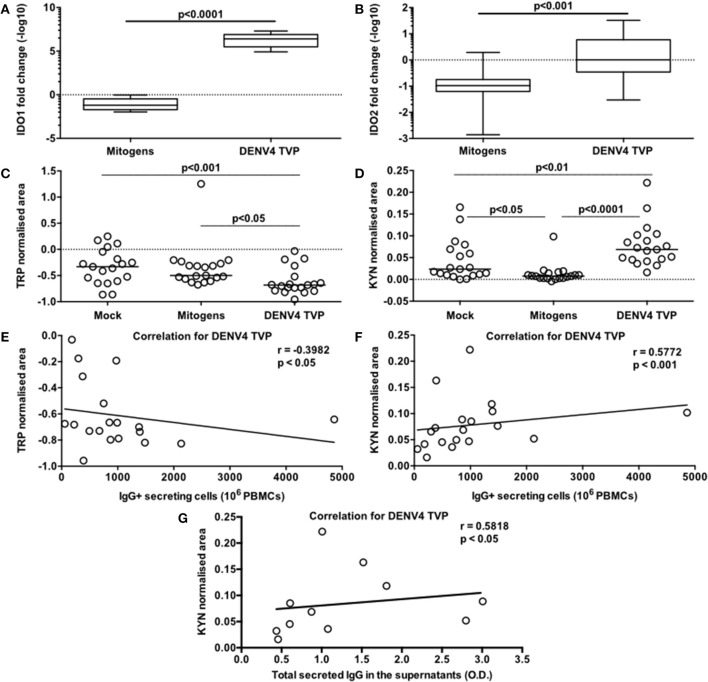
Patients infected with the Dengue virus (DENV) often present with a massive generation of DENV-specific antibody-secreting cells (ASCs) in the blood. In some cases, these ASCs represent more than 50% of the circulating B cells, a higher magnitude than those induced by other infections, vaccinations, and plasma cell lymphomas. However, it remains unclear how the DENV infection elicits this colossal response. To address this issue, we utilised an strategy to induce human PBMCs of healthy individuals incubated with DENV particles (DENV4 TVP/360) to differentiate into ASCs. As controls, PBMCs were incubated with a mitogen cocktail or supernatants of uninfected C6/36 cells (mock). The ASC phenotype and function were increasingly detected in the DENV and mitogen-cultured PBMCs as compared to mock-treated cells. In contrast to the condition, secreted IgG derived from the PBMC-DENV culture was not DENV-specific. Lower ASC numbers were observed when inactivated viral particles or purified B cells were added to the cultures. The physical contact was essential between B cells and the remaining PBMCs for the DENV-mediated ASC response. Considering the evidence for the activation of the tryptophan metabolism detected in the serum of Dengue patients, we assessed its relevance in the DENV-mediated ASC differentiation. For this, tryptophan and its respective metabolites were quantified in the supernatants of cell cultures through mass spectrophotometry. Tryptophan depletion and kynurenine accumulation were found in the supernatants of PBMC-DENV cultures, which presented enhanced detection of indoleamine 2,3-dioxygenase 1 and 2 transcripts as compared to controls. In PBMC-DENV cultures, tryptophan and kynurenine levels strongly correlated to the respective ASC numbers, while the kynurenine levels were directly proportional to the secreted IgG titers. Contrastingly, PBMCs incubated with Zika or attenuated Yellow Fever viruses showed no correlation between their kynurenine concentrations and ASC numbers. Therefore, our data revealed the existence of distinct pathways for the DENV-mediated ASC differentiation and suggest the involvement of the tryptophan metabolism in this cellular process triggered by flavivirus infections.
登革热病毒(DENV)感染患者的血液中常出现大量的 DENV 特异性抗体分泌细胞(ASC)。在某些情况下,这些 ASC 代表了循环 B 细胞的 50%以上,这一比例高于其他感染、疫苗接种和浆细胞瘤引起的比例。然而,目前尚不清楚 DENV 感染如何引发这种巨大的反应。为了解决这个问题,我们利用一种策略,即用 DENV 颗粒(DENV4 TVP/360)诱导健康个体的人 PBMC 分化为 ASC。作为对照,将 PBMC 与有丝分裂原混合物或未感染的 C6/36 细胞上清液(mock)孵育。与 mock 处理的细胞相比,DENV 和有丝分裂原培养的 PBMC 中 ASC 表型和功能的检测逐渐增加。与对照条件相比,来自 PBMC-DENV 培养物的分泌 IgG 不是 DENV 特异性的。当加入失活的病毒颗粒或纯化的 B 细胞时,观察到 ASC 数量减少。B 细胞与剩余的 PBMC 之间的物理接触对于 DENV 介导的 ASC 反应至关重要。考虑到登革热患者血清中检测到色氨酸代谢激活的证据,我们评估了其在 DENV 介导的 ASC 分化中的相关性。为此,通过质谱法定量了细胞培养物上清液中的色氨酸及其各自的代谢物。在 PBMC-DENV 培养物的上清液中发现色氨酸耗尽和犬尿氨酸积累,与对照相比,检测到吲哚胺 2,3-双加氧酶 1 和 2 转录物的增强。在 PBMC-DENV 培养物中,色氨酸和犬尿氨酸水平与各自的 ASC 数量强烈相关,而犬尿氨酸水平与分泌 IgG 滴度成正比。相比之下,用寨卡病毒或减毒黄热病病毒孵育的 PBMC 未显示其犬尿氨酸浓度与 ASC 数量之间存在相关性。因此,我们的数据揭示了 DENV 介导的 ASC 分化存在不同的途径,并表明色氨酸代谢参与了由黄病毒感染引发的这一细胞过程。