Godina Christopher, Ottander Erik, Tryggvadottir Helga, Borgquist Signe, Isaksson Karolin, Jernström Helena
Department of Clinical Sciences in Lund, Division of Oncology and Pathology, Lund University and Skåne University Hospital, Lund, Sweden.
Department of Oncology, Aarhus University and Aarhus University Hospital, Aarhus, Denmark.
Front Oncol. 2020 Feb 6;10:80. doi: 10.3389/fonc.2020.00080. eCollection 2020.
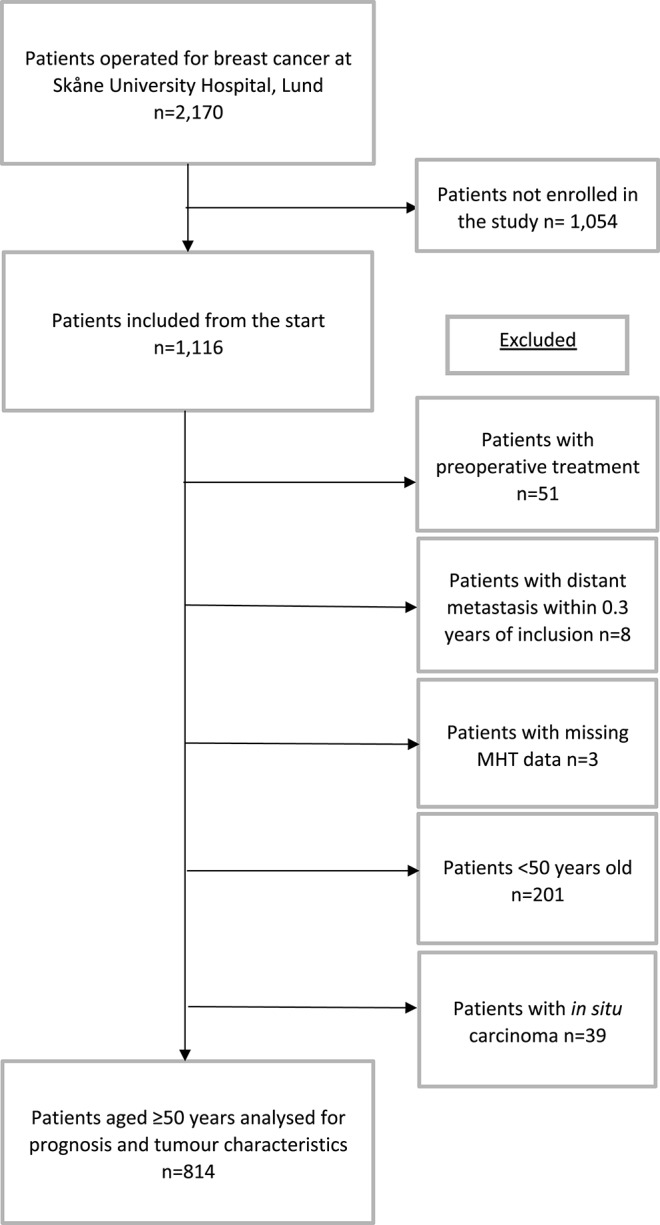
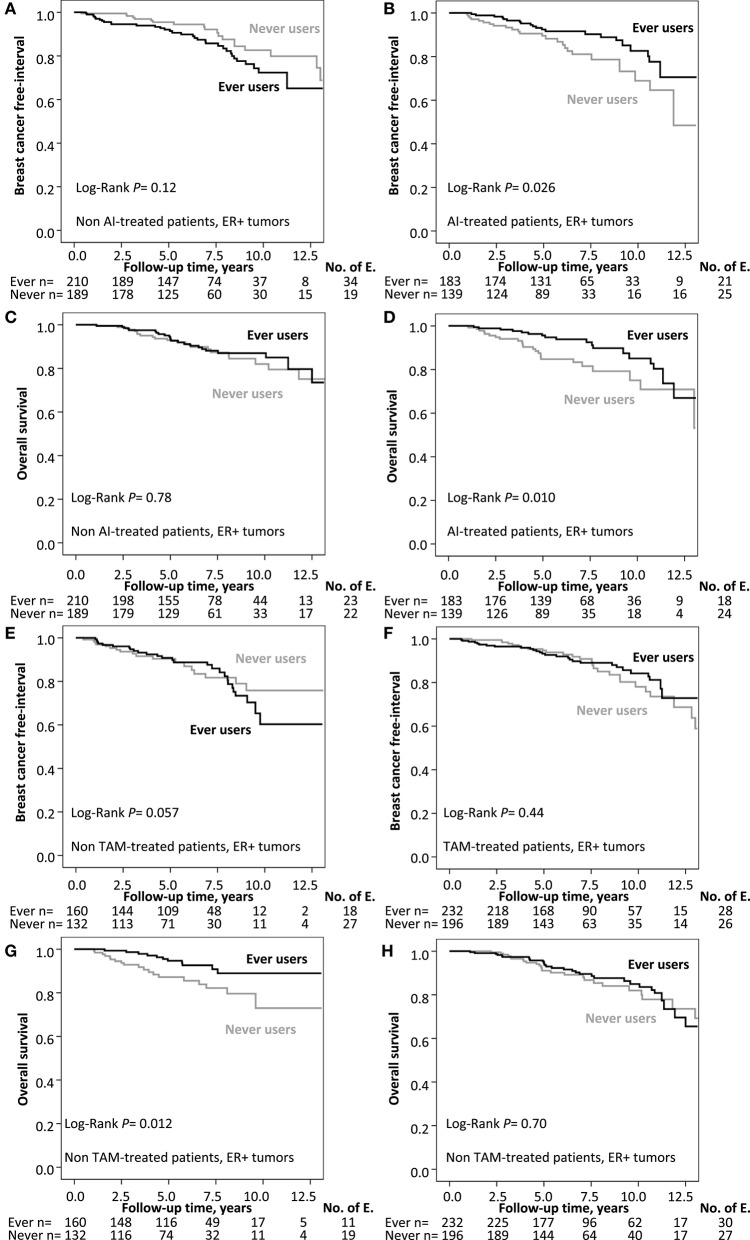
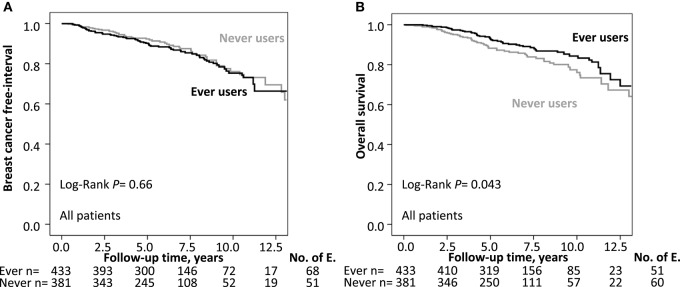
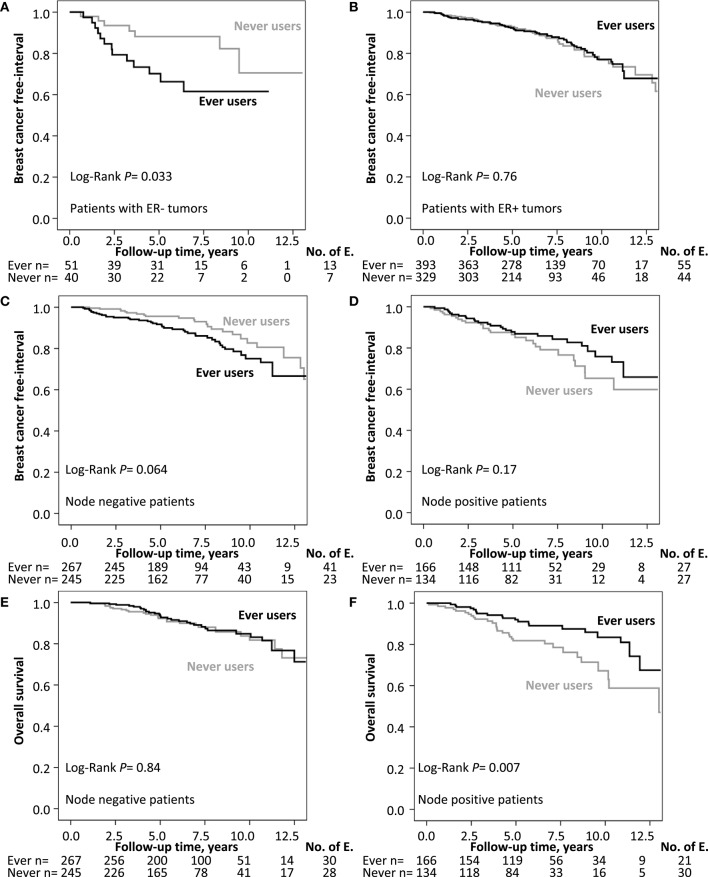
This study investigated how a history of menopausal hormone therapy (MHT) impacts clinical outcomes overall and in different subgroups of breast cancer patients. The study included 814 primary breast cancer patients aged ≥50 years in Sweden (2002-2012) with follow-up until 2016. Associations between patient- and tumor characteristics, recurrences, and overall survival were analyzed in relation to MHT. After a median follow-up of 7 years, 119 recurrences, and 111 deaths occurred. Ever MHT ( = 433, 53.2%) was associated with a lower BMI, frequency of alcohol abstinence, and histological grade, higher frequency of oral contraceptive use, and lobular cancer. Overall, MHT was not associated with prognosis, but there were significant effect modifications by estrogen receptor (ER) status, node status, main histological type, and aromatase inhibitor (AI) treatment on recurrence-risk (all ≤ 0.017). MHT conferred an increased recurrence-risk in patients with ER- tumors, adjusted Hazard Ratio (HR) 3.99 (95% Confidence Interval (CI) 1.40-11.33), in node-negative patients HR 1.88 (95% CI 1.11-3.17), and in non-AI-treated patients HR 1.81 (95% CI 1.01-3.24), but decreased recurrence-risk in AI-treated patients HR 0.46 (95% CI 0.25-0.84) and in patients with lobular cancer HR 0.15 (95% CI 0.04-0.64). MHT was associated with lower risk of death in node-positive patients HR of 0.48 (95% CI 0.27-0.86) and in AI-treated patients HR of 0.41 (95% CI 0.22-0.77), but not in other patients (both ≤ 0.027). A history of MHT may have prognostic value for certain subgroups of breast cancer patients such as AI-treated or node-negative patients.
本研究调查了绝经激素治疗(MHT)史对乳腺癌患者总体及不同亚组临床结局的影响。该研究纳入了瑞典814例年龄≥50岁的原发性乳腺癌患者(2002 - 2012年),随访至2016年。分析了患者和肿瘤特征、复发情况及总生存率与MHT之间的关联。中位随访7年后,发生了119例复发和111例死亡。曾经接受MHT治疗(n = 433,53.2%)与较低的体重指数、戒酒频率和组织学分级、较高的口服避孕药使用频率以及小叶癌有关。总体而言,MHT与预后无关,但雌激素受体(ER)状态、淋巴结状态、主要组织学类型和芳香化酶抑制剂(AI)治疗对复发风险有显著的效应修正作用(所有P≤0.017)。MHT使ER阴性肿瘤患者的复发风险增加,校正风险比(HR)为3.99(95%置信区间(CI)1.40 - 11.33),淋巴结阴性患者HR为1.88(95%CI 1.11 - 3.17),未接受AI治疗的患者HR为1.81(95%CI 1.01 - 3.24),但使接受AI治疗的患者复发风险降低,HR为0.46(95%CI 0.25 - 0.84),小叶癌患者HR为0.15(95%CI 0.04 - 0.64)。MHT与淋巴结阳性患者较低的死亡风险相关,HR为0.48(95%CI 0.27 - 0.86),与接受AI治疗的患者较低的死亡风险相关,HR为0.41(95%CI 0.22 - 0.77),但在其他患者中无此关联(两者P≤0.027)。MHT史可能对某些乳腺癌患者亚组如接受AI治疗或淋巴结阴性的患者具有预后价值。