Wang Huilan, Wang Ziwen, Huang Yu, Zhou Yue, Sheng Xiaowu, Jiang Qingzhi, Wang Yawei, Luo Peng, Luo Min, Shi Chunmeng
Department of Oncology, The Affiliated Hospital of Southwest Medical University, Luzhou, China.
State Key Laboratory of Trauma, Burns and Combined Injury, Institute of Rocket Force Medicine, Third Military Medical University, Chongqing, China.
Front Oncol. 2020 Feb 14;9:1576. doi: 10.3389/fonc.2019.01576. eCollection 2019.
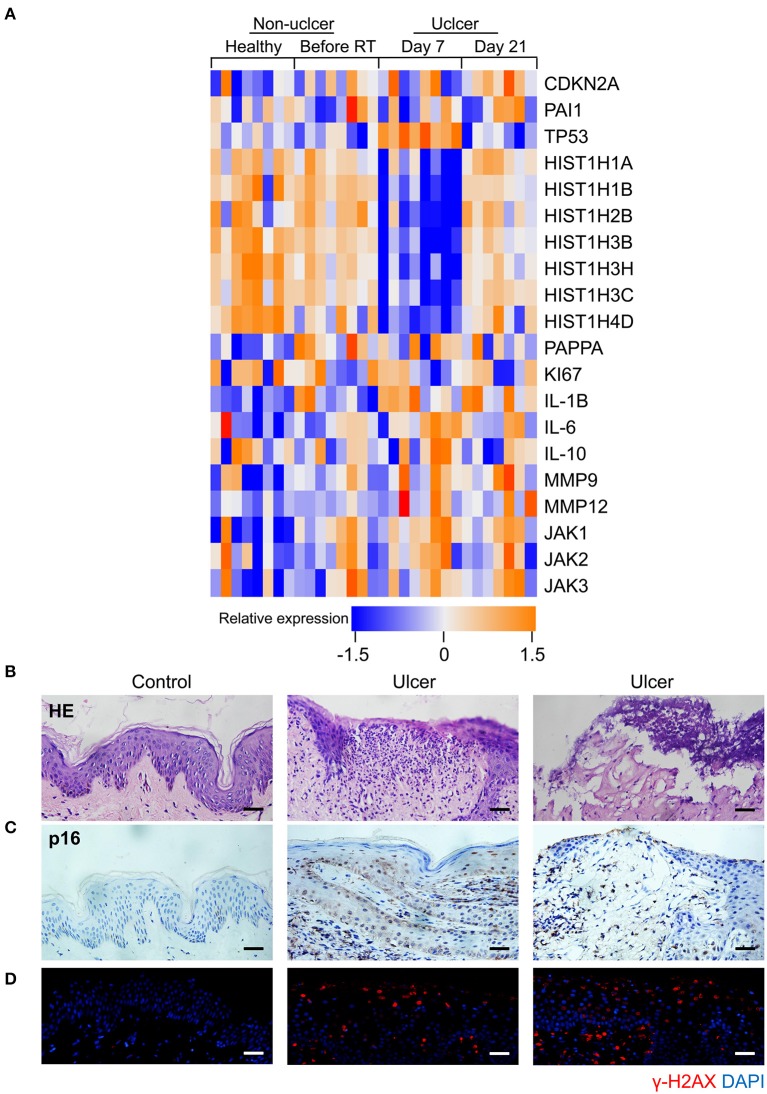
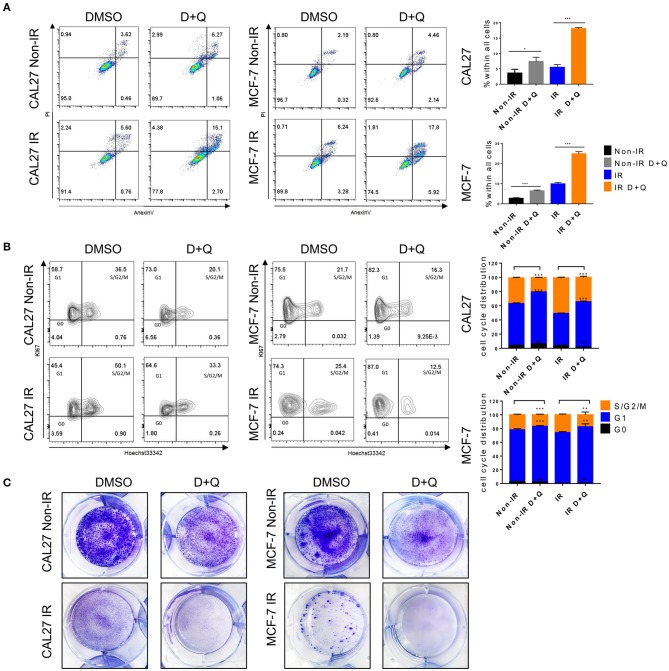
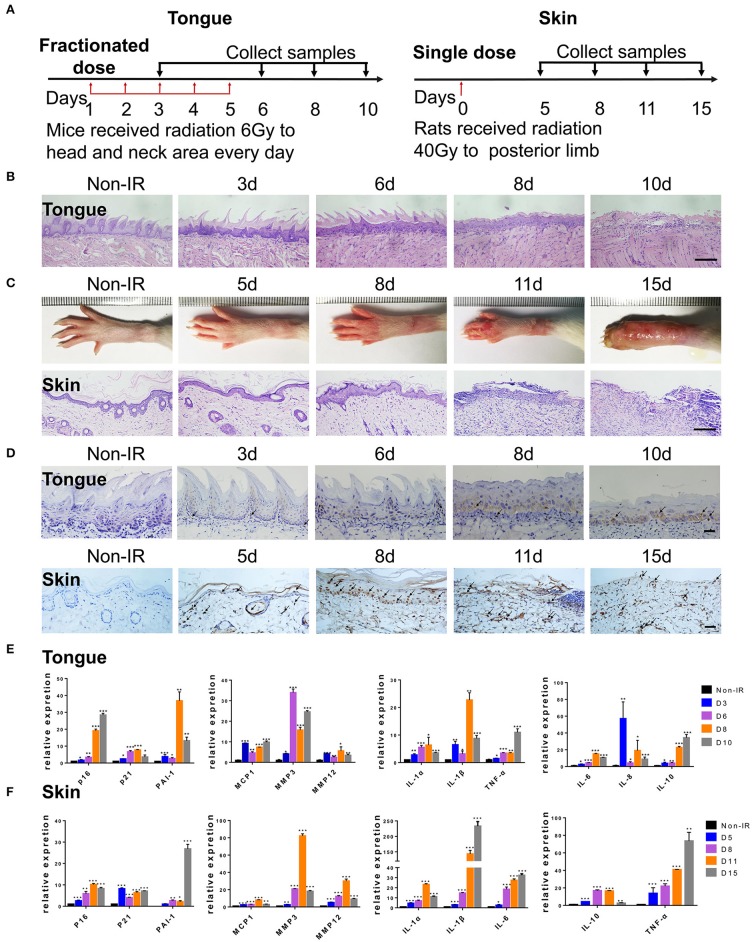
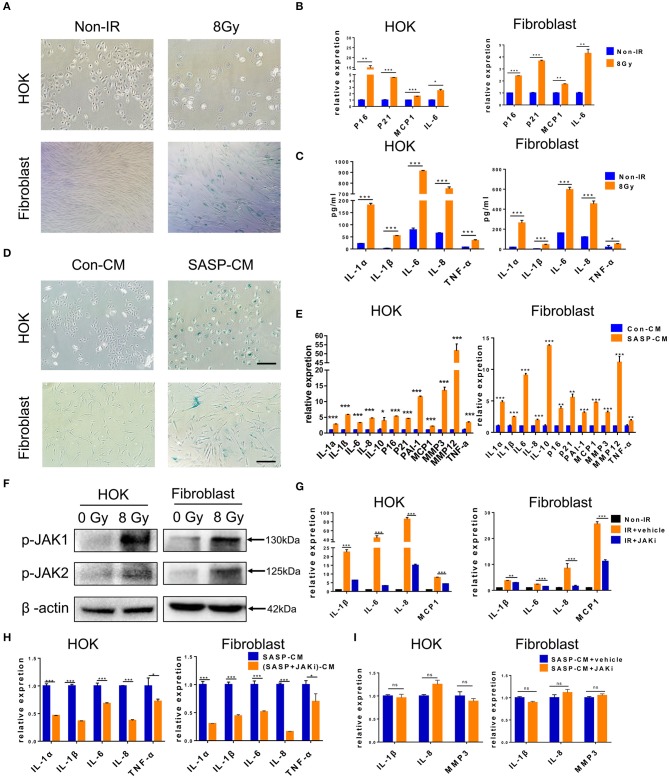
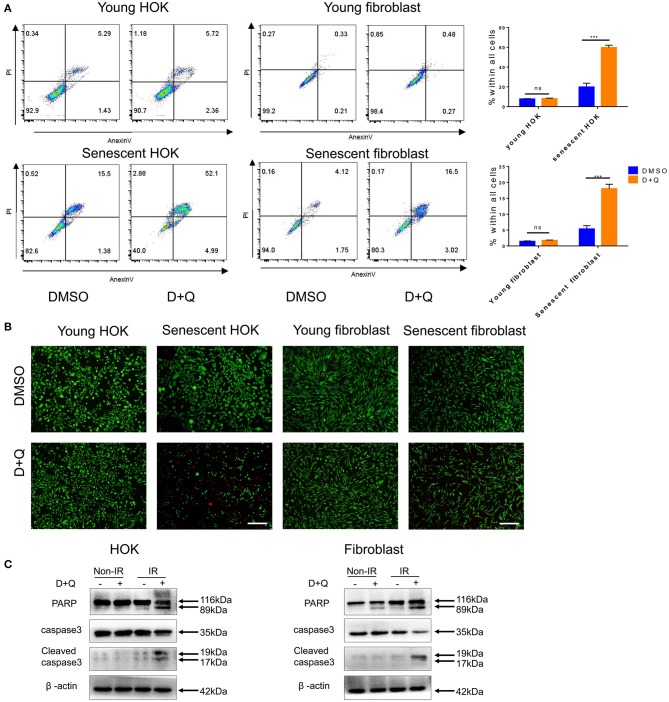
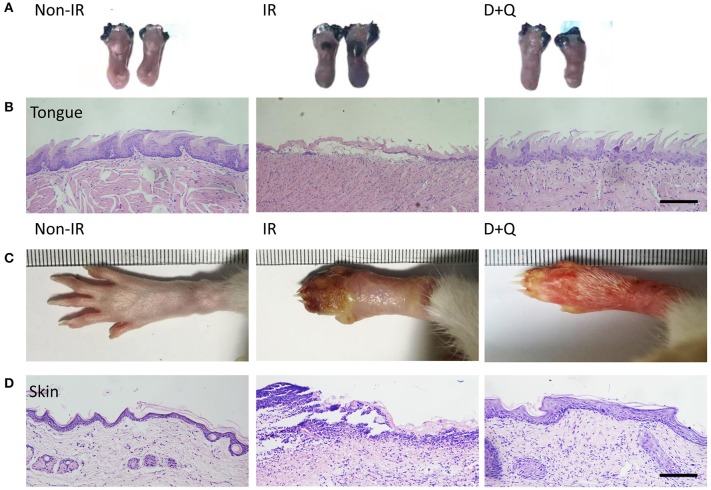
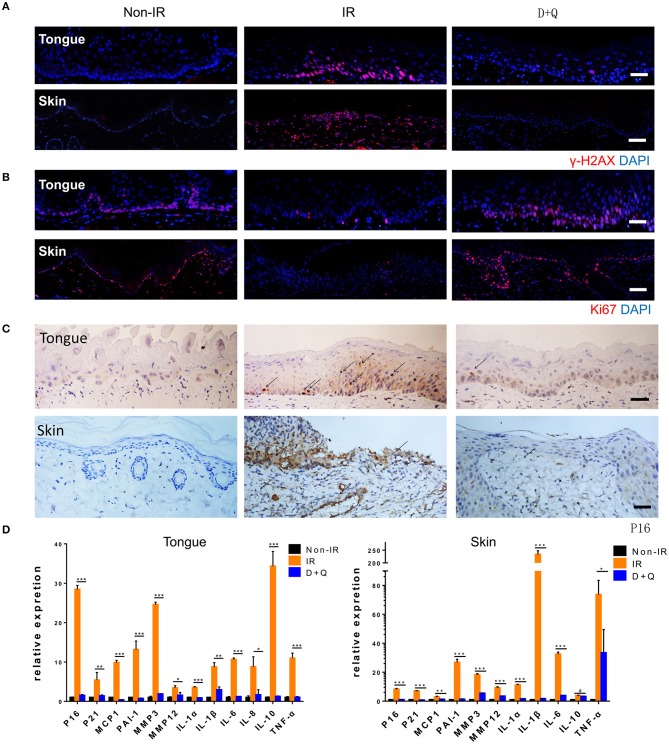
Radiation ulcers are a prevalent toxic side effect in patients receiving radiation therapy. At present, there is still no effective treatment for the complication. Senescent cells accumulate after radiation exposure, which can induce cell and tissue dysfunction. Here we demonstrate increased expression of p16 (a senescence biomarker) in human radiation ulcers after radiotherapy and radiation-induced persistent cell senescence in animal ulcer models. Furthermore, senescent cells secreted the senescence-associated secretory phenotype (SASP) and induced cell senescence in adjacent cells, which was alleviated by JAK inhibition. In addition, the clearance of senescent cells following treatment with a senolytics cocktail, Dasatinib plus Quercetin (DQ), mitigated radiation ulcers. Finally, DQ induced tumor cell apoptosis and enhanced radiosensitivity in representative CAL-27 and MCF-7 cell lines. Our results demonstrate that cell senescence is involved in the development of radiation ulcers and that elimination of senescent cells might be a viable strategy for patients with this condition.
放射性溃疡是接受放射治疗患者中普遍存在的毒性副作用。目前,对于该并发症仍没有有效的治疗方法。辐射暴露后衰老细胞会积累,这会诱导细胞和组织功能障碍。在此,我们证明放疗后人放射性溃疡中衰老生物标志物p16的表达增加,以及在动物溃疡模型中辐射诱导的持续性细胞衰老。此外,衰老细胞分泌衰老相关分泌表型(SASP)并诱导相邻细胞发生衰老,而JAK抑制可减轻这种现象。另外,用衰老细胞溶解鸡尾酒(达沙替尼加槲皮素,即DQ)处理后清除衰老细胞可减轻放射性溃疡。最后,DQ诱导代表性CAL-27和MCF-7细胞系中的肿瘤细胞凋亡并增强放射敏感性。我们的结果表明细胞衰老参与了放射性溃疡的发生发展,并且清除衰老细胞可能是治疗这种疾病患者的一种可行策略。