Zhang Hao, Jin Zhou, Cheng Ling, Zhang Bin
Department of Respiratory and Critical Care Medicine, Second Affiliated Hospital of Zhejiang University School of Medicine, Hangzhou, China.
Department of Respiration, Hospital of Traditional Chinese Medicine of Zhenhai, Ningbo, China.
Front Bioeng Biotechnol. 2020 Feb 7;8:3. doi: 10.3389/fbioe.2020.00003. eCollection 2020.
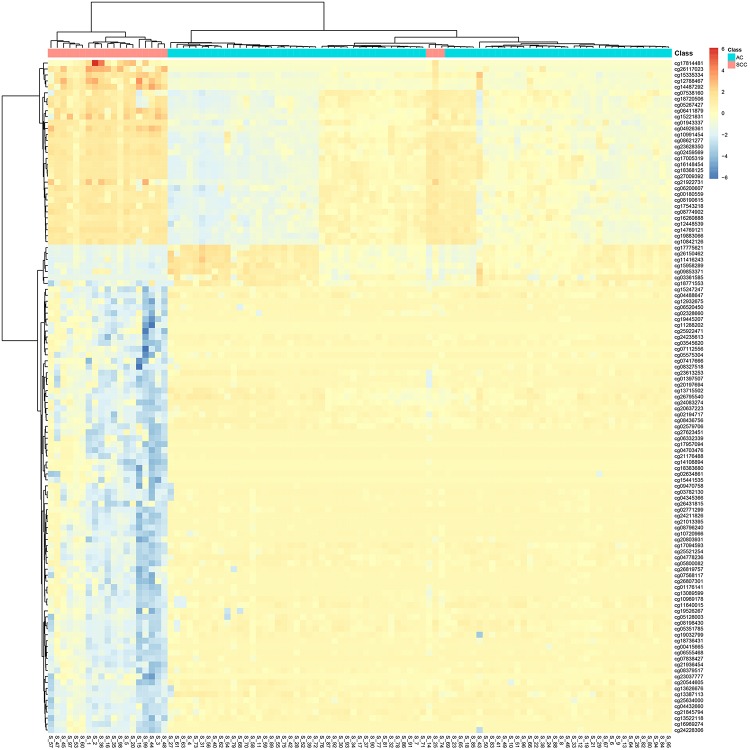
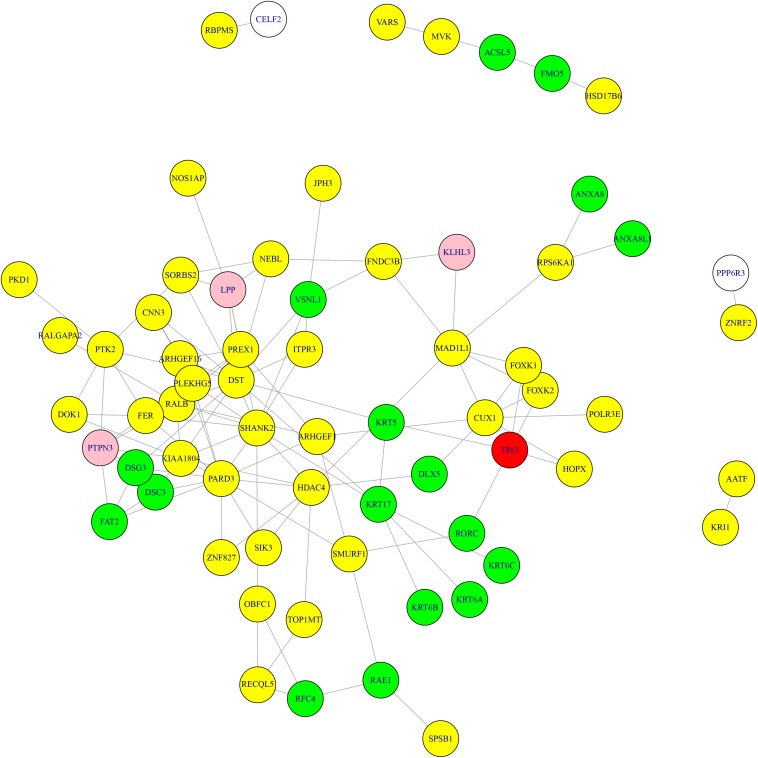
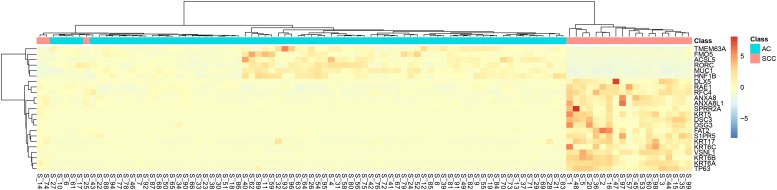
Lung cancer is a highly prevalent type of cancer with a poor 5-year survival rate of about 4-17%. Eighty percent lung cancer belongs to non-small-cell lung cancer (NSCLC). For a long time, the treatment of NSCLC has been mostly guided by tumor stage, and there has been no significant difference between the therapy strategy of lung adenocarcinoma (LUAD) and squamous cell lung carcinoma (SCLC), the two major subtypes of NSCLC. In recent years, important molecular differences between LUAD and SCLC are increasingly identified, indicating that targeted therapy will be more and more histologically specific in the future. To investigate the LUAD and SCLC difference on multi-omics scale, we analyzed the methylation and gene expression data together. With the Boruta method to remove irrelevant features and the MCFS (Monte Carlo Feature Selection) method to identify the significantly important features, we identified 113 key methylation features and 23 key gene expression features. HNF1B and TP63 were found to be dysfunctional on both methylation and gene expression levels. The experimentally determined interaction network suggested that TP63 may play an important role in connecting methylation genes and expression genes. Many of the discovered signature genes have been supported by literature. Our results may provide directions of precision diagnosis and therapy of LUAD and SCLC.
肺癌是一种高度常见的癌症类型,其5年生存率很低,约为4%-17%。80%的肺癌属于非小细胞肺癌(NSCLC)。长期以来,NSCLC的治疗主要依据肿瘤分期,而NSCLC的两大主要亚型——肺腺癌(LUAD)和肺鳞状细胞癌(SCLC)的治疗策略并无显著差异。近年来,越来越多LUAD和SCLC之间重要的分子差异被发现,这表明未来靶向治疗在组织学上的特异性将越来越高。为了在多组学层面研究LUAD和SCLC的差异,我们同时分析了甲基化和基因表达数据。通过使用Boruta方法去除无关特征,并采用MCFS(蒙特卡罗特征选择)方法识别显著重要的特征,我们确定了113个关键甲基化特征和23个关键基因表达特征。发现HNF1B和TP63在甲基化和基因表达水平上均功能失调。实验确定的相互作用网络表明,TP63可能在连接甲基化基因和表达基因方面发挥重要作用。许多发现的标志性基因已得到文献支持。我们的结果可能为LUAD和SCLC的精准诊断和治疗提供方向。