Aguilar-López Bruno A, Moreno-Altamirano María Maximina Bertha, Dockrell Hazel M, Duchen Michael R, Sánchez-García Francisco Javier
Laboratorio de Inmunorregulación, Departamento de Inmunología, Escuela Nacional de Ciencias Biológicas, Instituto Politécnico Nacional, Mexico City, Mexico.
Department of Infection Biology, London School of Hygiene & Tropical Medicine, London, United Kingdom.
Front Cell Dev Biol. 2020 Feb 7;8:51. doi: 10.3389/fcell.2020.00051. eCollection 2020.
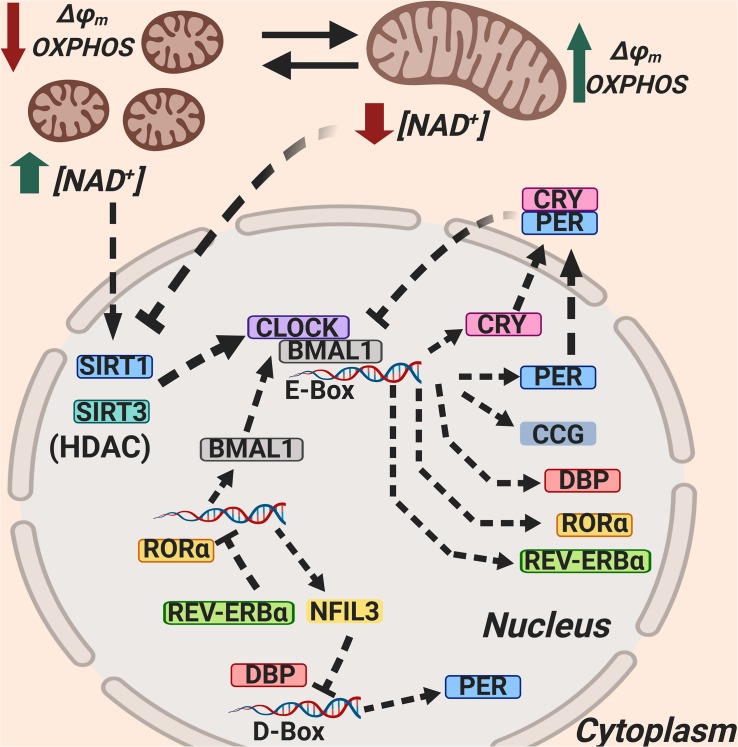
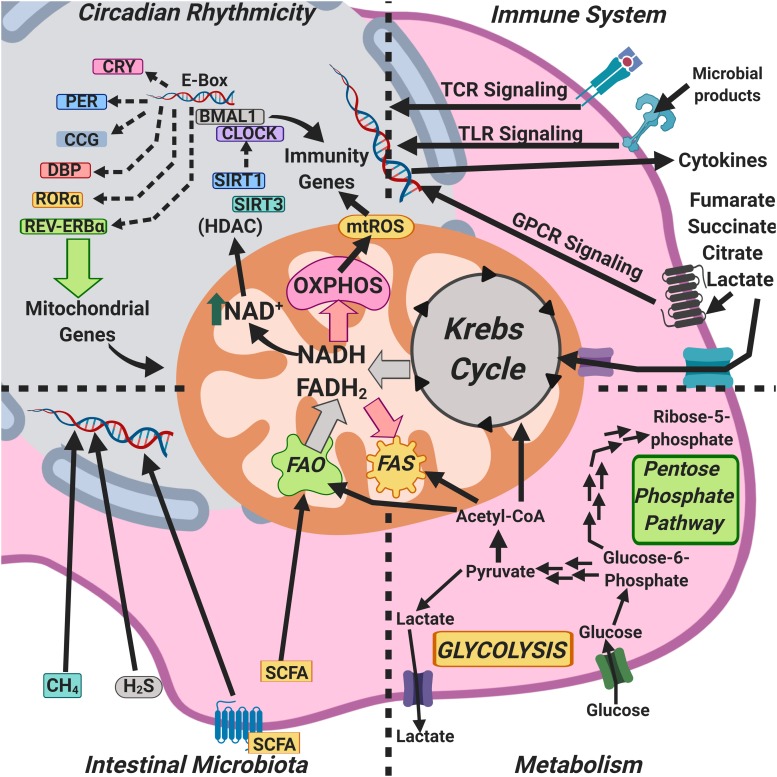
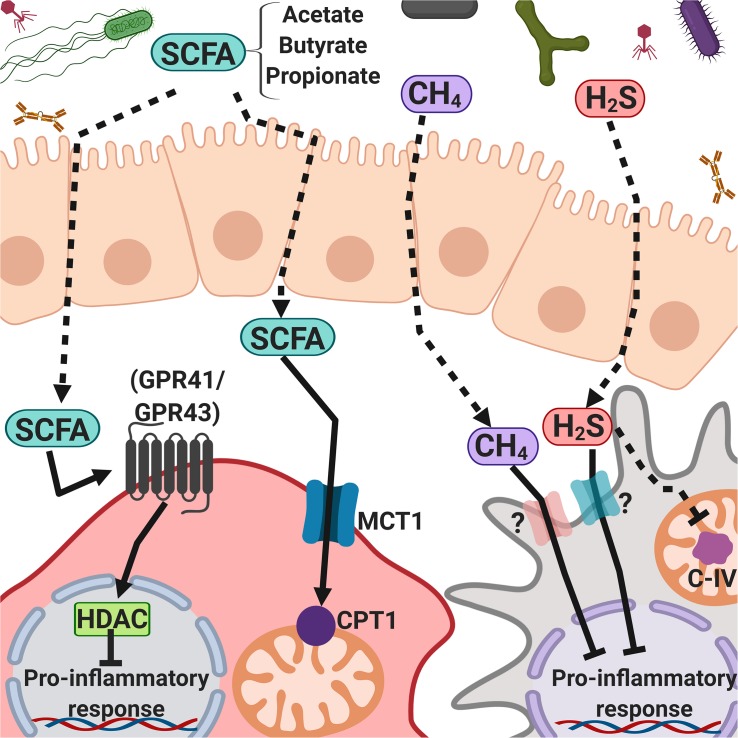
There is currently some understanding of the mechanisms that underpin the interactions between circadian rhythmicity and immunity, metabolism and immune response, and circadian rhythmicity and metabolism. In addition, a wealth of studies have led to the conclusion that the commensal microbiota (mainly bacteria) within the intestine contributes to host homeostasis by regulating circadian rhythmicity, metabolism, and the immune system. Experimental studies on how these four biological domains interact with each other have mainly focused on any two of those domains at a time and only occasionally on three. However, a systematic analysis of how these four domains concurrently interact with each other seems to be missing. We have analyzed current evidence that signposts a role for mitochondria as a key hub that supports and integrates activity across all four domains, circadian clocks, metabolic pathways, the intestinal microbiota, and the immune system, coordinating their integration and crosstalk. This work will hopefully provide a new perspective for both hypothesis-building and more systematic experimental approaches.
目前,对于昼夜节律与免疫、代谢与免疫反应以及昼夜节律与代谢之间相互作用的机制已有一定了解。此外,大量研究得出结论,肠道内的共生微生物群(主要是细菌)通过调节昼夜节律、代谢和免疫系统来维持宿主的内环境稳定。关于这四个生物学领域如何相互作用的实验研究主要一次聚焦于其中任意两个领域,偶尔才会涉及三个领域。然而,似乎缺少对这四个领域如何同时相互作用的系统分析。我们分析了当前的证据,这些证据表明线粒体作为一个关键枢纽发挥作用,支持并整合所有四个领域(生物钟、代谢途径、肠道微生物群和免疫系统)的活动,协调它们之间的整合与相互作用。这项工作有望为建立假设和更系统的实验方法提供新的视角。