Nawalpuri Bharti, Ravindran Sreenath, Muddashetty Ravi S
Centre for Brain Development and Repair, Institute for Stem Cell Science and Regenerative Medicine (Instem), Bangalore, India.
School of Chemical and Biotechnology, Shanmugha Arts, Science, and Technology and Research Academy (SASTRA) University, Thanjavur, India.
Front Mol Biosci. 2020 Jan 31;7:8. doi: 10.3389/fmolb.2020.00008. eCollection 2020.
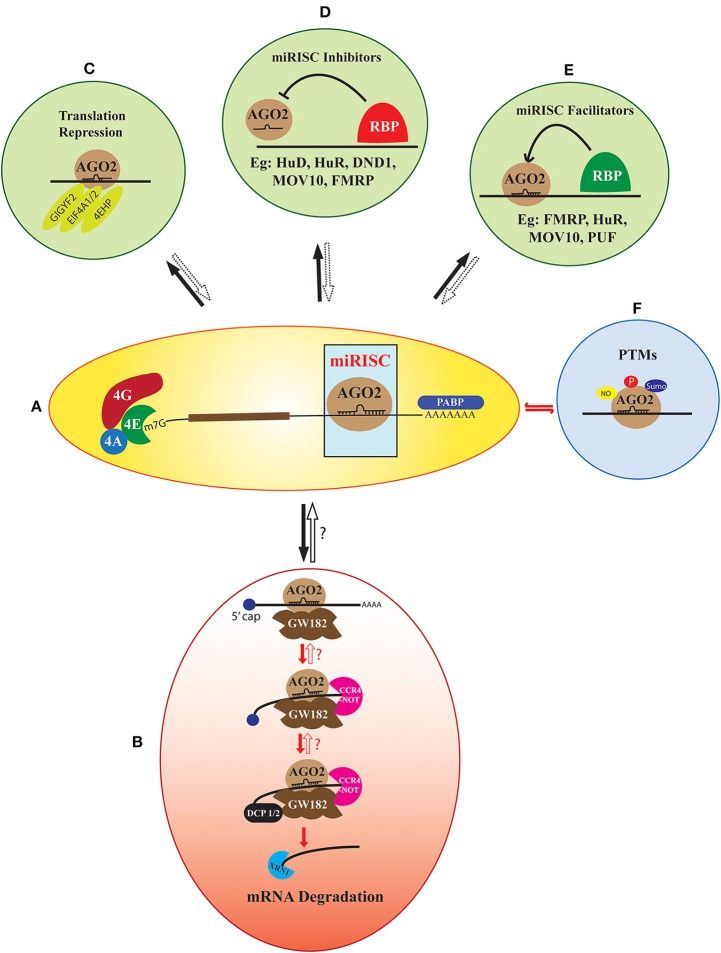
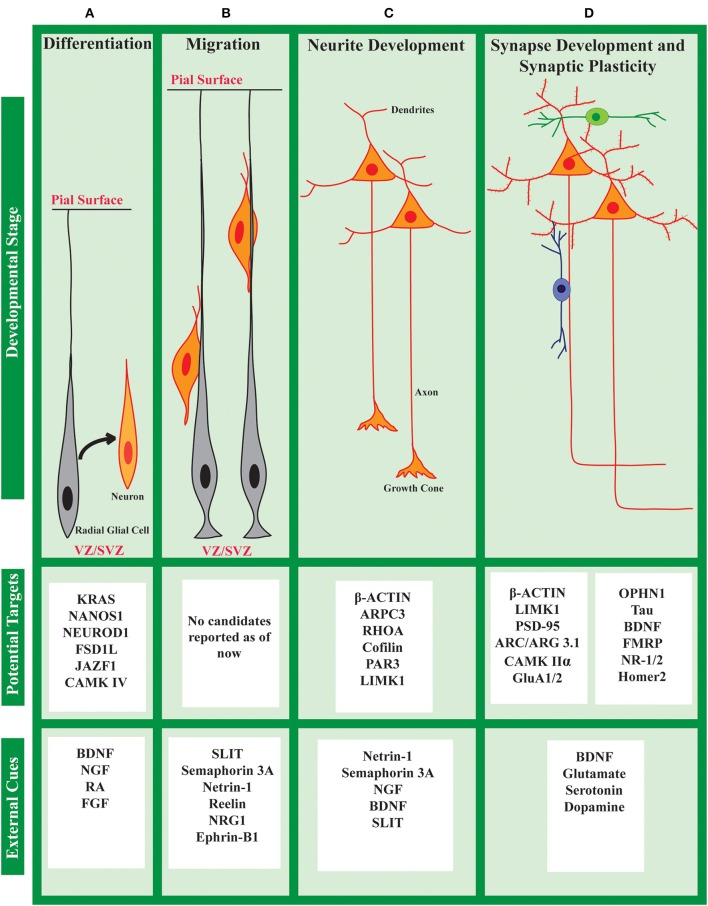
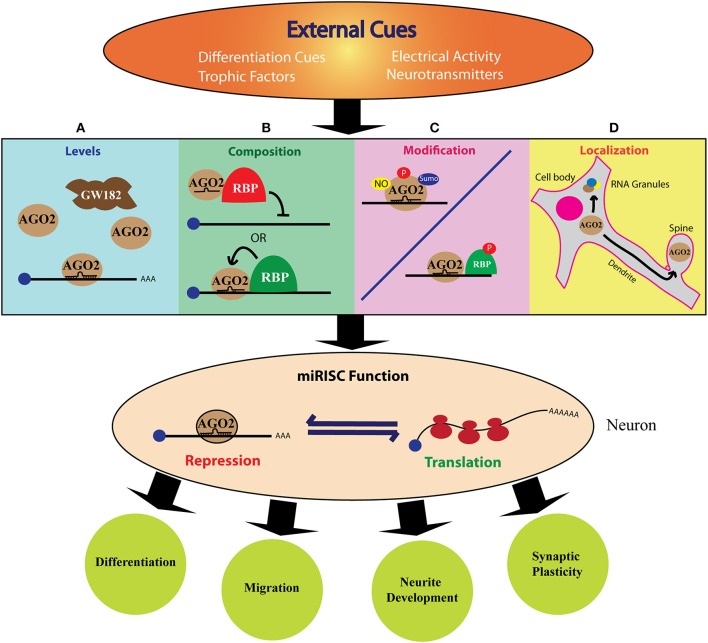
Activity-dependent protein synthesis plays an important role during neuronal development by fine-tuning the formation and function of neuronal circuits. Recent studies have shown that miRNAs are integral to this regulation because of their ability to control protein synthesis in a rapid, specific and potentially reversible manner. miRNA mediated regulation is a multistep process that involves inhibition of translation before degradation of targeted mRNA, which provides the possibility to store and reverse the inhibition at multiple stages. This flexibility is primarily thought to be derived from the composition of miRNA induced silencing complex (miRISC). AGO2 is likely the only obligatory component of miRISC, while multiple RBPs are shown to be associated with this core miRISC to form diverse miRISC complexes. The formation of these heterogeneous miRISC complexes is intricately regulated by various extracellular signals and cell-specific contexts. In this review, we discuss the composition of miRISC and its functions during neuronal development. Neurodevelopment is guided by both internal programs and external cues. Neuronal activity and external signals play an important role in the formation and refining of the neuronal network. miRISC composition and diversity have a critical role at distinct stages of neurodevelopment. Even though there is a good amount of literature available on the role of miRNAs mediated regulation of neuronal development, surprisingly the role of miRISC composition and its functional dynamics in neuronal development is not much discussed. In this article, we review the available literature on the heterogeneity of the neuronal miRISC composition and how this may influence translation regulation in the context of neuronal development.
依赖活性的蛋白质合成在神经元发育过程中通过微调神经回路的形成和功能发挥着重要作用。最近的研究表明,微小RNA(miRNA)对于这种调节不可或缺,因为它们能够以快速、特定且可能可逆的方式控制蛋白质合成。miRNA介导的调节是一个多步骤过程,涉及在靶向mRNA降解之前抑制翻译,这为在多个阶段储存和逆转抑制提供了可能性。这种灵活性主要被认为源自miRNA诱导沉默复合体(miRISC)的组成。AGO2可能是miRISC唯一的必需成分,而多种RNA结合蛋白(RBP)已被证明与这个核心miRISC相关联,形成不同的miRISC复合体。这些异质性miRISC复合体的形成受到各种细胞外信号和细胞特异性环境的复杂调控。在这篇综述中,我们讨论了miRISC的组成及其在神经元发育过程中的功能。神经发育由内部程序和外部线索共同引导。神经元活动和外部信号在神经网络的形成和完善中发挥着重要作用。miRISC的组成和多样性在神经发育的不同阶段起着关键作用。尽管有大量关于miRNA介导的神经元发育调节作用的文献,但令人惊讶的是,miRISC组成及其功能动态在神经元发育中的作用却很少被讨论。在本文中,我们综述了关于神经元miRISC组成异质性以及这可能如何在神经元发育背景下影响翻译调控的现有文献。