Department of Cardiology, Peking Union Medical College & Chinese Academy of Medical Science, Peking Union Medical College Hospital, No. 1 Shuai Fu Yuan, Beijing, 100730, China.
Department of Cardiology, Beijing Friendship Hospital, Capital Medical University, No. 95 Yong An Road, Beijing, 100050, China.
BMC Cardiovasc Disord. 2020 Mar 2;20(1):101. doi: 10.1186/s12872-020-01398-0.
This study investigated neutrophil activation and neutrophil-derived extracellular traps formation in coronary artery ectasia.
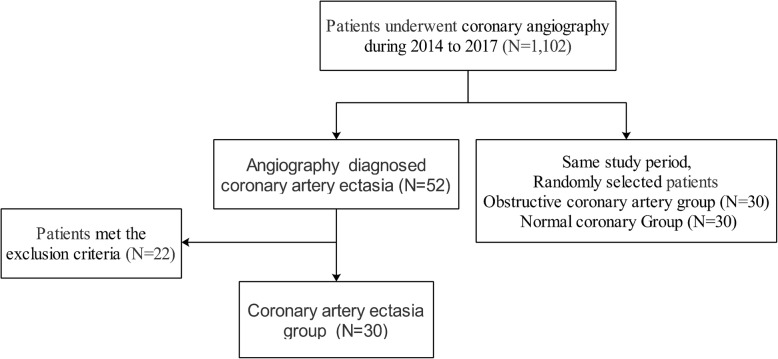
We enrolled 90 patients who underwent coronary angiography, and included 30 patients with coronary artery ectasia (CAE), 30 patients with obstructive coronary artery disease (CAD) and 30 patients with normal coronary arteries (CON). Intra-neutrophil mean myeloperoxidase index (MPXI) was determined using an automated blood cell counter (ADVIA2120 Hematology System). Serum concentrations of plasma adhesion molecules, cytokines, and neutrophil-derived extracellular traps were quantified.
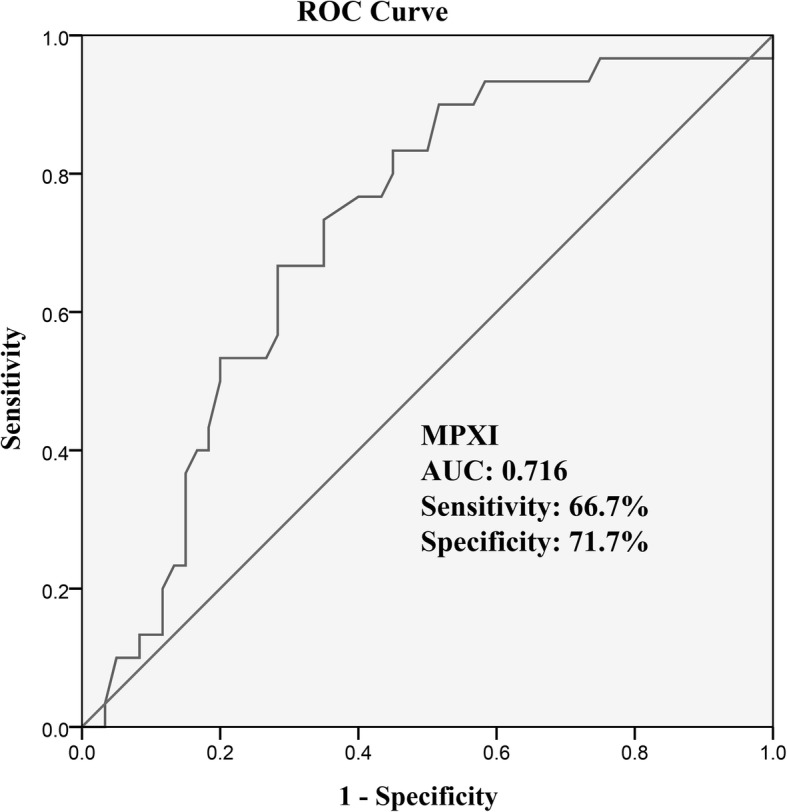
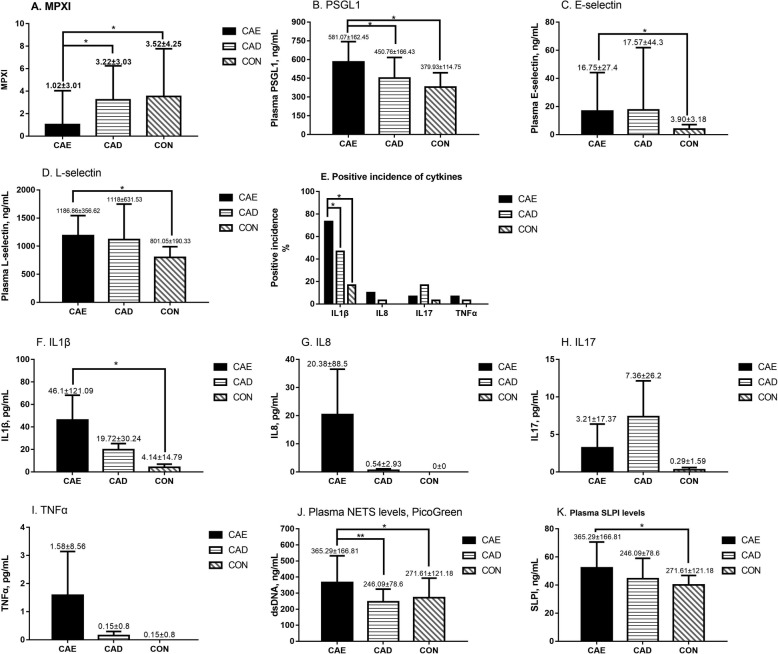
The intra-neutrophil mean myeloperoxidase index was reduced in CAE patients compared to CAD and CON patients (1.02 ± 3.01, 3.22 ± 3.03, 3.52 ± 4.25, respectively; CAE vs CAD, p = 0.016 and CAE vs CON, p = 0.007). Multiple logistic regression analysis showed that MPXI and dsDNA were independent factors that predicted the presence of CAE. CAE patients had higher levels of plasma adhesion molecules (P-selectin glycoprotein ligand-1, E-selectin, L-selectin) and interleukin 1 beta levels. Neutrophil extracellular trap concentrations were significantly higher in the CAE group compared to CAD and CON patients (284.31(258.33-449.91) ng/mL, 225.12(203.34-257.13) ng/mL, and 247.37(231.04-273.01) ng/mL, respectively; CAE vs CAD, p = 0.000 and CAE vs CON, p = 0.001).
Peripheral neutrophils from CAE patients were activated and neutrophil extracellular traps were elevated in the plasma. IL-1β and soluble adhesion molecules may be the causal factors for neutrophil activation.
本研究探讨了冠状动脉扩张症患者中性粒细胞激活和中性粒细胞衍生的细胞外陷阱的形成。
我们纳入了 90 例行冠状动脉造影的患者,包括 30 例冠状动脉扩张症(CAE)患者、30 例阻塞性冠状动脉疾病(CAD)患者和 30 例正常冠状动脉(CON)患者。使用自动血细胞计数器(ADVIA2120 血液系统)测定中性粒细胞内平均髓过氧化物酶指数(MPXI)。定量检测血浆黏附分子、细胞因子和中性粒细胞衍生的细胞外陷阱的血清浓度。
与 CAD 和 CON 患者相比,CAE 患者的中性粒细胞内平均髓过氧化物酶指数降低(分别为 1.02±3.01、3.22±3.03、3.52±4.25;CAE 与 CAD,p=0.016 和 CAE 与 CON,p=0.007)。多因素逻辑回归分析显示,MPXI 和双链 DNA 是预测 CAE 存在的独立因素。CAE 患者的血浆黏附分子(P-选择素糖蛋白配体-1、E-选择素、L-选择素)和白细胞介素 1β水平较高。与 CAD 和 CON 患者相比,CAE 组的中性粒细胞细胞外陷阱浓度明显升高(分别为 284.31(258.33-449.91)ng/ml、225.12(203.34-257.13)ng/ml 和 247.37(231.04-273.01)ng/ml;CAE 与 CAD,p=0.000 和 CAE 与 CON,p=0.001)。
CAE 患者外周血中性粒细胞被激活,血浆中中性粒细胞衍生的细胞外陷阱升高。白细胞介素 1β和可溶性黏附分子可能是中性粒细胞激活的因果因素。