Kopp Alexander, Smeets Ralf, Gosau Martin, Kröger Nadja, Fuest Sandra, Köpf Marius, Kruse Magnus, Krieger Judith, Rutkowski Rico, Henningsen Anders, Burg Simon
Fibrothelium GmbH, Aachen, Germany.
Department of Oral and Maxillofacial Surgery, University Medical Center Hamburg-Eppendorf, Hamburg, Germany.
Bioact Mater. 2020 Feb 23;5(2):241-252. doi: 10.1016/j.bioactmat.2020.01.010. eCollection 2020 Jun.
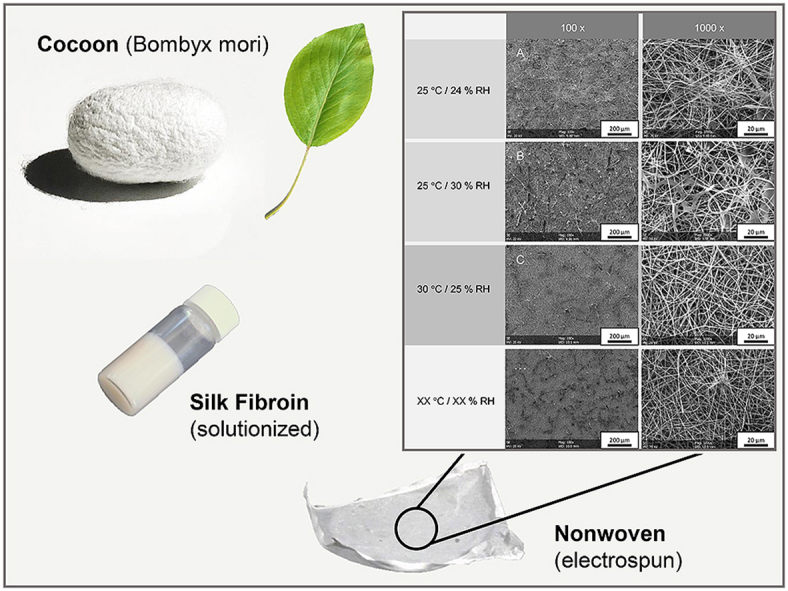
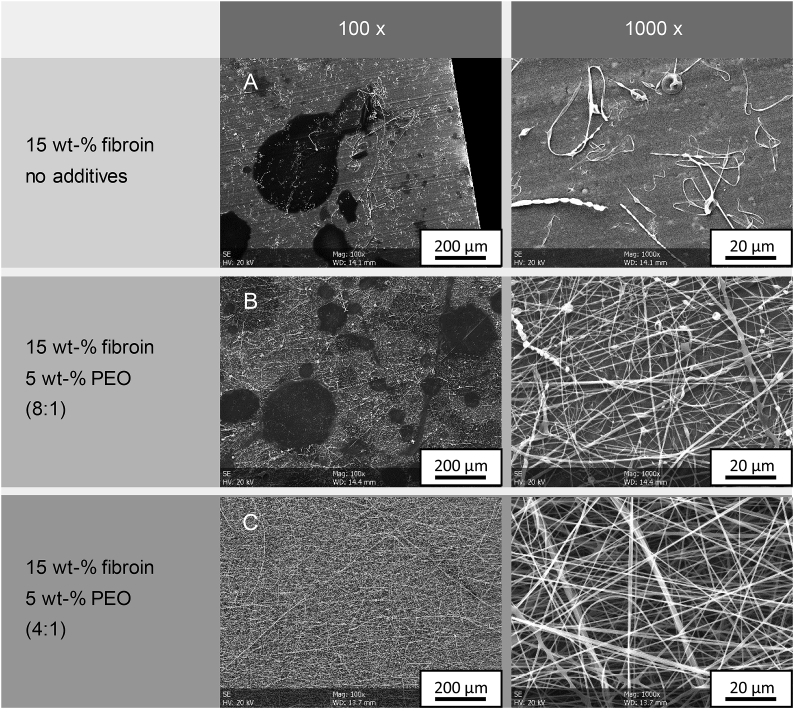
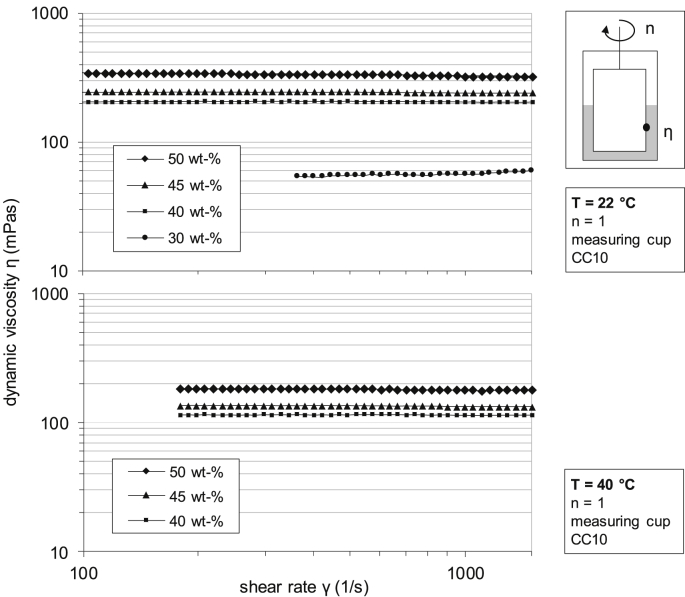
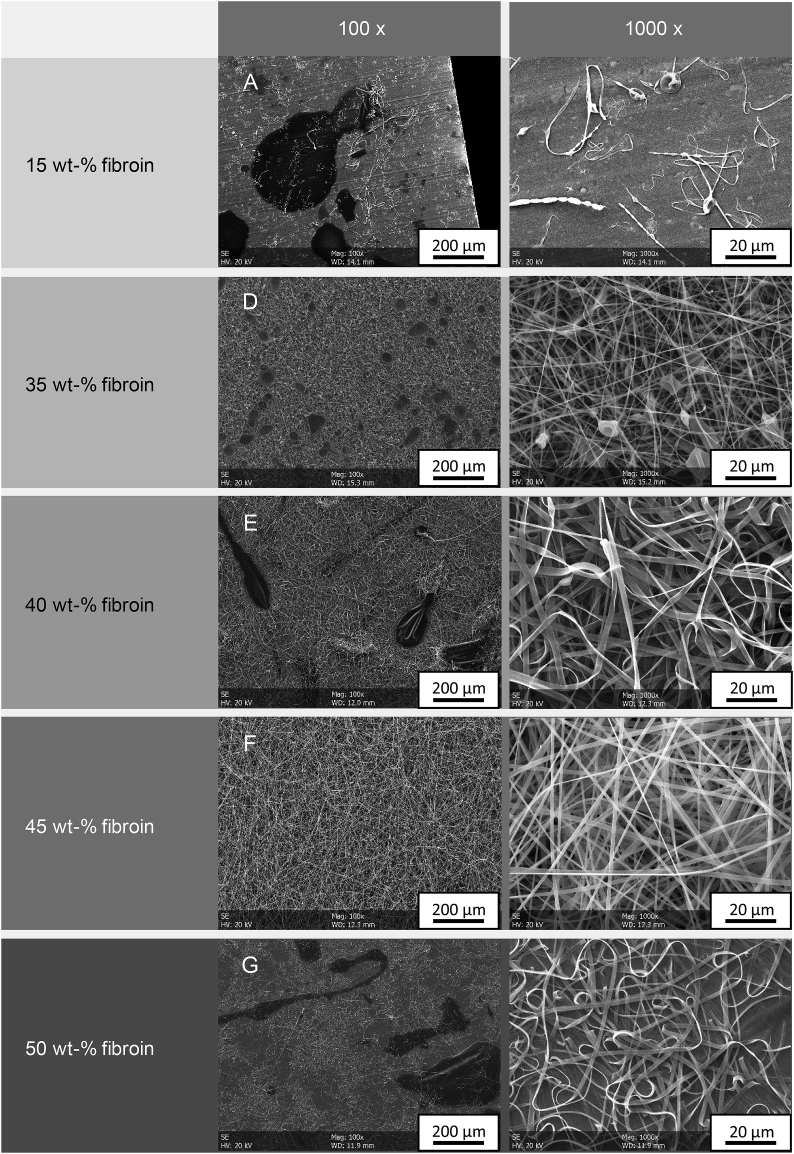
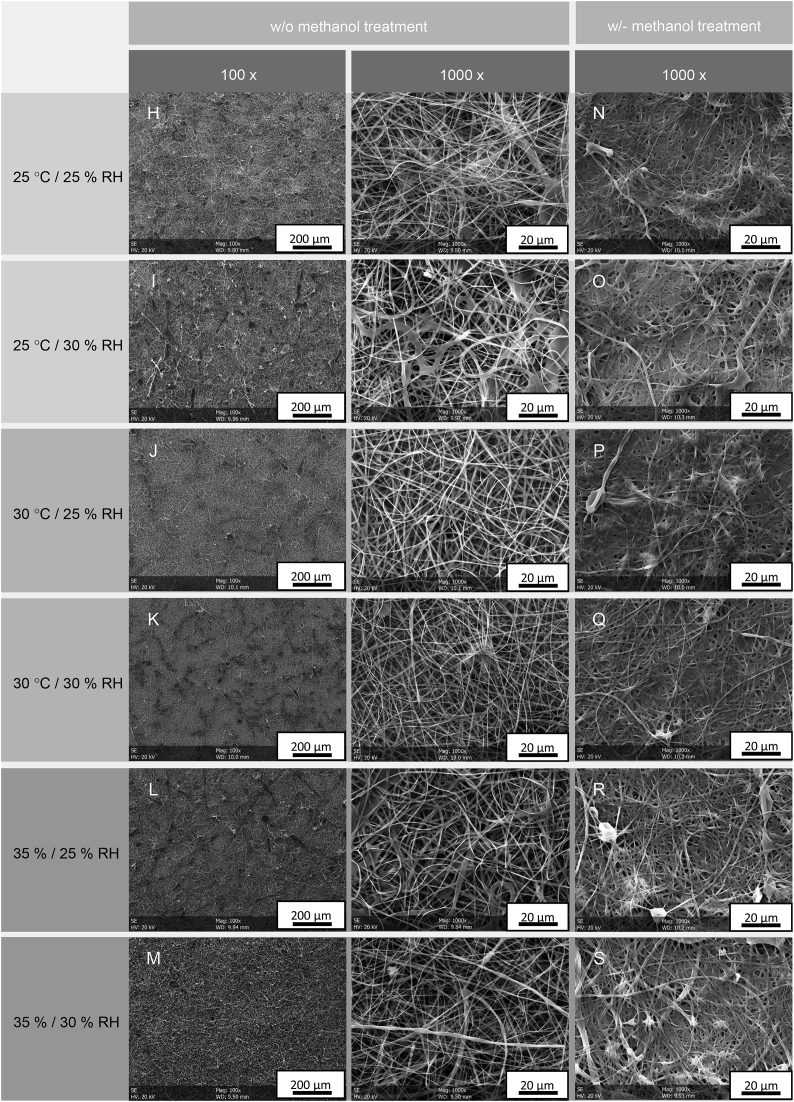
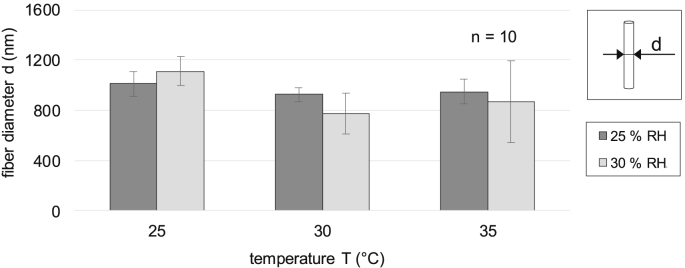
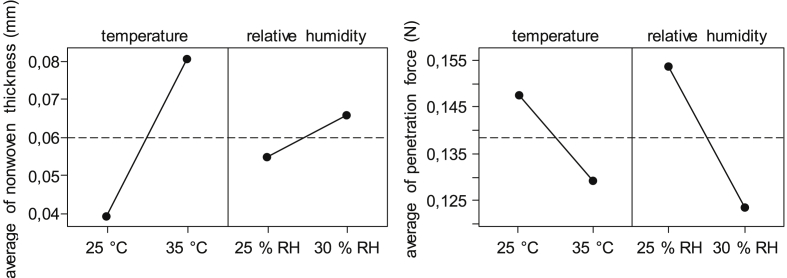
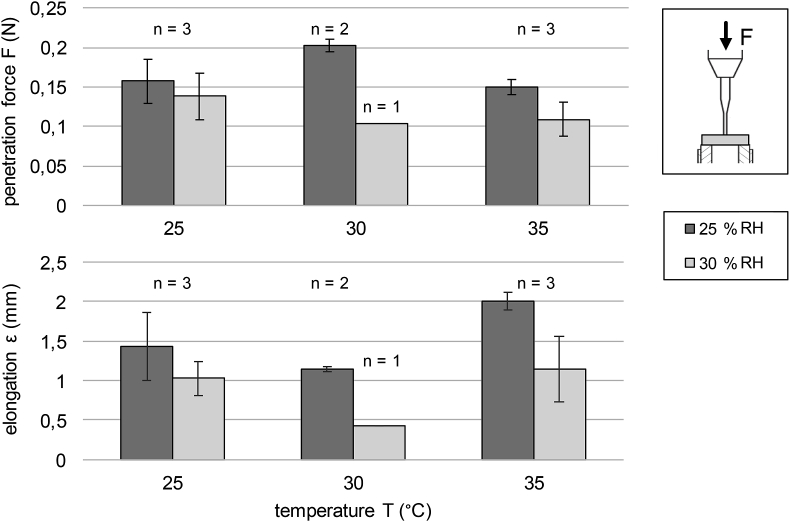
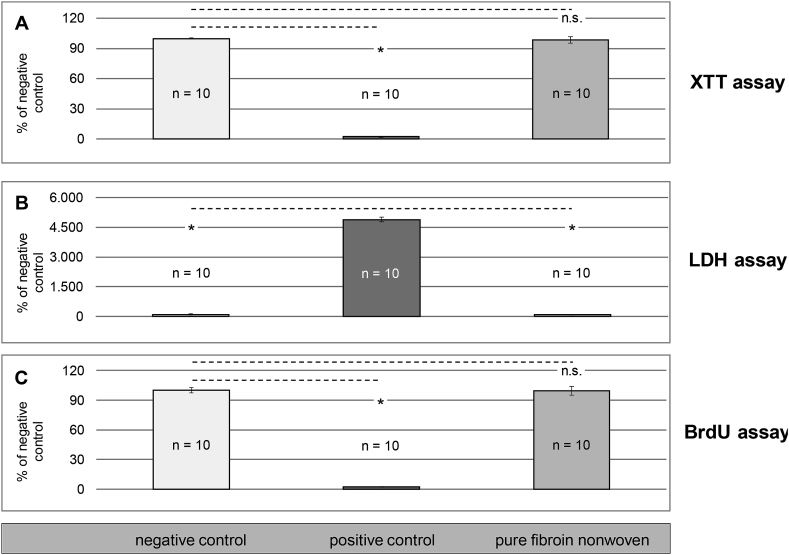
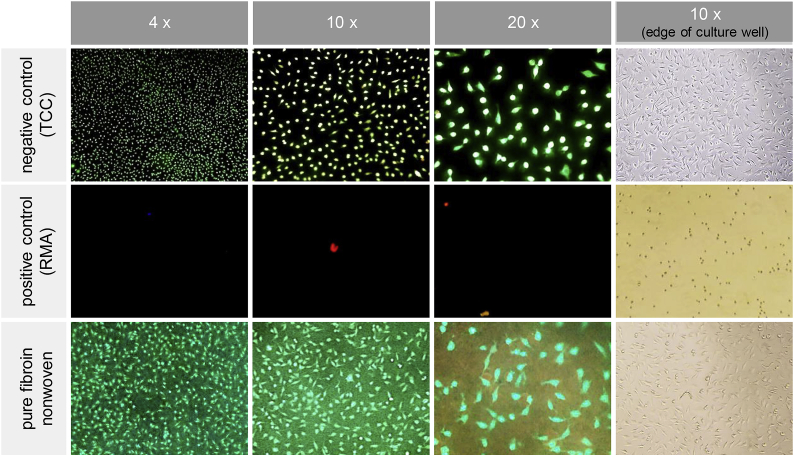
Silk fibroin is a biomaterial with multiple beneficial properties for use in regenerative medicine and tissue engineering. When dissolving and processing the reconstituted silk fibroin solution by electrospinning, the arrangement and size of fibers can be manifold varied and according fiber diameters reduced to the nanometer range. Such nonwovens show high porosity as well as potential biocompatibility. Usually, electrospinning of most biomaterials demands for the application of additives, which enable stable electrospinning by adjusting viscosity, and are intended to evaporate during processing or to be washed out afterwards. However, the use of such additives increases costs and has to be taken into account in terms of biological risks when used for biomedical applications. In this study, we explored the possibilities of additive-free electrospinning of pure fibroin nonwovens and tried to optimize process parameters to enable stable processing. We used natural silk derived from the mulberry silkworm Bombyx mori. After degumming, the silk fibroin was dissolved and the viscosity of the spinning solution was controlled by partial evaporation of the initial solving agent. This way, we were able to completely avoid the use of additives and manufacture nonwovens, which potentially offer higher biocompatibility and reduced immunogenicity. Temperature and relative humidity during electrospinning were systematically varied (25-35 °C, 25-30% RH). In a second step, the nonwovens optionally underwent methanol treatment to initiate beta-sheet formation in order to increase structural integrity and strength. Comprehensive surface analysis on the different nonwovens was performed using scanning electron microscopy and supplemented by additional mechanical testing. Cytotoxicity was evaluated using BrdU-assay, XTT-assay, LDH-assay and live-dead staining. Our findings were, that an increase of temperature and relative humidity led to unequal fiber diameters and defective nonwovens. Resistance to penetration decreased accordingly. The most uniform fiber diameters of 998 ± 63 nm were obtained at 30 °C and 25% relative humidity, also showing the highest value for resistance to penetration (0.20 N). The according pure fibroin nonwoven also showed no signs of cytotoxicity. However, while the biological response showed statistical evidence, the material characteristics showed no statistically significant correlation to changes of the ambient conditions within the investigated ranges. We suggest that further experiments should explore additional ranges for temperature and humidity and further focus on the repeatability of material properties in dependency of suitable process windows.
丝素蛋白是一种具有多种有益特性的生物材料,可用于再生医学和组织工程。通过静电纺丝溶解和处理再生丝素蛋白溶液时,纤维的排列和尺寸可以有多种变化,纤维直径可缩小至纳米范围。这种无纺布具有高孔隙率以及潜在的生物相容性。通常,大多数生物材料的静电纺丝需要添加添加剂,通过调节粘度来实现稳定的静电纺丝,并且这些添加剂旨在在加工过程中蒸发或之后被冲洗掉。然而,使用这些添加剂会增加成本,并且在用于生物医学应用时,必须考虑其生物风险。在本研究中,我们探索了纯丝素蛋白无纺布无添加剂静电纺丝的可能性,并试图优化工艺参数以实现稳定加工。我们使用了来自家蚕Bombyx mori的天然蚕丝。脱胶后,将丝素蛋白溶解,并通过部分蒸发初始溶剂来控制纺丝溶液的粘度。通过这种方式,我们能够完全避免使用添加剂并制造出无纺布,这种无纺布可能具有更高的生物相容性和更低的免疫原性。静电纺丝过程中的温度和相对湿度被系统地改变(25 - 35°C,25 - 30%相对湿度)。第二步,无纺布可选择进行甲醇处理以引发β - 折叠的形成,从而提高结构完整性和强度。使用扫描电子显微镜对不同的无纺布进行了全面的表面分析,并辅以额外的机械测试。使用BrdU测定法、XTT测定法、LDH测定法和活死染色法评估细胞毒性。我们的研究结果表明,温度和相对湿度的增加会导致纤维直径不均匀和无纺布有缺陷。相应地,抗穿透性降低。在30°C和25%相对湿度下获得了最均匀的纤维直径,为998±63纳米,同时也显示出最高的抗穿透值(0.20 N)。相应的纯丝素蛋白无纺布也没有细胞毒性的迹象。然而,虽然生物学反应显示出统计学证据,但材料特性在研究范围内与环境条件的变化没有统计学上的显著相关性。我们建议进一步的实验应探索温度和湿度的其他范围,并进一步关注材料特性在合适工艺窗口下的可重复性。