University of Vermont, Department of Neurological Sciences, Burlington, United States.
Elife. 2020 Mar 3;9:e51440. doi: 10.7554/eLife.51440.
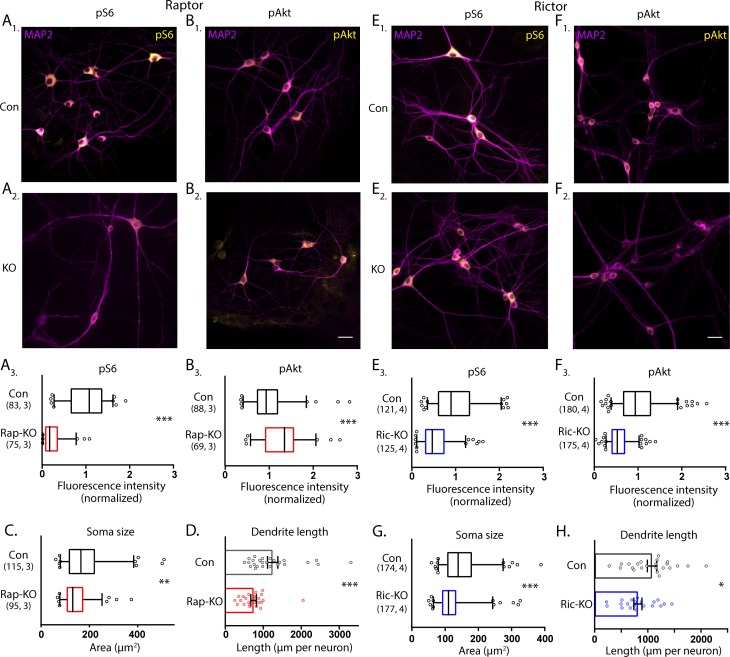
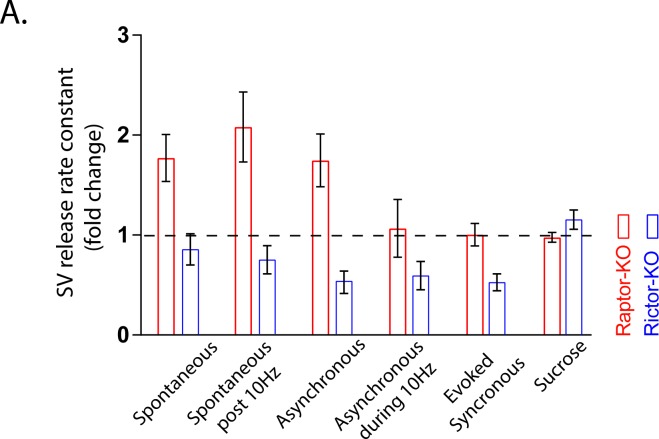
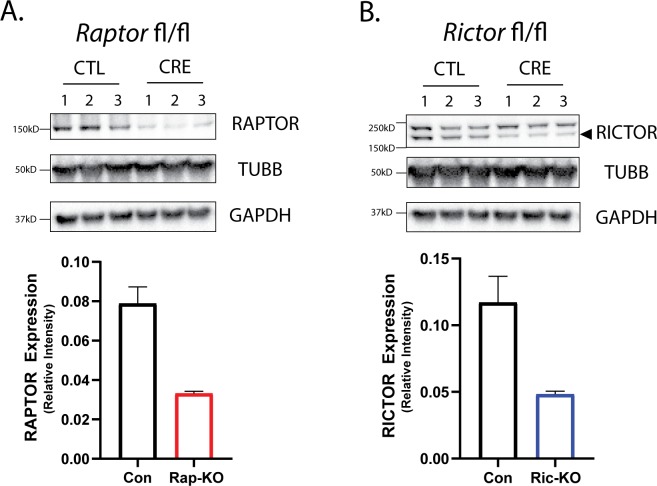
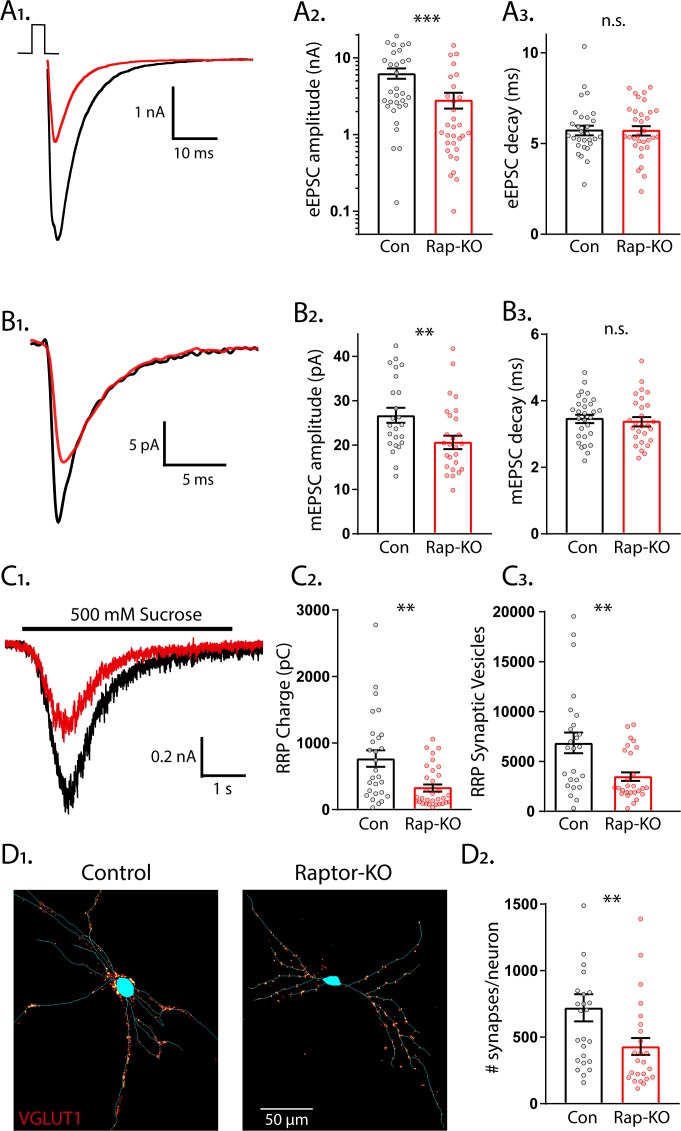
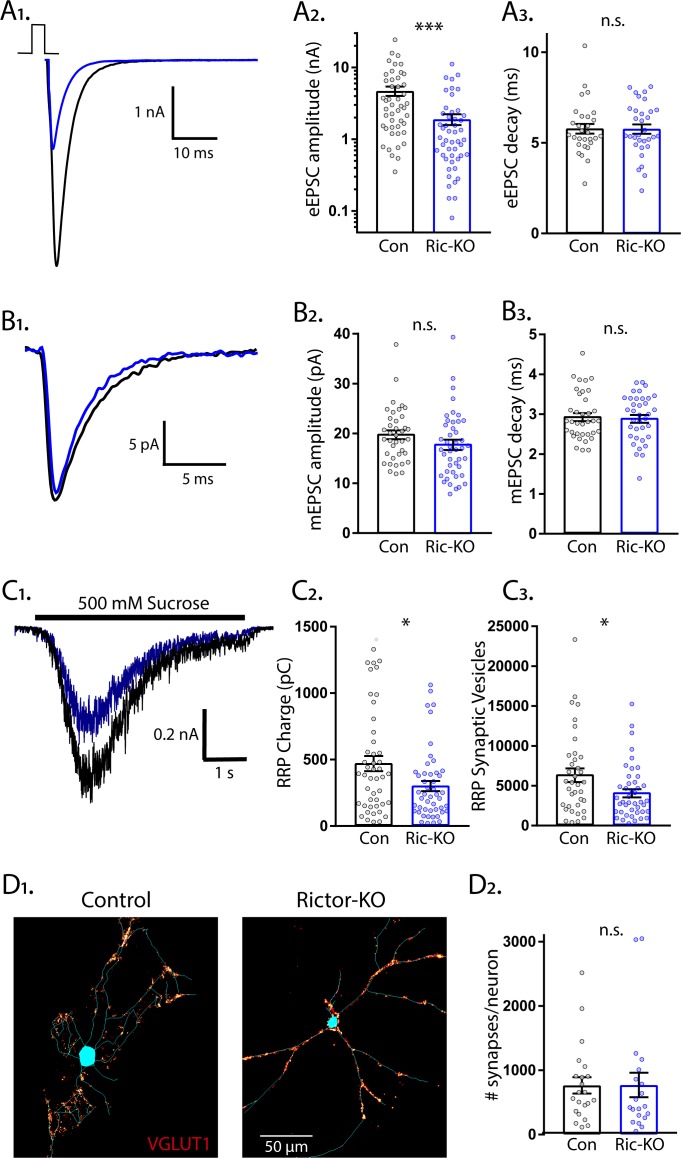
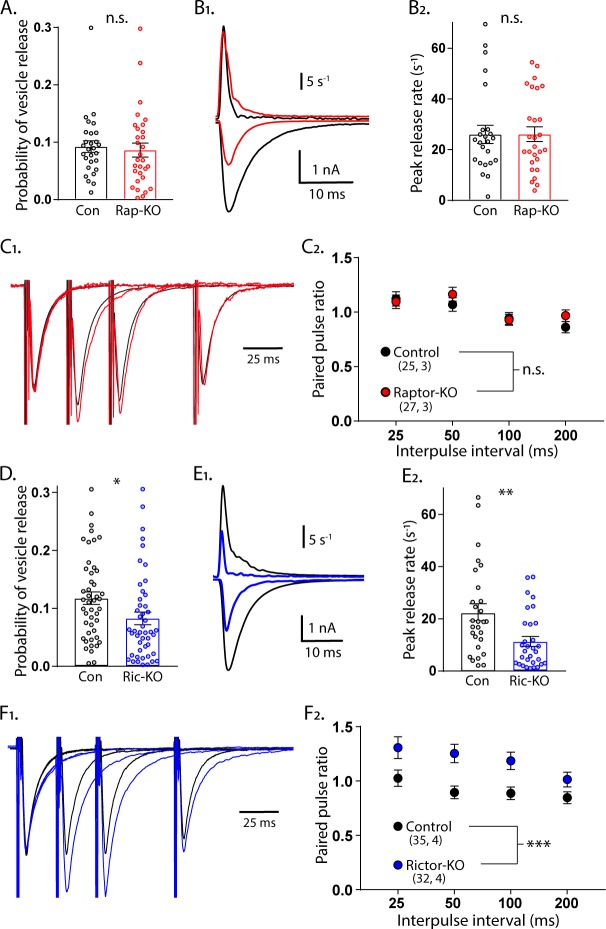
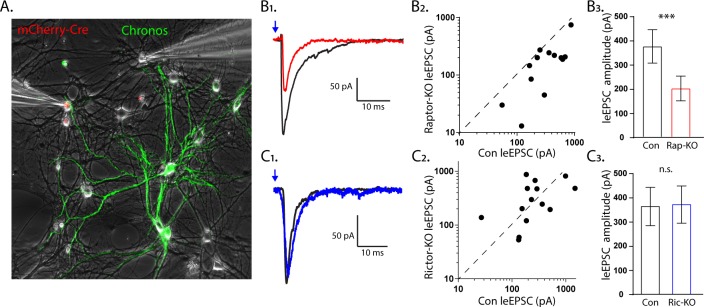
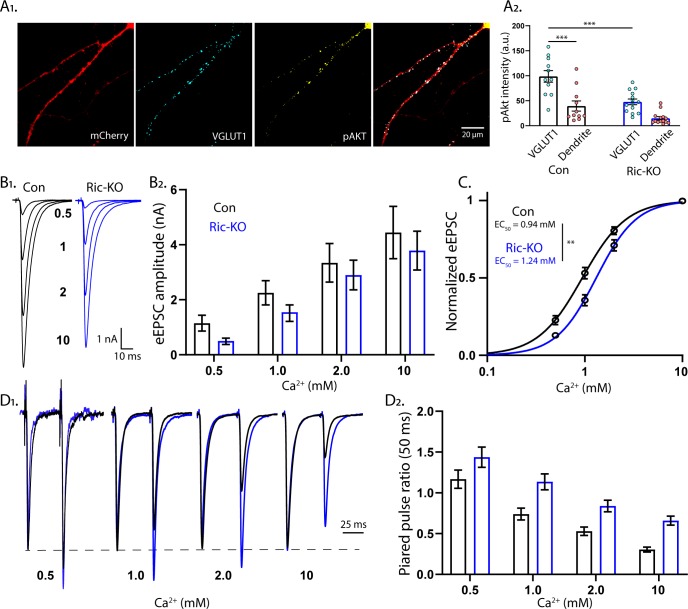
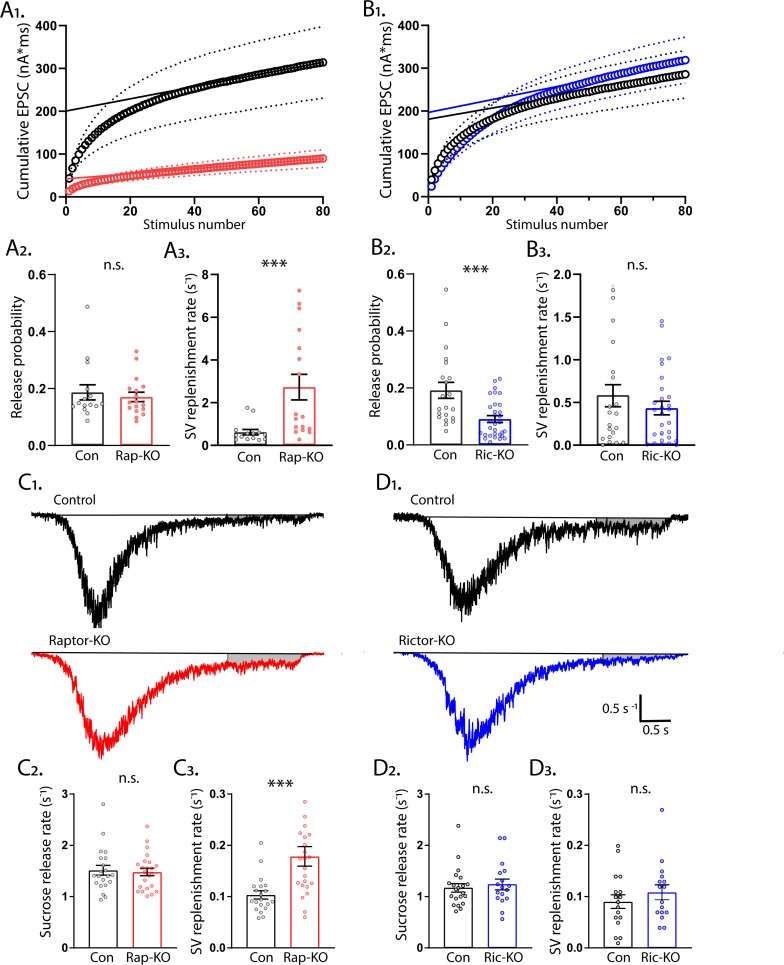
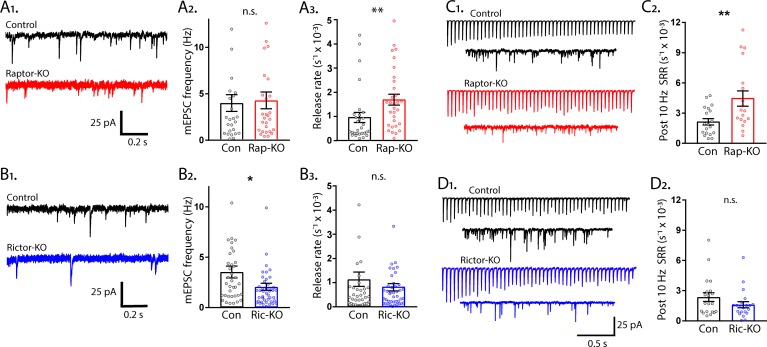
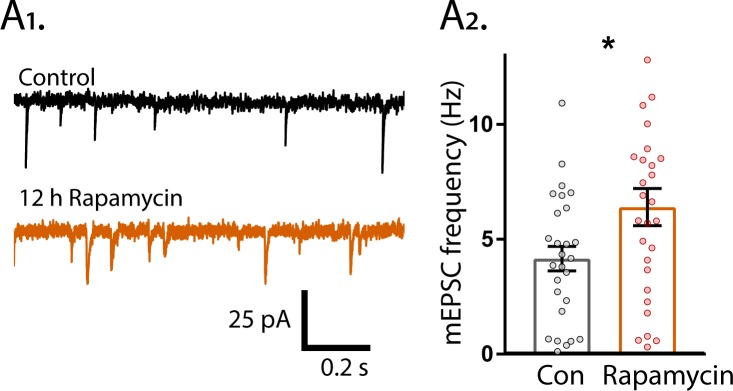
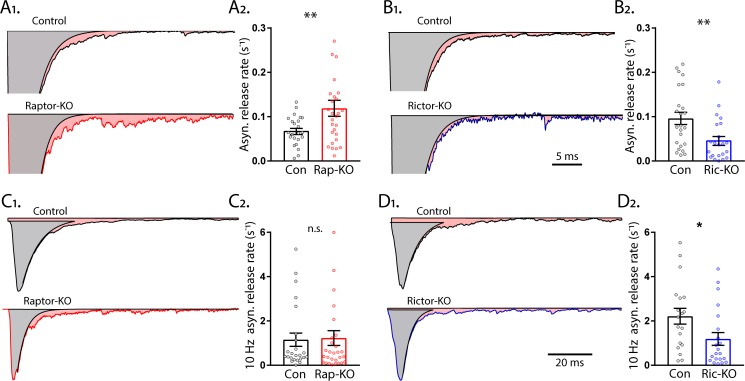
Although mTOR signaling is known as a broad regulator of cell growth and proliferation, in neurons it regulates synaptic transmission, which is thought to be a major mechanism through which altered mTOR signaling leads to neurological disease. Although previous studies have delineated postsynaptic roles for mTOR, whether it regulates presynaptic function is largely unknown. Moreover, the mTOR kinase operates in two complexes, mTORC1 and mTORC2, suggesting that mTOR's role in synaptic transmission may be complex-specific. To better understand their roles in synaptic transmission, we genetically inactivated mTORC1 or mTORC2 in cultured mouse glutamatergic hippocampal neurons. Inactivation of either complex reduced neuron growth and evoked EPSCs (eEPSCs), however, the effects of mTORC1 on eEPSCs were postsynaptic and the effects of mTORC2 were presynaptic. Despite postsynaptic inhibition of evoked release, mTORC1 inactivation enhanced spontaneous vesicle fusion and replenishment, suggesting that mTORC1 and mTORC2 differentially modulate postsynaptic responsiveness and presynaptic release to optimize glutamatergic synaptic transmission.
虽然 mTOR 信号被认为是细胞生长和增殖的广泛调节剂,但在神经元中,它调节突触传递,这被认为是改变 mTOR 信号导致神经疾病的主要机制。尽管先前的研究已经描述了 mTOR 的突触后作用,但它是否调节突触前功能在很大程度上尚不清楚。此外,mTOR 激酶在两个复合物中发挥作用,mTORC1 和 mTORC2,这表明 mTOR 在突触传递中的作用可能是特定于复合物的。为了更好地理解它们在突触传递中的作用,我们在培养的小鼠谷氨酸能海马神经元中遗传失活了 mTORC1 或 mTORC2。任一复合物的失活均减少了神经元的生长和诱发 EPSC(eEPSC),然而,mTORC1 对 eEPSC 的作用是突触后的,而 mTORC2 的作用是突触前的。尽管诱发释放的突触后抑制,但 mTORC1 失活增强了自发性囊泡融合和补充,这表明 mTORC1 和 mTORC2 差异调节突触后反应性和突触前释放,以优化谷氨酸能突触传递。