State Key Laboratory of Hulless Barley and Yak Germplasm Resources and Genetic Improvement, No.130 Jinzhu West Road, Chengguan District, Lhasa 850002, Tibet, China.
Institute of Agricultural Research, Tibet Academy of Agricultural and Animal Husbandry Sciences, No.130 Jinzhu West Road, Chengguan District, Lhasa 850002, Tibet, China.
Gigascience. 2020 Mar 1;9(3). doi: 10.1093/gigascience/giaa019.
Tibetan hull-less barley (Hordeum vulgare L. var. nudum) is one of the primary crops cultivated in the mountains of Tibet and encounters low temperature, high salinity, and drought. Specifically, drought is one of the major abiotic stresses that affect and limit Tibetan barley growth. Osmotic stress is often simultaneously accompanied by drought conditions. Thus, to improve crop yield, it is critical to explore the molecular mechanism governing the responses of hull-less barley to osmotic/drought stress conditions.
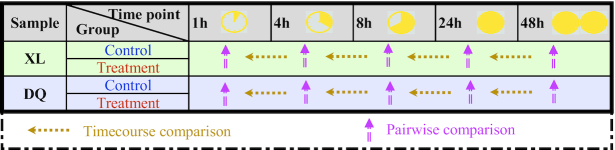
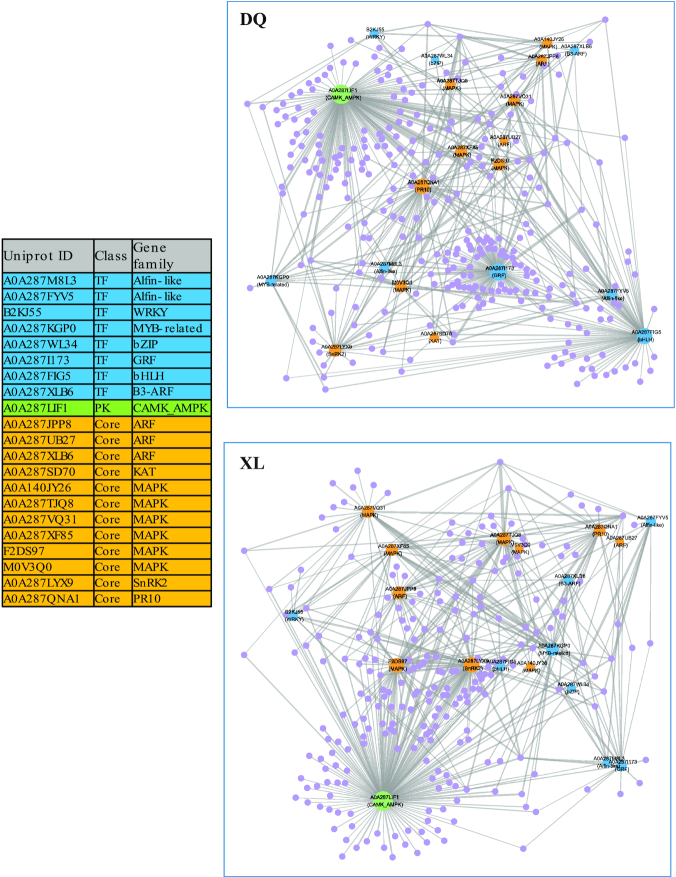
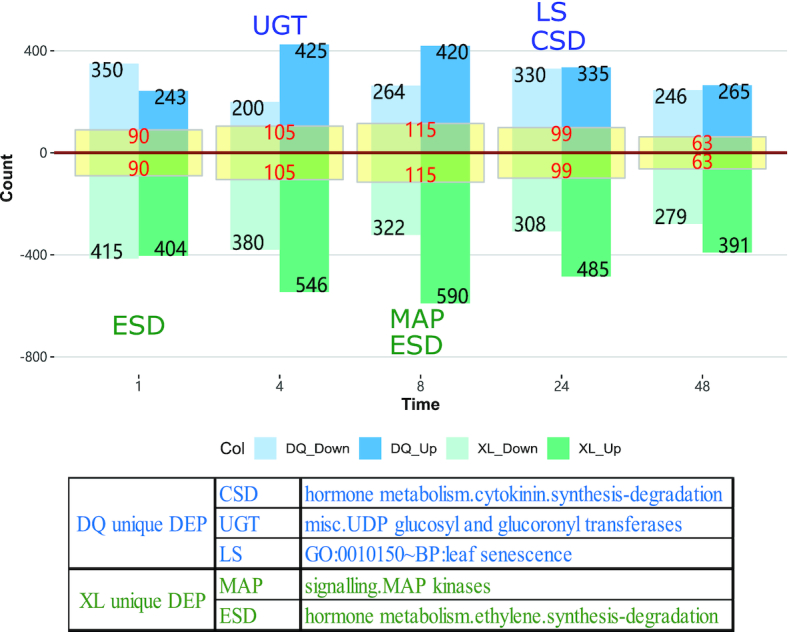
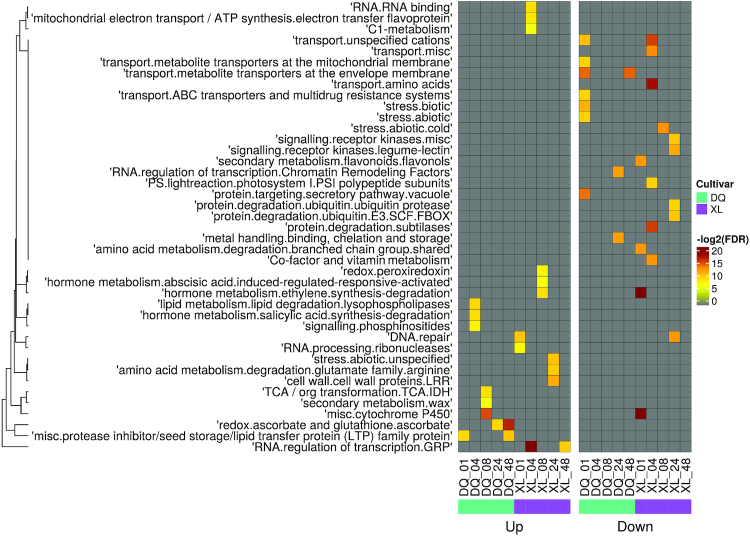
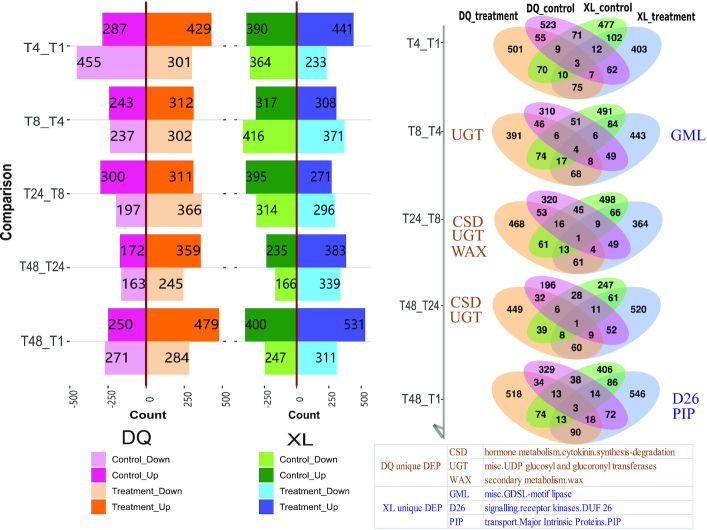
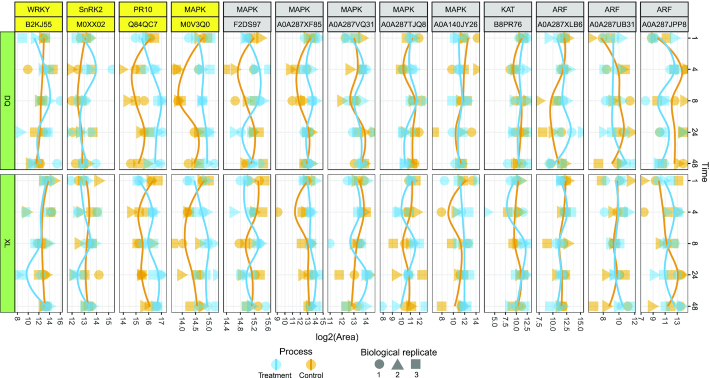
In this study, we used quantitative proteomics by data-independent acquisition mass spectrometry to investigate protein abundance changes in tolerant (XL) and sensitive (DQ) cultivars. A total of 6,921 proteins were identified and quantified in all samples. Two distinct strategies based on pairwise and time-course comparisons were utilized in the comprehensive analysis of differentially abundant proteins. Further functional analysis of differentially abundant proteins revealed that some hormone metabolism-associated and phytohormone abscisic acid-induced genes are primarily affected by osmotic stress. Enhanced regulation of reactive oxygen species (may promote the tolerance of hull-less barley under osmotic stress. Moreover, we found that some regulators, such as GRF, PR10, MAPK, and AMPK, were centrally positioned in the gene regulatory network, suggesting that they may have a dominant role in the osmotic stress response of Tibetan barley.
Our findings highlight a subset of proteins and processes that are involved in the alleviation of osmotic stress. In addition, this study provides a large-scale and multidimensional proteomic data resource for the further investigation and improvement of osmotic/drought stress tolerance in hull-less barley or other plant species.
西藏青稞(Hordeum vulgare L. var. nudum)是西藏山区主要种植的作物之一,它会遭遇低温、高盐和干旱等环境。具体来说,干旱是影响和限制青稞生长的主要非生物胁迫之一。渗透胁迫通常与干旱条件同时发生。因此,为了提高作物产量,探索青稞对渗透/干旱胁迫条件响应的分子机制至关重要。
在这项研究中,我们使用了数据非依赖性采集质谱的定量蛋白质组学技术,研究了耐盐(XL)和敏感(DQ)品种的蛋白丰度变化。在所有样本中,共鉴定和定量了 6921 种蛋白。我们在综合分析差异丰度蛋白时,使用了基于成对和时间进程比较的两种不同策略。对差异丰度蛋白的进一步功能分析表明,一些激素代谢相关和植物激素脱落酸诱导的基因主要受到渗透胁迫的影响。活性氧(ROS)的增强调控可能促进青稞在渗透胁迫下的耐受性。此外,我们发现一些调节剂,如 GRF、PR10、MAPK 和 AMPK,在基因调控网络中处于中心位置,这表明它们可能在青稞对渗透胁迫的响应中发挥主导作用。
本研究结果强调了一组参与缓解渗透胁迫的蛋白和过程。此外,本研究为进一步研究和提高青稞或其他植物物种的渗透/干旱胁迫耐受性提供了大规模和多维的蛋白质组学数据资源。