Advanced Technical Teacher's Training School (ENSET), University of Douala, PO BOX 1872, Douala, Cameroon.
Faculty of Science, Department of Plant biology, University of Douala, PO BOX 24157, Douala, Cameroon.
J Ethnobiol Ethnomed. 2020 Mar 4;16(1):12. doi: 10.1186/s13002-020-00362-8.
In seasons of food shortage, local communities across Africa use wild edible plants and mushrooms (WEPM) that contribute significantly to food security by supplementing households' diets and providing alternative income. In the Bamenda Highlands of Cameroon, their biodiversity is believed to be rapidly declining as a result of land use change. Despite their potential beneficial values, there has been only limited research on this topic in this area. This study aims to document traditional knowledge related to the use of plants and mushrooms for food purpose by indigenous people of the Bamenda highland.
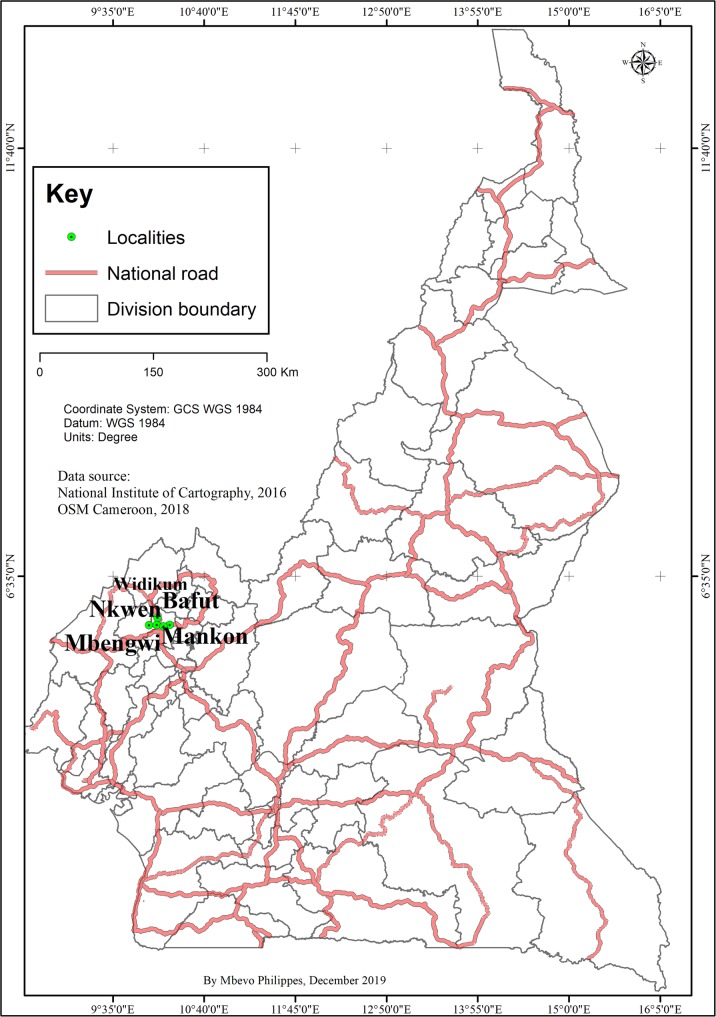
Ethnobotanical surveys were conducted in 6 localities (Mbengwi, Bafut, Nkwen, Mankon, Bambili, and Widikum) of the Bamenda Highlands of Cameroon, and 121 individuals were interviewed on commonly gathered and eaten WEPMs and their perception on their availability. Respondents were permanent residents selected based on their willingness to participate in the study. Specimens of recorded plants were collected and processed for future identification at the National Herbarium of Cameroon. Their nutritional potentials are discussed based on available literature.
A total of 47 species were recorded including leafy vegetable, spices, fruits, roots/tubers, and mushrooms. The top 5 most frequent are Amaranthus sp. (6.6%), Termitomyces clypeatus (6.4%), Irvingia gabonensis (5.2%), Ricinodendron heudelotii (5.1%), and Aframomum sp. (4.5%). Leafy vegetable and spices are the most diversified group with 13 species each. All recorded species are important from nutritional and pharmaceutical points. However, many of their values remain uninvestigated, while their natural populations are facing threats of degradation.
WEPMs have great potential to contribute to food and nutritional security in the study area. Sound nutrients and metabolites profiling of poorly known species can enhance their contribution in addressing food insecurity.
在食物短缺的季节,非洲各地的当地社区都会使用野生食用植物和蘑菇(Wetlands and Protected Marine Areas,WPM),这些植物和蘑菇通过补充家庭饮食和提供替代收入,对粮食安全做出了重大贡献。在喀麦隆的巴门达高地,由于土地利用方式的改变,人们认为这里的生物多样性正在迅速减少。尽管它们具有潜在的有益价值,但该地区对此类植物和蘑菇的研究非常有限。本研究旨在记录巴门达高地土著人民有关食用植物和蘑菇的传统知识。
在喀麦隆巴门达高地的 6 个地方(姆本格维、巴富特、恩克文、曼孔、班比利和威迪库姆)进行了民族植物学调查,对 121 名经常采集和食用 WPM 的人进行了采访,了解他们对这些植物和蘑菇可获取性的看法。受访者是根据参与研究的意愿选择的常住居民。记录的植物标本被采集并在国家植物标本馆进行处理,以备将来鉴定。根据现有文献讨论了它们的营养潜力。
共记录了 47 种植物,包括叶菜、香料、水果、根/块茎和蘑菇。最常被提及的前 5 种植物是苋属植物(6.6%)、齿菌(6.4%)、非洲油棕(5.2%)、ricinodendron heudelotii(5.1%)和阿弗拉莫姆属植物(4.5%)。叶菜和香料是种类最多的两个多样化群体,各有 13 种。所有记录的物种在营养和药用方面都很重要。然而,许多物种的价值仍未得到研究,而它们的自然种群正面临退化的威胁。
WPM 对研究区的粮食和营养安全有很大的贡献。对了解甚少的物种进行良好的营养和代谢物分析,可以增强它们在解决粮食不安全问题方面的作用。