Department of Botany and Plant Physiology, Faculty of Science, University of Buea, P.O. Box 63, Buea, South West Region, Cameroon.
Department of Biological Sciences, Faculty of Science, The University of Bamenda, P.O.Box 39, Bamenda, North West Region, Cameroon.
J Ethnobiol Ethnomed. 2018 Apr 2;14(1):25. doi: 10.1186/s13002-018-0225-8.
Majority of the people in rural areas depend on traditional fungi-based medicines to combat different illnesses. This ethnomycological survey was undertaken to document the traditional knowledge of mushrooms among the communities in the Kilum-Ijim mountain forest reserve. Although macrofungi are exploited for food and medicine, their ethnomycological knowledge has not been documented in this ecosystem.
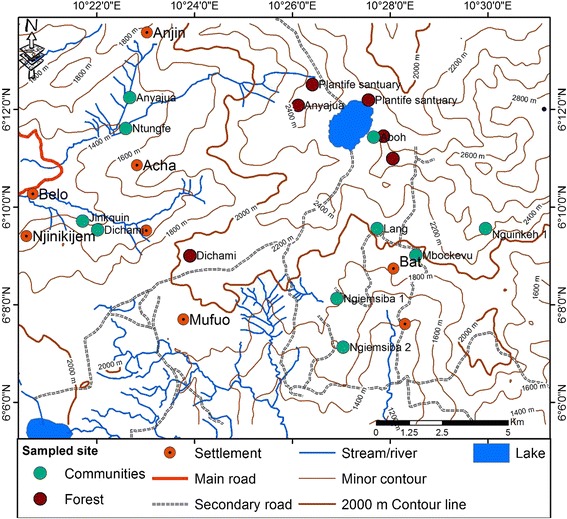
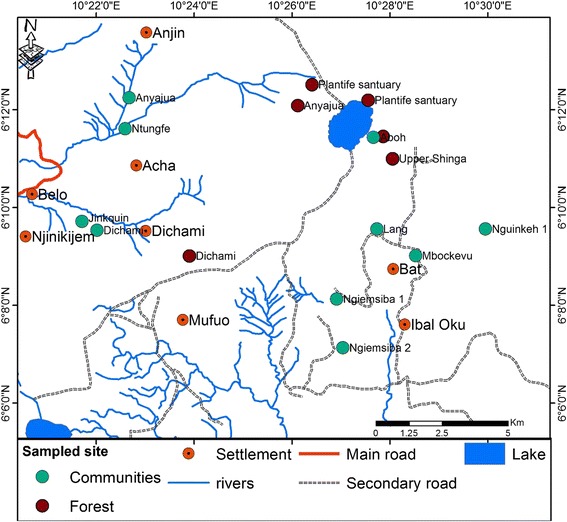
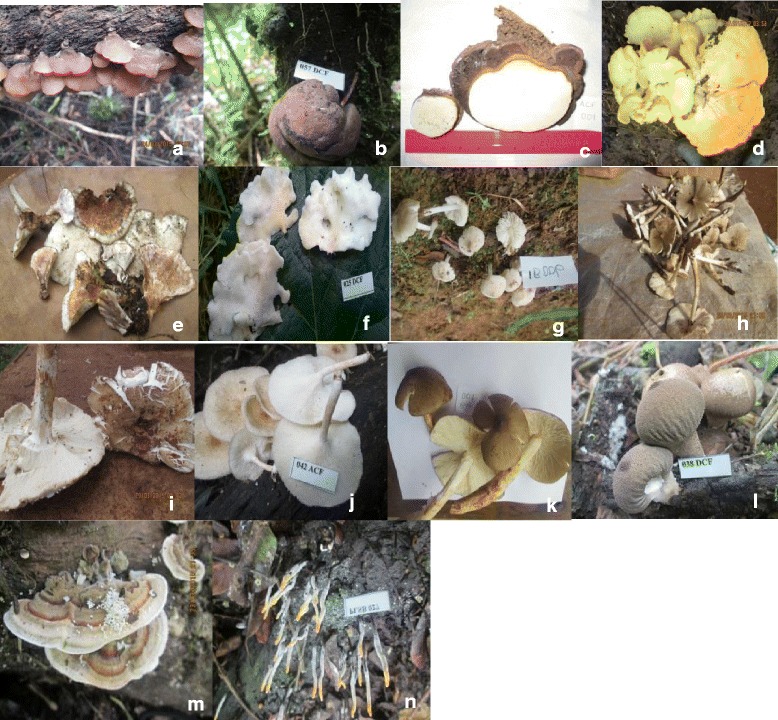
A field study was carried out between 2014 and 2015; 14 mushrooms used by the local communities were collected and identified using the polymorphism of the ribosomal ITS1, 5.8S, and ITS2 regions. Semi-structured questionnaires, focus group discussions, and pictorial method were used to collect information on edibility, local names, indigenous knowledge, and the role of macrofungi in ten communities.
Ethnomycological findings revealed that mushrooms were used as food and medicine, while the non-edible species were regarded as food from Satan. Eight species, Polyporus tenuiculus, Termitomyces striatus, Termitomyces microcarpus Auricularia polytricha, Laetiporus sulphureus, Termitomyces sp.1, Termitomyces sp.2, and Polyporus dictyopus, were reported as edible and Auricularia polytricha, Daldinia concentrica, Ganoderma applanatum, Lentinus squarrosulus, Polyporus dictyopus, Termitomyces microcarpus, Trametes versicolor, Vascellum pretense and Xylaria sp., were used as medicine in traditional health care. Local names were found to be a very important factor in distinguishing between edible, medicinal, and poisonous mushrooms. Edible mushrooms are called "awo'oh" in Belo and "Kiwoh" in Oku. Poisonous mushrooms were commonly referred to as "awo'oh Satan" in Belo and "Kiwohfiyini" in Oku. Mushrooms were highly valued as a source of protein and as a substitute for meat in their diets. It is worth noting that Polyporus dictyopus was reported here for the first time in literature as an edible mushroom species.
Local knowledge of medicinal mushrooms in the treatment of different illness still exists in all ten villages surveyed. Elderly men and women appear to play an important role in primary health care services in these communities. This survey underscores the need to preserve and document traditional knowledge of the different medicinal mushrooms used in treating different illnesses and for more future scientific research on the mushrooms to determine their efficacy and their safety.
农村地区的大多数人依赖传统的真菌类药物来治疗各种疾病。本民族真菌学调查旨在记录基卢姆-伊吉姆山林保护区社区对蘑菇的传统知识。尽管大型真菌被用于食品和药物,但它们在该生态系统中的民族真菌学知识尚未被记录下来。
2014 年至 2015 年进行了实地研究;收集了当地社区使用的 14 种蘑菇,并使用核糖体 ITS1、5.8S 和 ITS2 区域的多态性进行了鉴定。采用半结构式问卷、焦点小组讨论和图片法收集了 10 个社区关于可食用性、当地名称、本土知识以及大型真菌在其中的作用的信息。
民族真菌学研究结果表明,蘑菇被用作食物和药物,而不可食用的物种则被视为来自撒旦的食物。有 8 种物种,如薄孔菌、非洲白蚁伞、微毛齿菌、金顶侧耳、拟层孔菌、节毛齿菌 1 号、节毛齿菌 2 号和多孔菌被报告为可食用,而木耳、密纹薄孔菌、平盖灵芝、粗毛栓菌、多孔菌、微毛齿菌、硫色多孔菌、拟栓孔菌和拟珊瑚状革裥菌则被用于传统保健。当地名称被发现是区分可食用、药用和有毒蘑菇的一个非常重要的因素。可食用蘑菇在贝洛语中称为“awo'oh”,在奥库语中称为“Kiwoh”。有毒蘑菇在贝洛语中通常被称为“awo'oh Satan”,在奥库语中被称为“Kiwohfiyini”。蘑菇被高度重视为蛋白质的来源,并作为其饮食中肉类的替代品。值得注意的是,多孔菌被首次报道为可食用蘑菇物种。
在所调查的 10 个村庄中,关于药用蘑菇治疗不同疾病的本土知识仍然存在。老年人在这些社区的初级卫生保健服务中似乎发挥着重要作用。这项调查强调了保护和记录用于治疗不同疾病的不同药用蘑菇的传统知识的必要性,以及进行更多关于蘑菇的未来科学研究以确定其功效和安全性的必要性。