International Center for Equity in Health, Universidade Federal de Pelotas, Pelotas, RS, Brazil.
Reproductive Health and Research, WHO, Geneve, GE, Switzerland.
BMJ Glob Health. 2020 Jan 26;5(1):e002208. doi: 10.1136/bmjgh-2019-002208. eCollection 2020.
Intimate partner violence (IPV) against women is a critical public health issue that transcends social and economic boundaries and considered to be a major obstacle to the progress towards the 2030 women, children and adolescents' health goals in low-income and middle-income countries (LMICs). Standardised IPV measures have been increasingly incorporated into Demographic and Health Surveys carried out in LMICs. Routine reporting and disaggregated analyses at country level are essential to identify populational subgroups that are particularly vulnerable to IPV exposure.
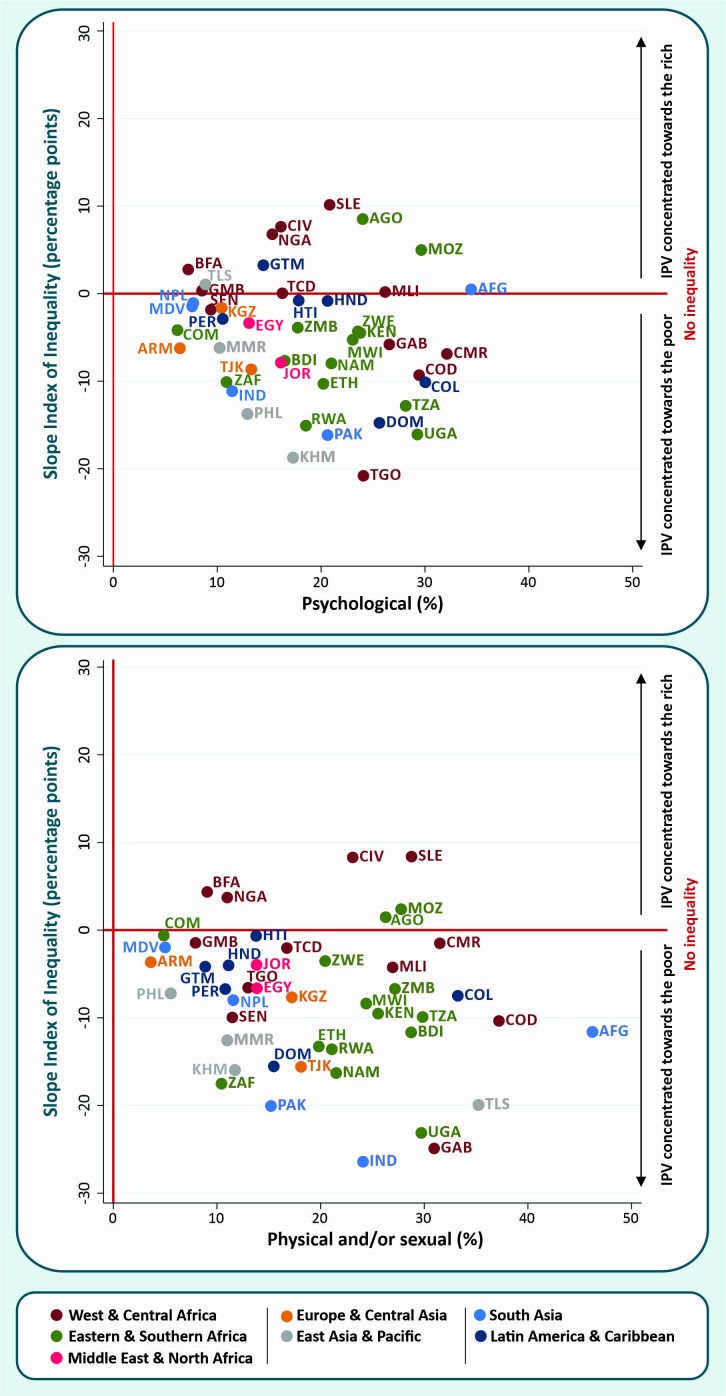
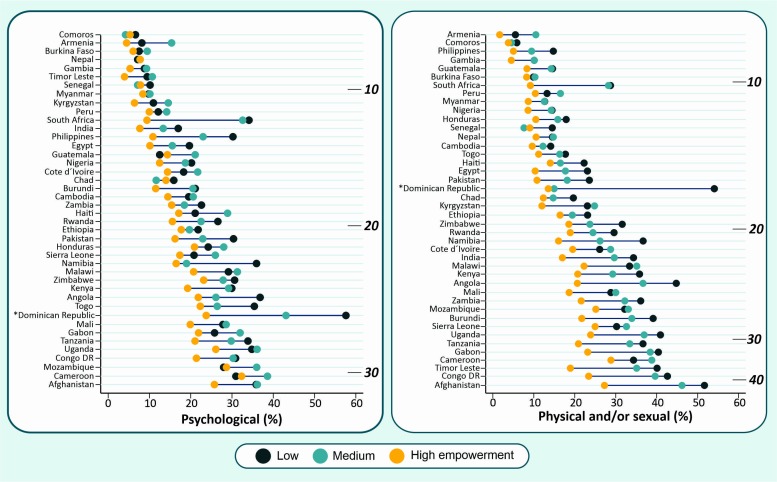
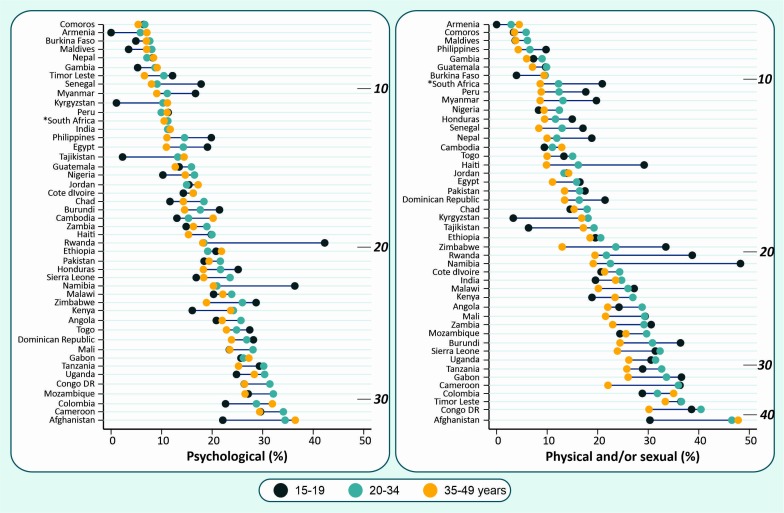
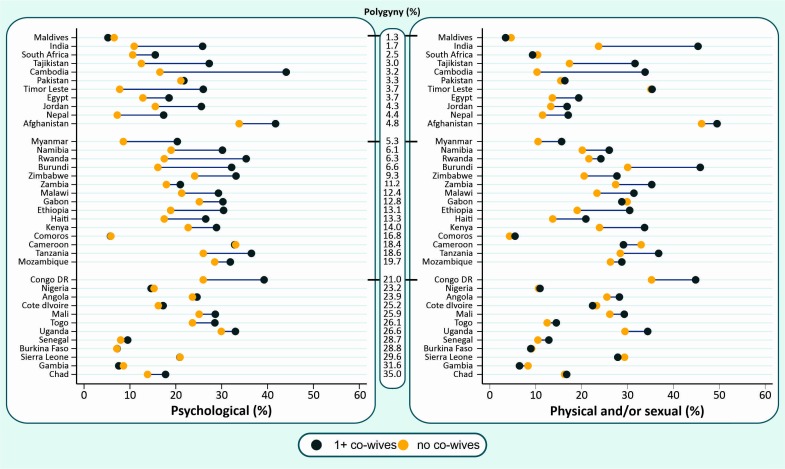
We examined data from 46 countries with surveys carried out between 2010 and 2017 to assess the prevalence and inequalities in recent psychological, physical and sexual IPV among ever-partnered women aged 15-49 years. Inequalities were assessed by disaggregating the data according to household wealth, women's age, women's empowerment level, polygyny status of the relationship and area of residence.
National levels of reported IPV varied widely across countries-from less than 5% in Armenia and Comoros to more than 40% in Afghanistan. Huge inequalities within countries were also observed. Generally, richer and more empowered women reported less IPV, as well as those whose partners had no cowives. Different patterns across countries were observed according to women's age and area of residence but in most cases younger women and those living in rural areas tend to be more exposed to IPV.
The present study advances the current knowledge by providing a global panorama of the prevalence of different forms of IPV across LMICs, helping the identification of the most vulnerable groups of women and for future monitoring of leaving no one behind towards achieving the elimination of all forms of violence among women and girls.
亲密伴侣暴力(IPV)是一个严重的公共卫生问题,它超越了社会和经济界限,被认为是实现 2030 年妇女、儿童和青少年健康目标的主要障碍,这些目标在中低收入国家(LMICs)。标准化的 IPV 措施已越来越多地纳入在 LMICs 进行的人口与健康调查中。在国家一级进行常规报告和分类分析对于确定特别容易受到 IPV 暴露的人群亚组至关重要。
我们检查了 2010 年至 2017 年间在 46 个国家进行的调查数据,以评估 15-49 岁曾有伴侣的妇女最近经历心理、身体和性 IPV 的流行率和不平等现象。通过按家庭财富、妇女年龄、妇女赋权程度、关系中的多妻制状况和居住地区对数据进行分类,评估了不平等现象。
报告的 IPV 国家水平在各国之间差异很大-从亚美尼亚和科摩罗的不到 5%到阿富汗的超过 40%。在各国内部也观察到巨大的不平等。一般来说,较富裕和更赋权的妇女报告的 IPV 较少,其伴侣没有妾的妇女也是如此。根据妇女的年龄和居住地区,各国之间观察到不同的模式,但在大多数情况下,年轻妇女和居住在农村地区的妇女更容易遭受 IPV。
本研究通过提供 LMICs 不同形式 IPV 的流行率的全球概况,为当前的知识提供了进展,有助于确定最脆弱的妇女群体,并为未来监测实现消除所有形式的暴力行为而不留下任何人掉队的目标提供支持。