Hitotsubashi University Institute of Economic Research, Kunitachi, Tokyo, Japan.
BMJ Glob Health. 2020 Feb 23;5(2):e001729. doi: 10.1136/bmjgh-2019-001729. eCollection 2020.
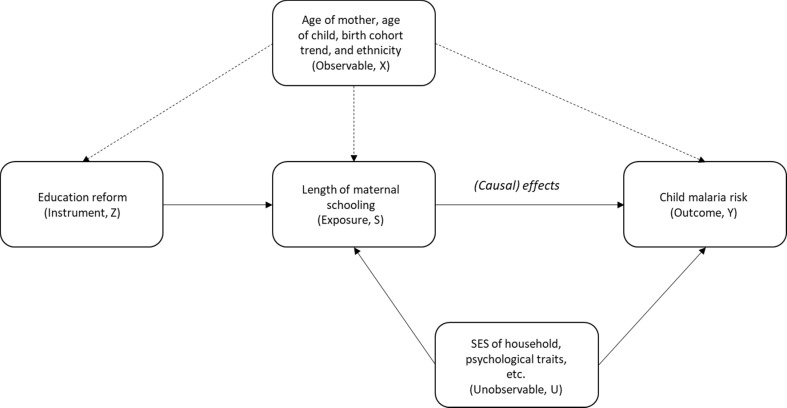
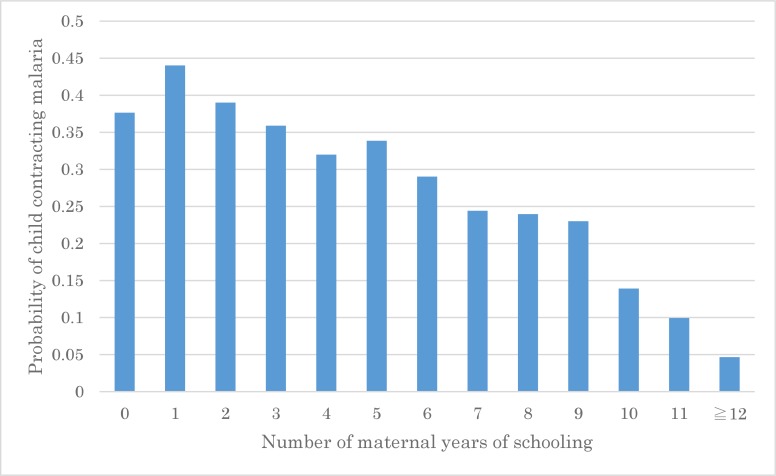
An estimated 216 million cases of malaria occurred worldwide every year. Cross-sectional studies have reported negative association between maternal education and child malaria risks; however, no randomised trial or quasi-experimental study using a natural experiment has confirmed a causal relationship between these two factors. I used the free primary education reform in Uganda to assess the causal effects of maternal schooling on children's risk of malaria infection.
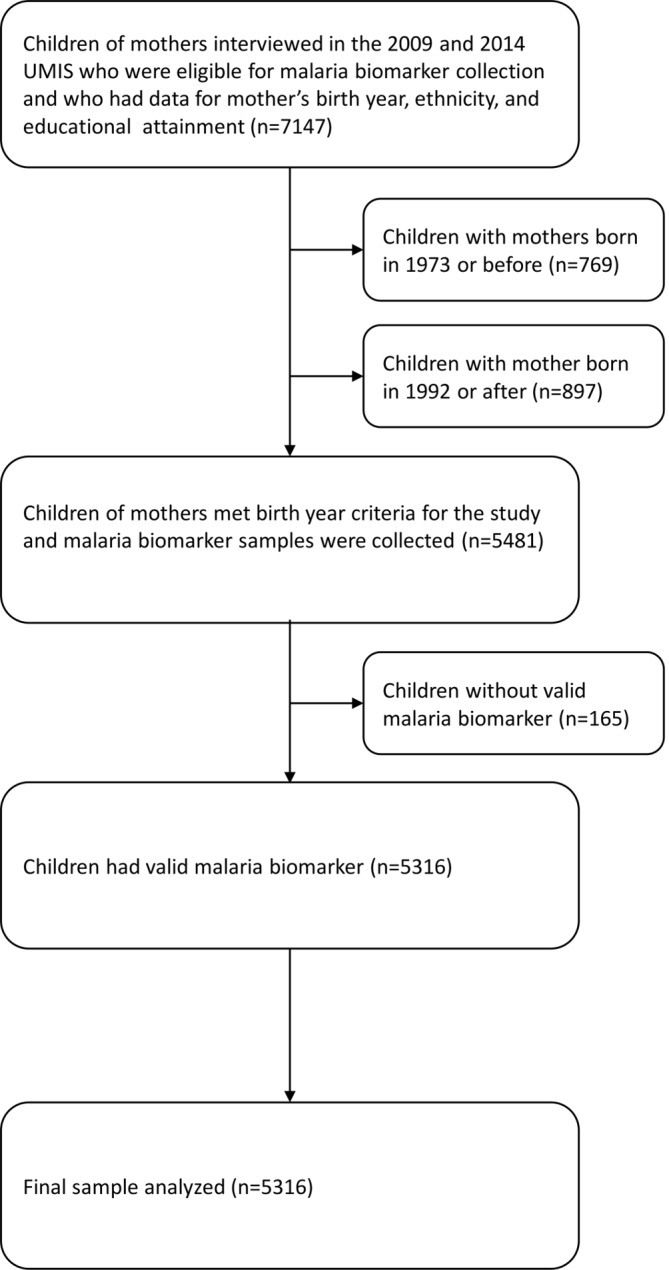
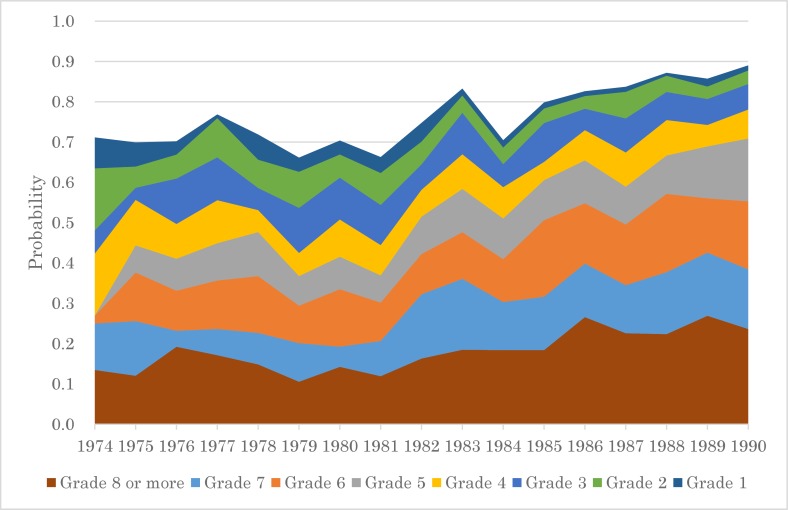
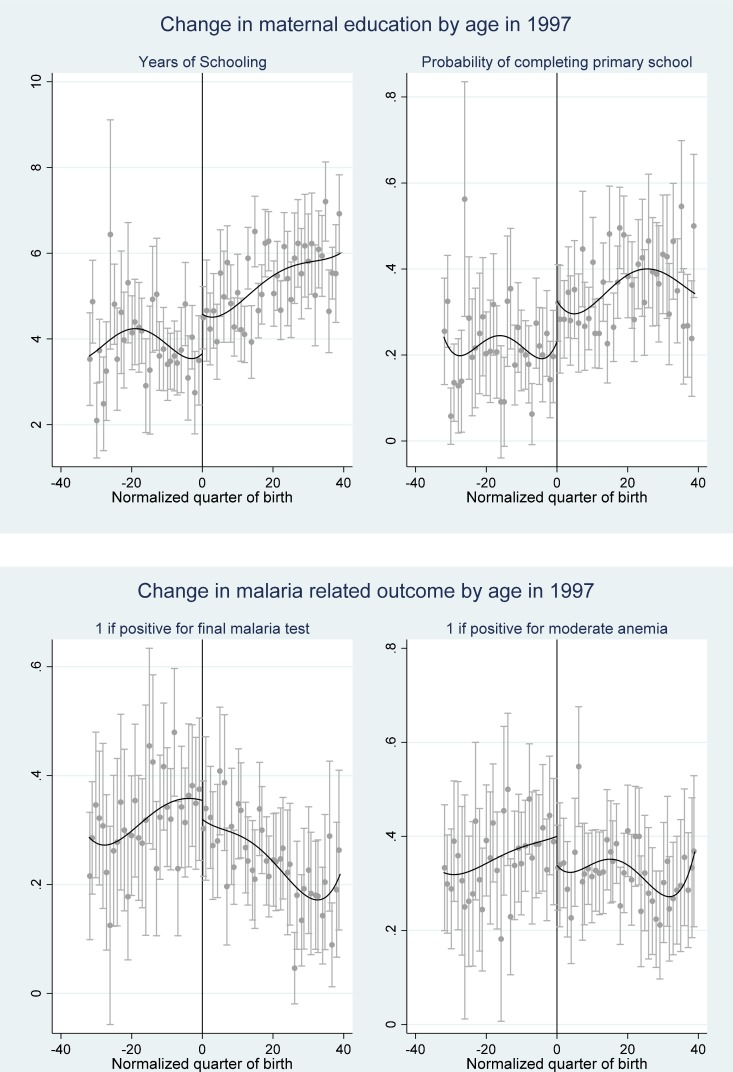
Malaria biomarkers of children aged <5 years were collected from the 2009 and 2014 Uganda Malaria Indicator Surveys (n=5316). In 1997, the government eliminated tuition requirements in primary schools, which increased the educational attainment of the affected cohorts. Using exposure to the reform as an instrumental variable, I used a two-stage least squares approach to estimate the causal effects of maternal year of education on the probability that a child would contract malaria at the time of the survey. I also evaluated the cost-effectiveness of primary schooling as a malaria control intervention.
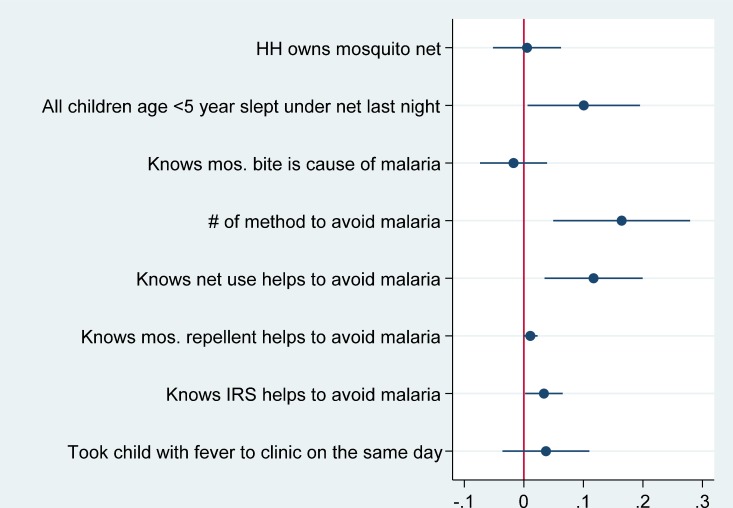
One extra year of maternal education reduced children's risk of malaria infection by 7.5 percentage points (p=0.057) from baseline (34.9%). The length of maternal education was also positively associated with insecticide-treated bednet usage by their children. The results were robust to a variety of sensitivity tests. Primary schooling for women was a cost-effective intervention to reduce children's malaria infection.
Improving access to primary education could be a cost-effective measure to reduce malaria prevalence among children of educated mothers aged <5 years in malaria-endemic countries.
据估计,全球每年有 2.16 亿例疟疾病例。横断面研究报告称,母亲受教育程度与儿童患疟疾风险之间呈负相关;然而,没有随机试验或使用自然实验的准实验研究证实了这两个因素之间的因果关系。我利用乌干达的免费小学教育改革来评估母亲受教育程度对儿童疟疾感染风险的因果影响。
收集了 2009 年和 2014 年乌干达疟疾指标调查中年龄<5 岁儿童的疟疾生物标志物(n=5316)。1997 年,政府取消了小学的学费要求,这提高了受影响群体的教育程度。我利用接触改革作为工具变量,使用两阶段最小二乘法来估计母亲受教育年限对儿童在调查时感染疟疾的概率的因果影响。我还评估了小学教育作为疟疾控制干预措施的成本效益。
母亲受教育年限每增加一年,儿童患疟疾的风险就会降低 7.5 个百分点(p=0.057),基线为 34.9%。母亲受教育年限的长短也与她们的孩子使用驱虫蚊帐呈正相关。结果在各种敏感性测试中都是稳健的。提高妇女接受小学教育的机会是一种具有成本效益的干预措施,可以降低疟疾流行国家中 5 岁以下受过教育的母亲的孩子的疟疾感染率。
改善小学教育的普及程度可能是一种具有成本效益的措施,可以降低疟疾流行国家中 5 岁以下受过教育的母亲的孩子的疟疾患病率。