Rebl Henrike, Renner Jürgen, Kram Wolfgang, Springer Armin, Fritsch Nele, Hansmann Harald, Hakenberg Oliver W, Nebe J Barbara
Dept. of Cell Biology, Rostock University Medical Center, Schillingallee 69, 18057 Rostock, Germany.
Institute for Polymer Technologies e.V. (IPT), Alter Holzhafen 19, 23966 Wismar, Germany.
Polymers (Basel). 2020 Mar 3;12(3):558. doi: 10.3390/polym12030558.
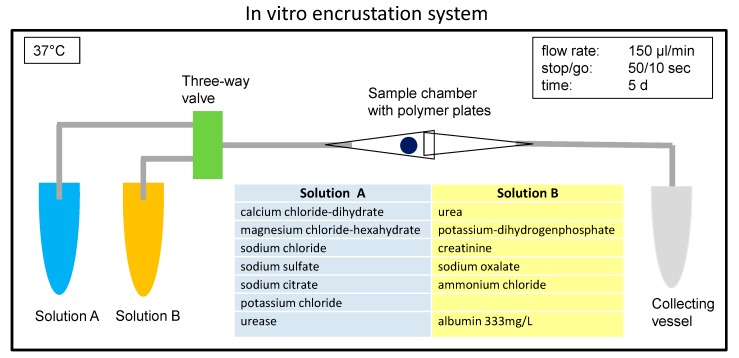
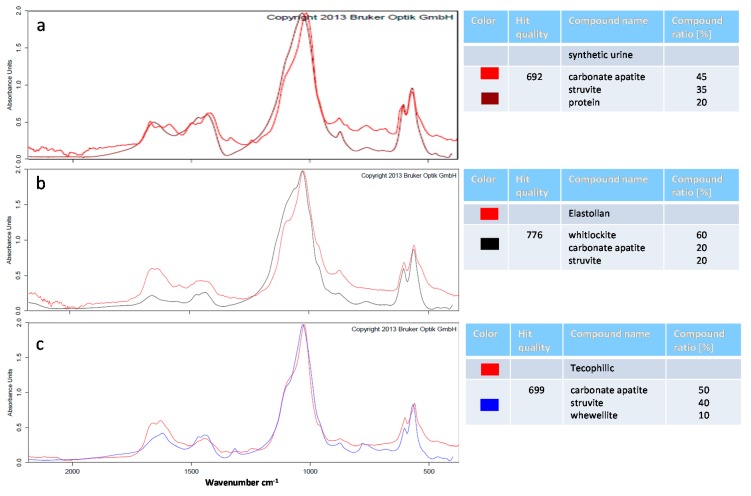
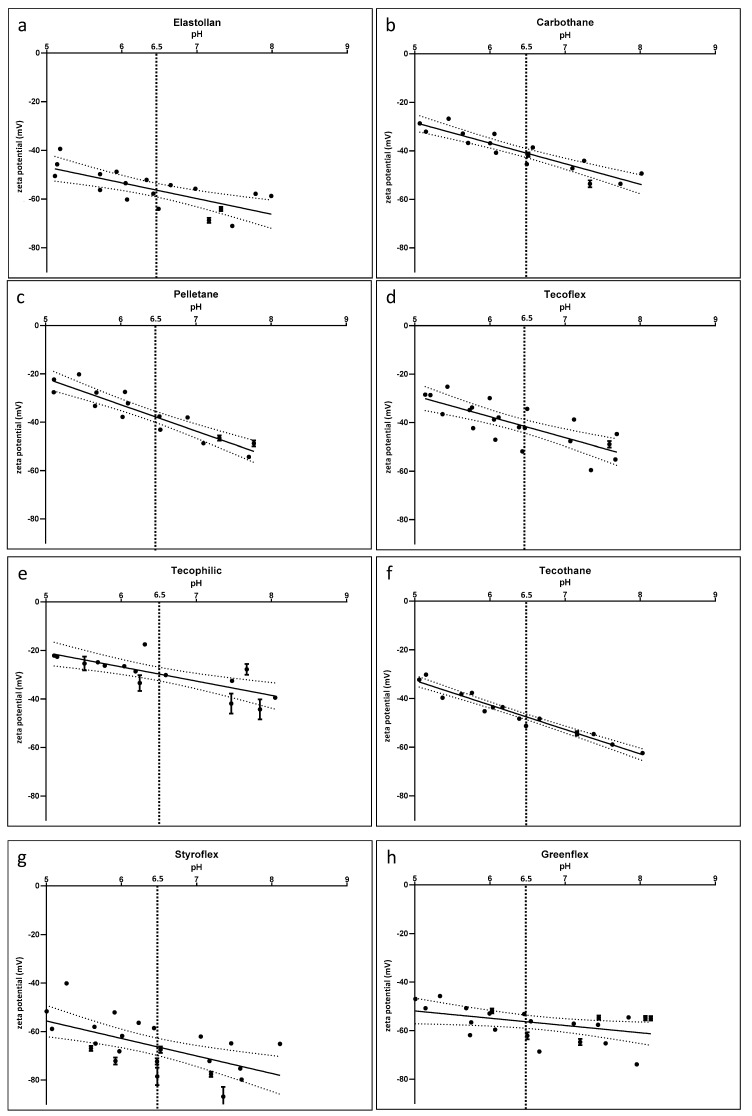
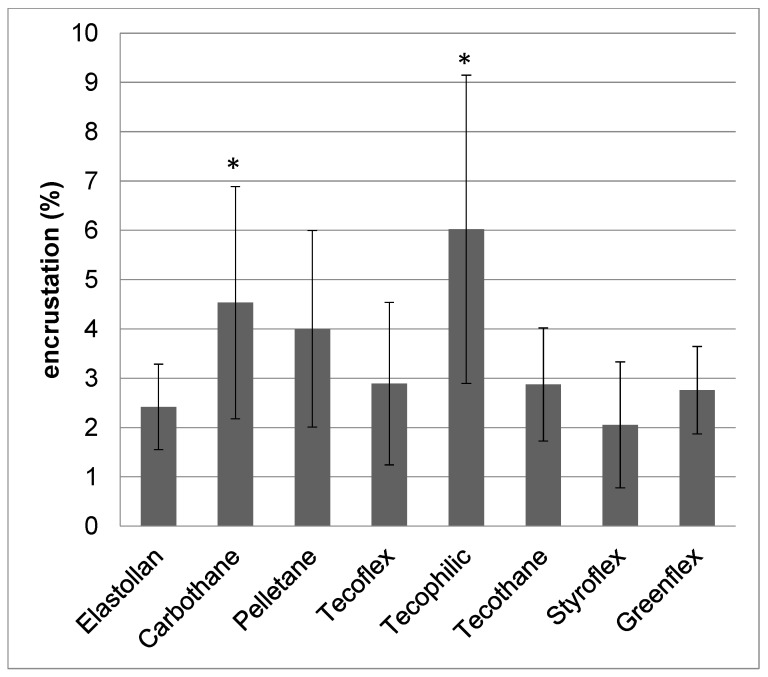
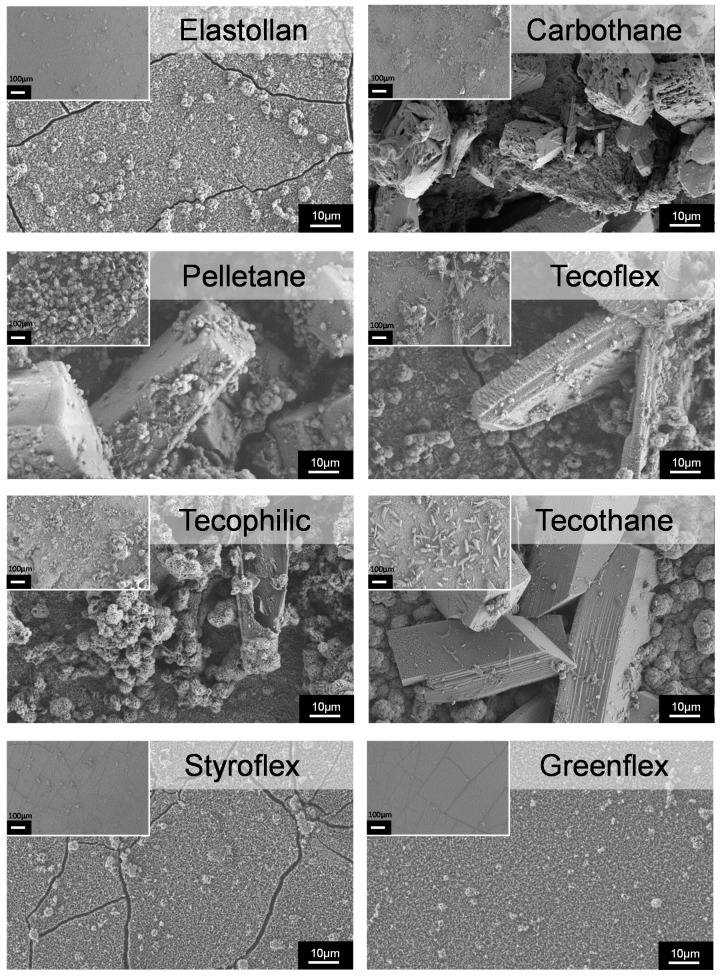
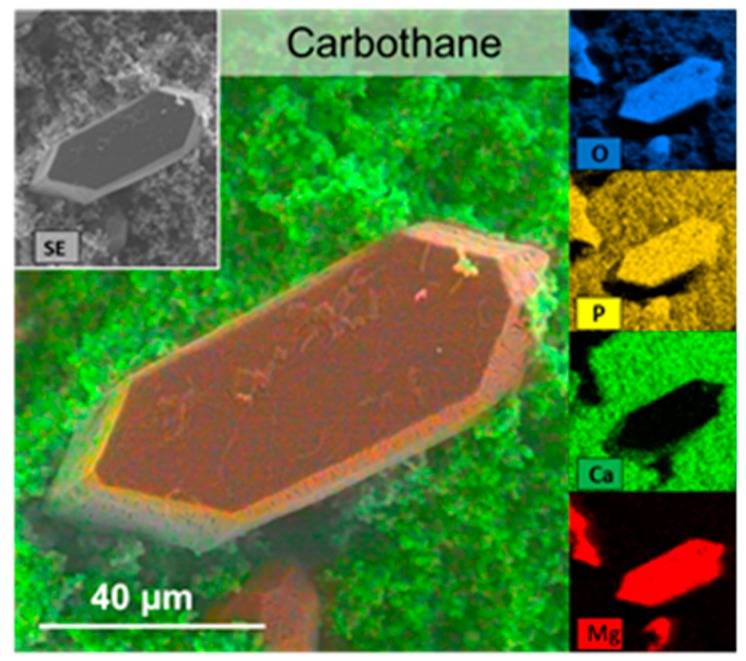
Encrustations of ureteral stents are one of the biggest problems with urological implants. Crystalline biofilms can occur alone or in combination with bacterial biofilms. To identify which surface parameters provide guidance for the development of novel stent materials, we used an in vitro encrustation system. Synthetic urine with increasing pH to simulate an infection situation was pumped over the polymer samples with adjusted flow rates at 37 °C to mimic the native body urine flow. Chemical surface features (contact angle, surface charge), as well as encrustations were characterized. The encrustations on the materials were analyzed quantitatively (dry mass) and qualitatively using scanning electron microscopy (SEM), energy dispersive X-ray spectroscopy (EDX), and Fourier transform infrared spectroscopy (FTIR). The aim of this comparative study was to identify crucial surface parameters that might predict the quantity and type of mineral deposits in vitro and provide guidance for the development and screening of new polymer-based biomaterials for ureteral stent design. For the first time, we could identify that, within the range of our polymers, those materials with a slight hydrophilicity and a strong negative zeta potential (around -60 mV) were most favorable for use as ureteral stent materials, as the deposition of crystalline biofilms was minimized.
输尿管支架结壳是泌尿外科植入物面临的最大问题之一。结晶生物膜可以单独出现,也可以与细菌生物膜同时出现。为了确定哪些表面参数可为新型支架材料的开发提供指导,我们使用了体外结壳系统。将pH值不断升高以模拟感染情况的合成尿液,在37°C下以调整后的流速泵送至聚合物样品上,以模拟人体尿液的自然流动。对化学表面特征(接触角、表面电荷)以及结壳情况进行了表征。使用扫描电子显微镜(SEM)、能量色散X射线光谱仪(EDX)和傅里叶变换红外光谱仪(FTIR)对材料上的结壳进行了定量(干质量)和定性分析。这项比较研究的目的是确定关键的表面参数,这些参数可能预测体外矿物质沉积的数量和类型,并为输尿管支架设计中新型聚合物基生物材料的开发和筛选提供指导。我们首次能够确定,在我们所研究的聚合物范围内,那些具有轻微亲水性和强负zeta电位(约-60 mV)的材料最适合用作输尿管支架材料,因为结晶生物膜的沉积被最小化了。