Yang Wenyan, Luo Zhenghui, Sun Rui, Guo Jie, Wang Tao, Wu Yao, Wang Wei, Guo Jing, Wu Qiang, Shi Mumin, Li Hongneng, Yang Chuluo, Min Jie
The Institute for Advanced Studies, Wuhan University, 430072, Wuhan, China.
Hubei Key Lab on Organic and Polymeric Optoelectronic Materials, Department of Chemistry, Wuhan University, 430072, Wuhan, China.
Nat Commun. 2020 Mar 5;11(1):1218. doi: 10.1038/s41467-020-14926-5.
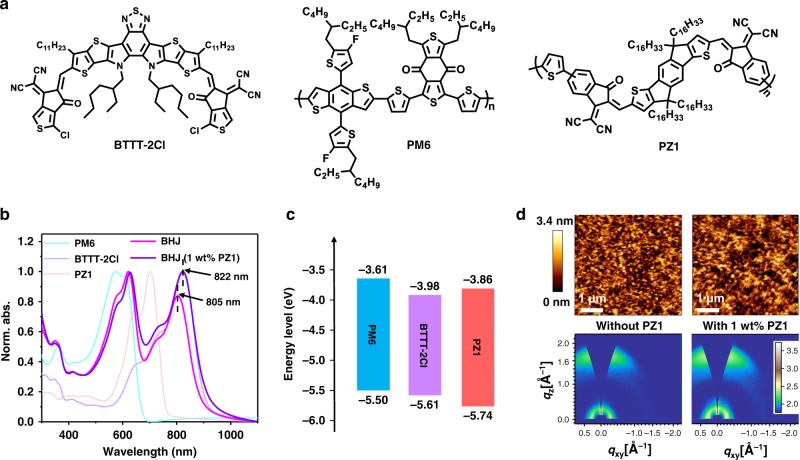
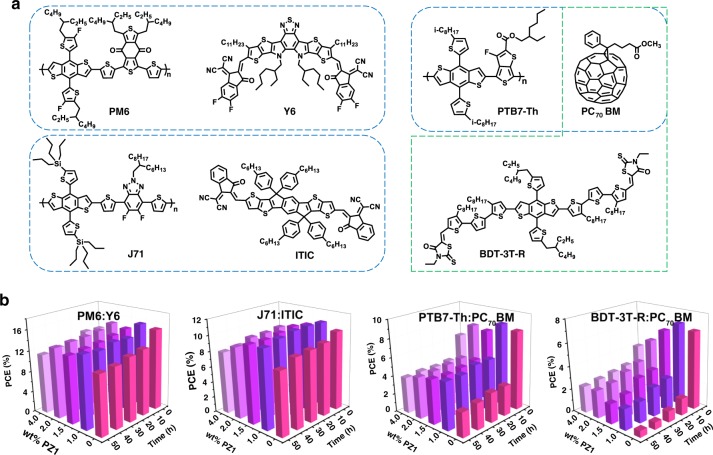
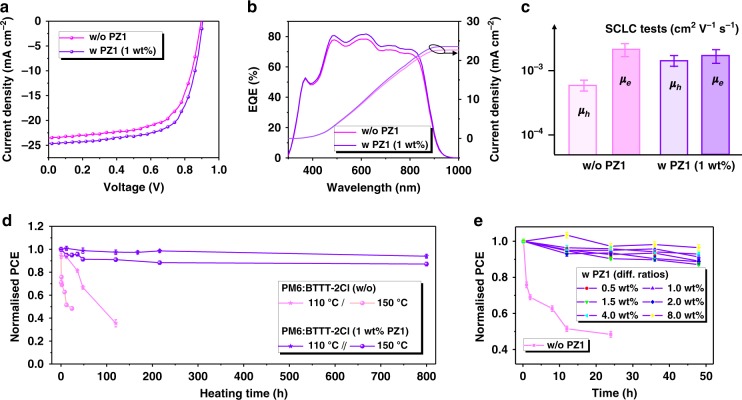
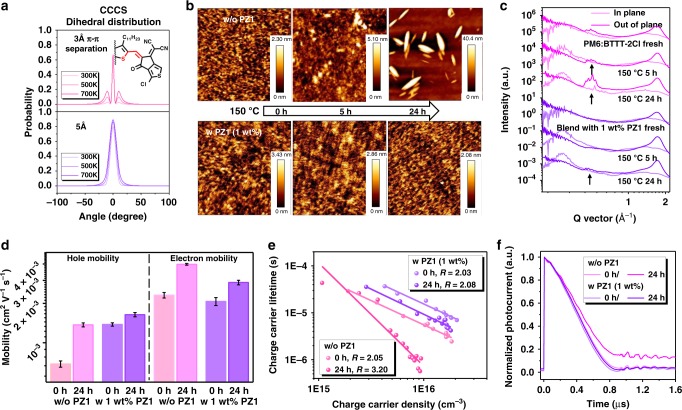
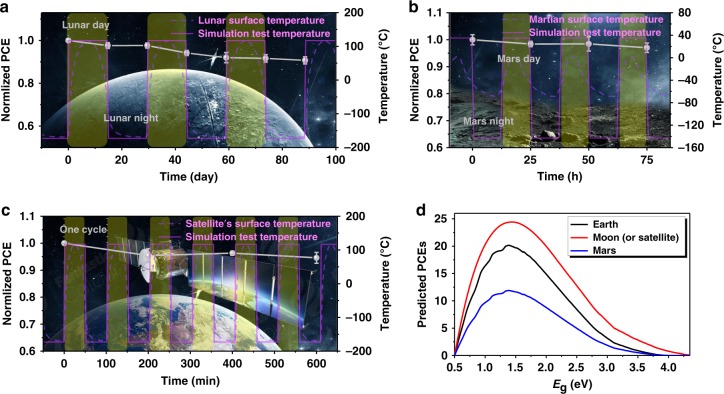
The thermal stability of organic solar cells is critical for practical applications of this emerging technology. Thus, effective approaches and strategies need to be found to alleviate their inherent thermal instability. Here, we show a polymer acceptor-doping general strategy and report a thermally stable bulk heterojunction photovoltaic system, which exhibits an improved power conversion efficiency of 15.10%. Supported by statistical analyses of device degradation data, and morphological characteristics and physical mechanisms study, this polymer-doping blend shows a longer lifetime, nearly keeping its efficiency (t = 800 h) under accelerated aging tests at 150 C. Further analysis of the degradation behaviors indicates a bright future of this system in outer space applications. Notably, the use of polymer acceptor as a dual function additive in the other four photovoltaic systems was also confirmed, demonstrating the good generality of this polymer-doping strategy.
有机太阳能电池的热稳定性对于这项新兴技术的实际应用至关重要。因此,需要找到有效的方法和策略来缓解其固有的热不稳定性。在此,我们展示了一种聚合物受体掺杂通用策略,并报道了一种热稳定的体异质结光伏系统,其功率转换效率提高到了15.10%。在器件降解数据的统计分析、形态特征和物理机制研究的支持下,这种聚合物掺杂共混物具有更长的寿命,在150℃加速老化测试下几乎保持其效率(t = 800 h)。对降解行为的进一步分析表明该系统在外层空间应用中有光明的前景。值得注意的是,在其他四个光伏系统中使用聚合物受体作为双功能添加剂也得到了证实,证明了这种聚合物掺杂策略具有良好的通用性。