Montreal Neurological Institute, McGill University, Montréal, QC, Canada.
Memory and Aging Center, University of California, San Francisco, CA, USA.
Nat Commun. 2020 Feb 19;11(1):960. doi: 10.1038/s41467-020-14518-3.
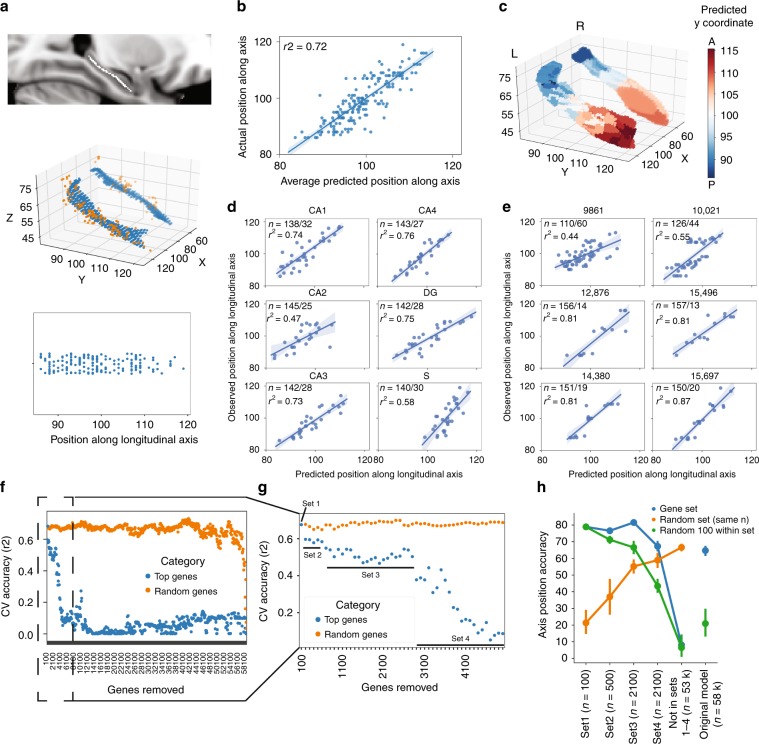
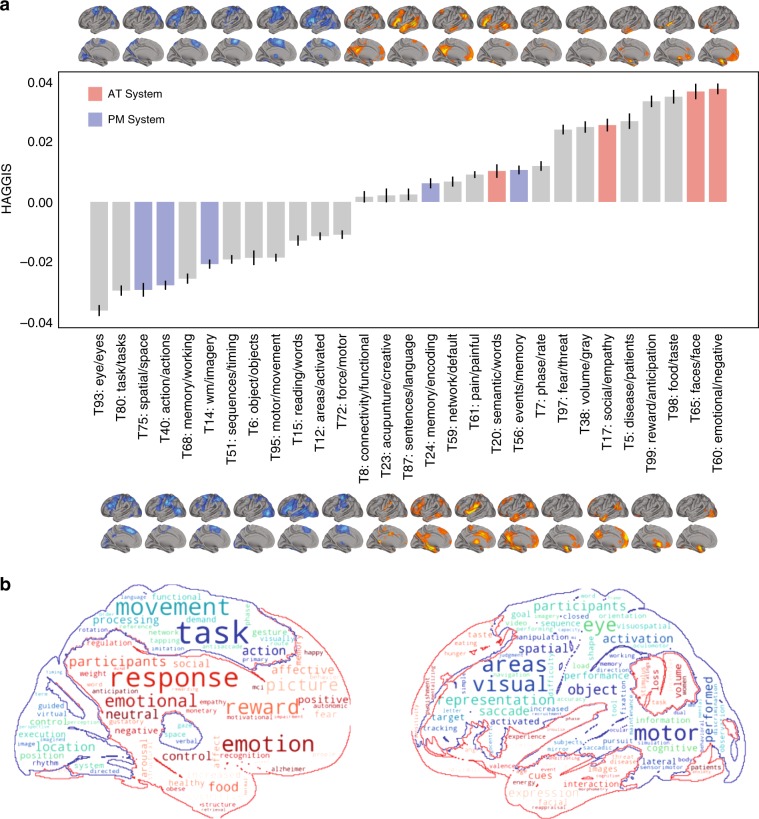
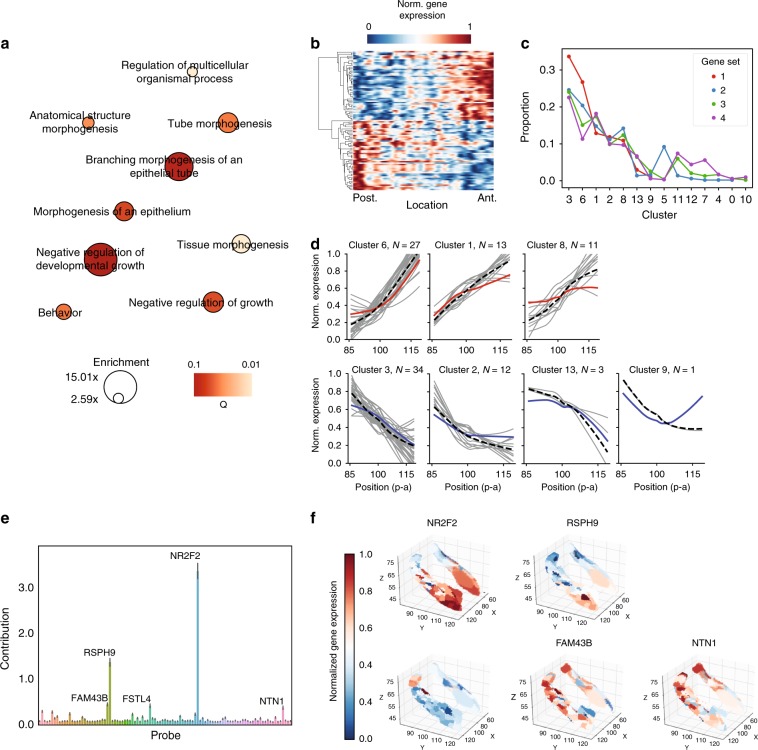
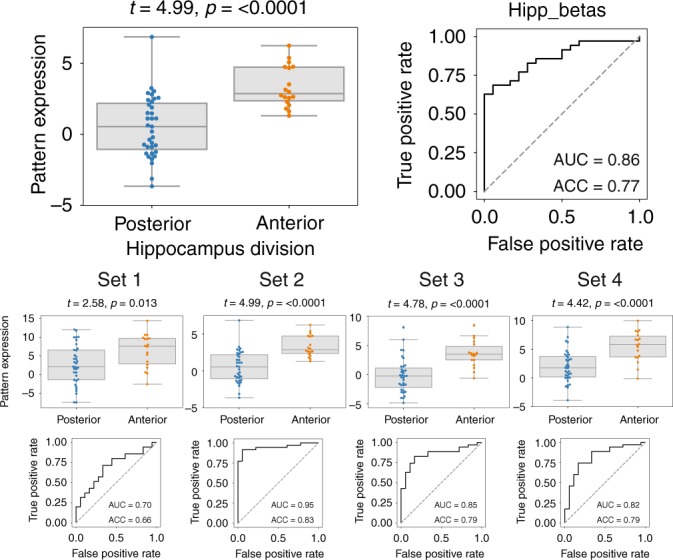
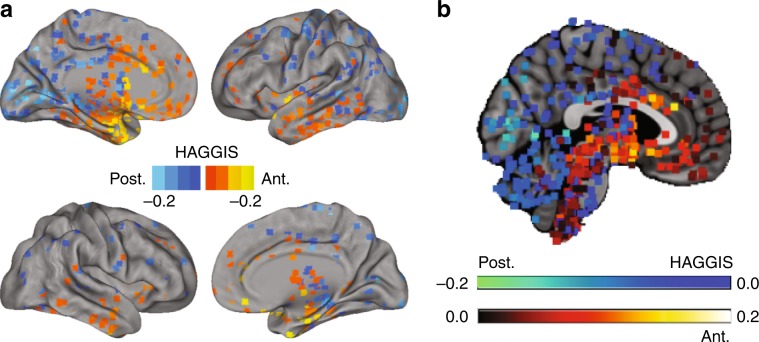
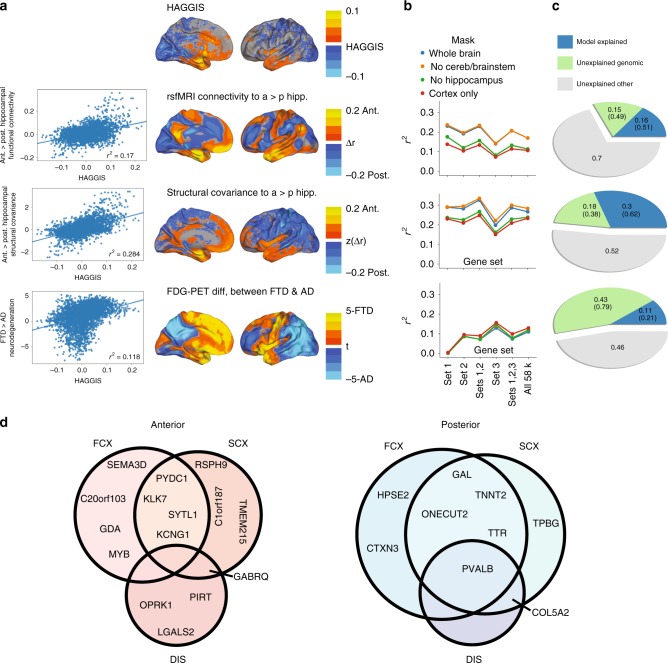
The functional organization of the hippocampus is distributed as a gradient along its longitudinal axis that explains its differential interaction with diverse brain systems. We show that the location of human tissue samples extracted along the longitudinal axis of the adult human hippocampus can be predicted within 2mm using the expression pattern of less than 100 genes. Futhermore, this model generalizes to an external set of tissue samples from prenatal human hippocampi. We examine variation in this specific gene expression pattern across the whole brain, finding a distinct anterioventral-posteriodorsal gradient. We find frontal and anterior temporal regions involved in social and motivational behaviors, and more functionally connected to the anterior hippocampus, to be clearly differentiated from posterior parieto-occipital regions involved in visuospatial cognition and more functionally connected to the posterior hippocampus. These findings place the human hippocampus at the interface of two major brain systems defined by a single molecular gradient.
海马体的功能组织沿着其纵轴呈梯度分布,这解释了它与不同大脑系统的差异相互作用。我们表明,使用不到 100 个基因的表达模式,可以在 2mm 内预测从成人海马体纵轴上提取的人类组织样本的位置。此外,该模型推广到来自产前人类海马体的一组外部组织样本。我们研究了整个大脑中这种特定基因表达模式的变化,发现了一个明显的前腹侧到后背侧梯度。我们发现涉及社交和动机行为的额和前颞区域与更与前海马体功能连接,明显不同于涉及视觉空间认知的后顶枕区域,与后海马体功能连接更密切。这些发现将人类海马体置于由单个分子梯度定义的两个主要大脑系统的界面。