Wang Tongxin, Yao Weilei, Li Juan, Shao Yafei, He Qiongyu, Xia Jun, Huang Feiruo
Department of Animal Nutrition and Feed Science, College of Animal Science and Technology, Huazhong Agricultural University, Wuhan, 430070 China.
J Anim Sci Biotechnol. 2020 Mar 2;11:12. doi: 10.1186/s40104-020-0426-6. eCollection 2020.
The effects of dietary garcinol on diarrhea and intestinal barrier function associated with its modulation of gut microbiota in weaned piglets were investigated.
One hundred forty four weaned piglets (Duroc × Yorkshire × Landrace) from 16 pens (9 piglets per pen) were randomly divided into four treatment groups: controls (CON) or those supplemented with 200 mg/kg (LOW), 400 mg/kg (MID), or 600 mg/kg (HIGH) diet garcinol. After 14-day trial, three piglets per pen were chosen to collect plasma, intestinal tissue and colonic digesta samples.
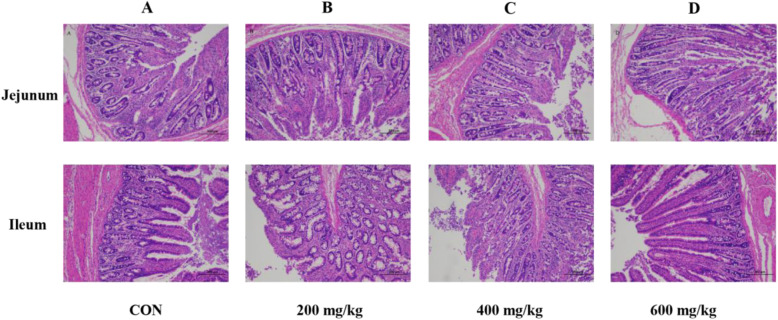
We demonstrated for the first time that garcinol promoted growth performance, as increased average daily feed intake (ADFI) and decreased feed/gain ratio (F/G); and reduced diarrhea incidence ( < 0.05); and strengthened antioxidant capacity, as an increased antioxidative index ( < 0.05). Additionally, garcinol ameliorated intestinal barrier dysfunction, as an increased villus height to crypt depth ratio, increased zonula occludens protein 1 (ZO-1), occludin and claudin-1 expression in the jejunum and ileum ( < 0.05), and decreased intestinal permeability ( < 0.05); and reduced inflammation, as decreased cytokine interleukin (IL)-6, IL-10, IL-1β and tumor necrosis factor-α (TNF-α) levels in the mucosa of the jejunum and ileum, and NF-κB p65 translocation ( < 0.05). Moreover, garcinol inhibited the growth of most harmful bacteria in the gut, especially , and increased the growth of the beneficial bacteria
This work provides a fundamental basis for the future development of garcinol-functional food use for improving diarrhea and intestinal barrier function in weaned piglets and for understanding the biological effects of garcinol and its potential as a functional feed additive.
研究了日粮藤黄脂素对断奶仔猪腹泻和肠道屏障功能的影响及其对肠道微生物群的调节作用。
将来自16个栏(每栏9头仔猪)的144头断奶仔猪(杜洛克×约克夏×长白)随机分为四个处理组:对照组(CON)或补充200 mg/kg(低剂量组,LOW)、400 mg/kg(中剂量组,MID)或600 mg/kg(高剂量组,HIGH)日粮藤黄脂素的组。经过14天的试验,每栏选择3头仔猪采集血浆、肠道组织和结肠内容物样本。
我们首次证明藤黄脂素可促进生长性能,表现为平均日采食量(ADFI)增加和料重比(F/G)降低;降低腹泻发生率(<0.05);增强抗氧化能力,表现为抗氧化指数增加(<0.05)。此外,藤黄脂素改善了肠道屏障功能障碍,表现为空肠和回肠绒毛高度与隐窝深度比值增加、紧密连接蛋白1(ZO-1)、闭合蛋白和Claudin-1表达增加(<0.05)以及肠道通透性降低(<0.05);减轻炎症,表现为空肠和回肠黏膜中细胞因子白细胞介素(IL)-6、IL-10、IL-1β和肿瘤坏死因子-α(TNF-α)水平降低以及核因子κB p65易位减少(<0.05)。此外,藤黄脂素抑制肠道中大多数有害细菌的生长,尤其是[此处原文缺失具体细菌名称],并增加有益细菌的生长。
本研究为藤黄脂素功能性食品未来用于改善断奶仔猪腹泻和肠道屏障功能以及理解藤黄脂素的生物学效应及其作为功能性饲料添加剂的潜力提供了基础依据。