Ramakrishnan Puvanesswaray, Loh Wei Mee, Gopinath Subash C B, Bonam Srinivasa Reddy, Fareez Ismail M, Mac Guad Rhanye, Sim Maw Shin, Wu Yuan Seng
Ageing and Age-Associated Disorders Research Group, Faculty of Medicine, University of Malaya, Kuala Lumpur 50603, Malaysia.
Department of Pharmacology, Faculty of Medicine, University of Malaya, Kuala Lumpur 50603, Malaysia.
Acta Pharm Sin B. 2020 Mar;10(3):399-413. doi: 10.1016/j.apsb.2019.11.008. Epub 2019 Nov 14.
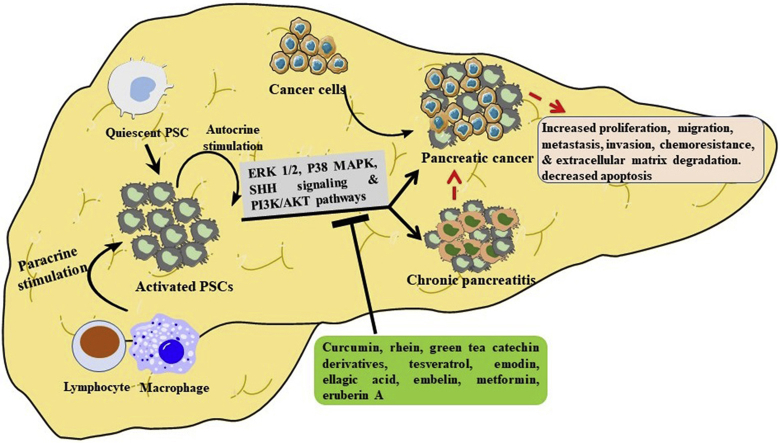
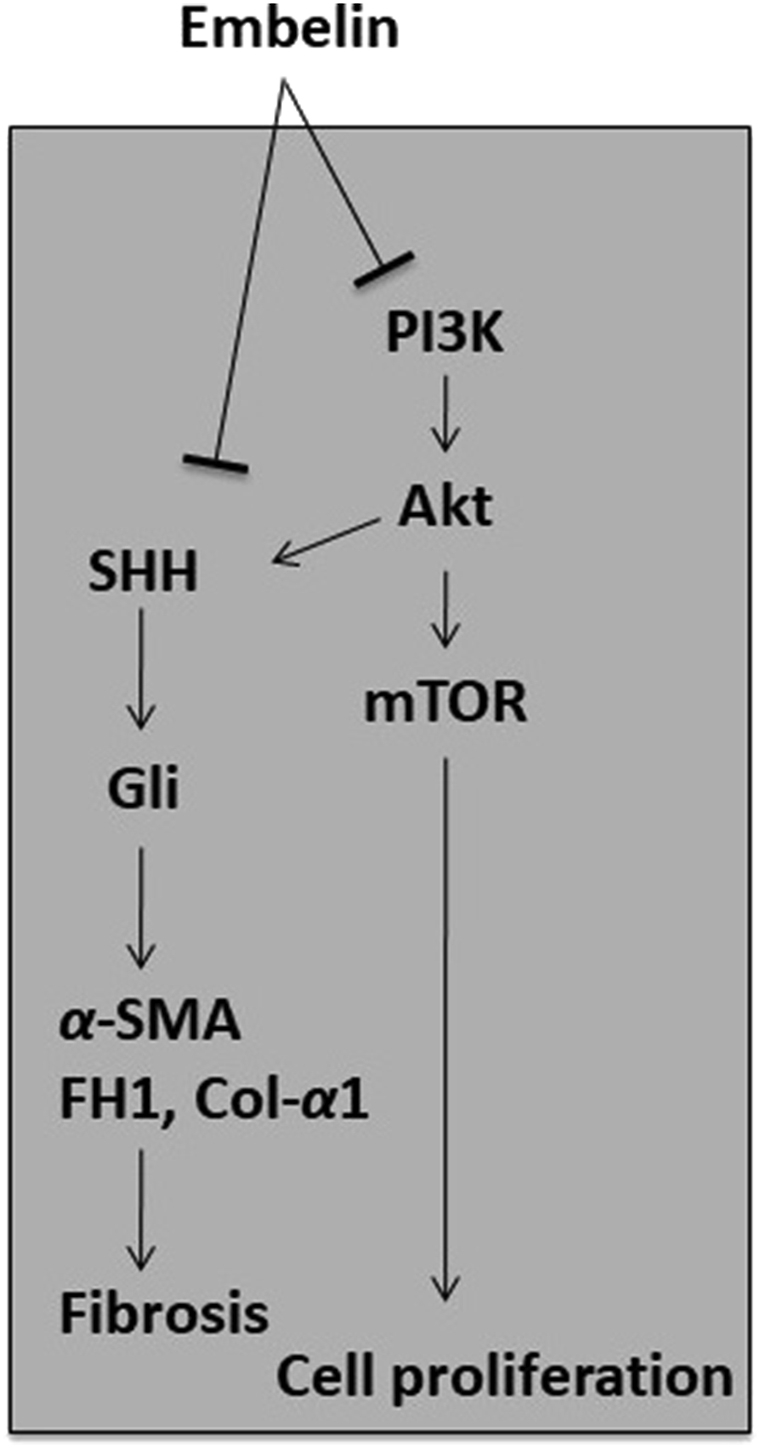
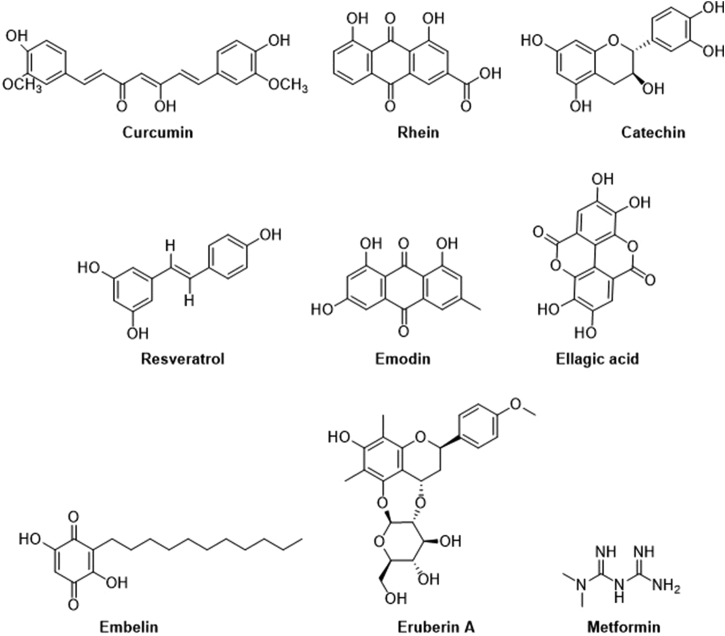
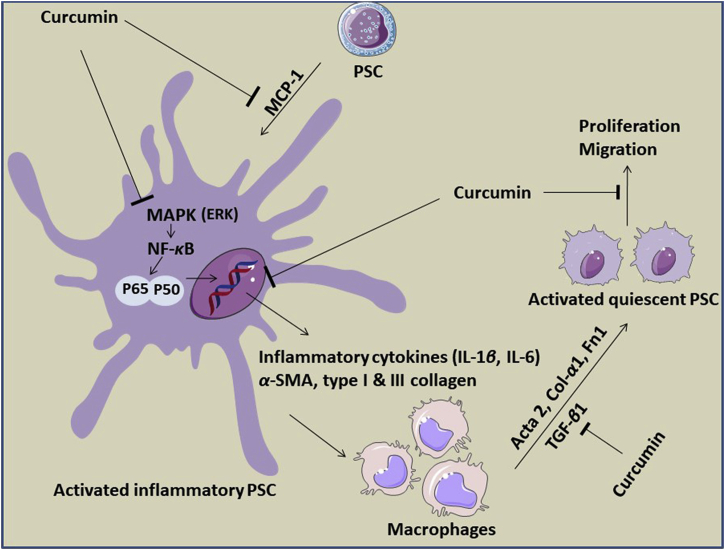
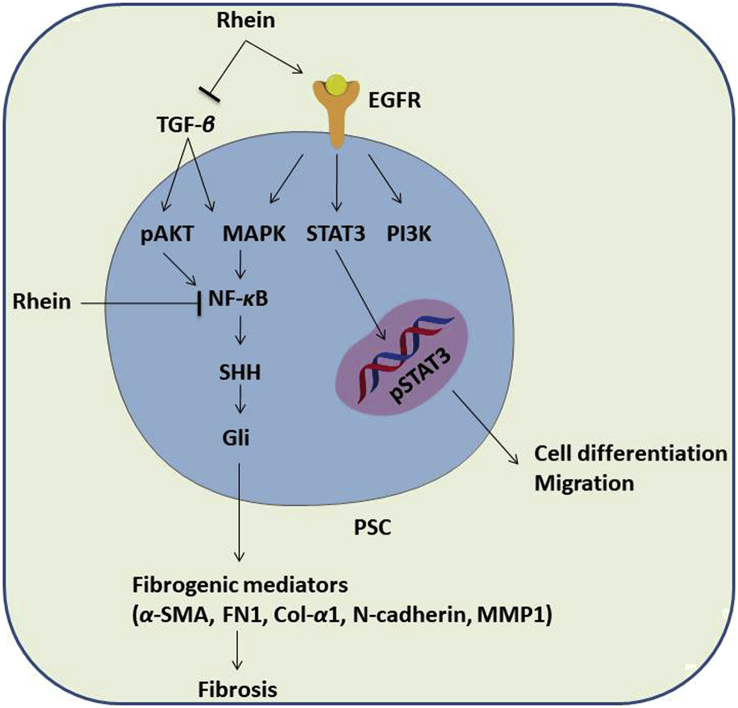
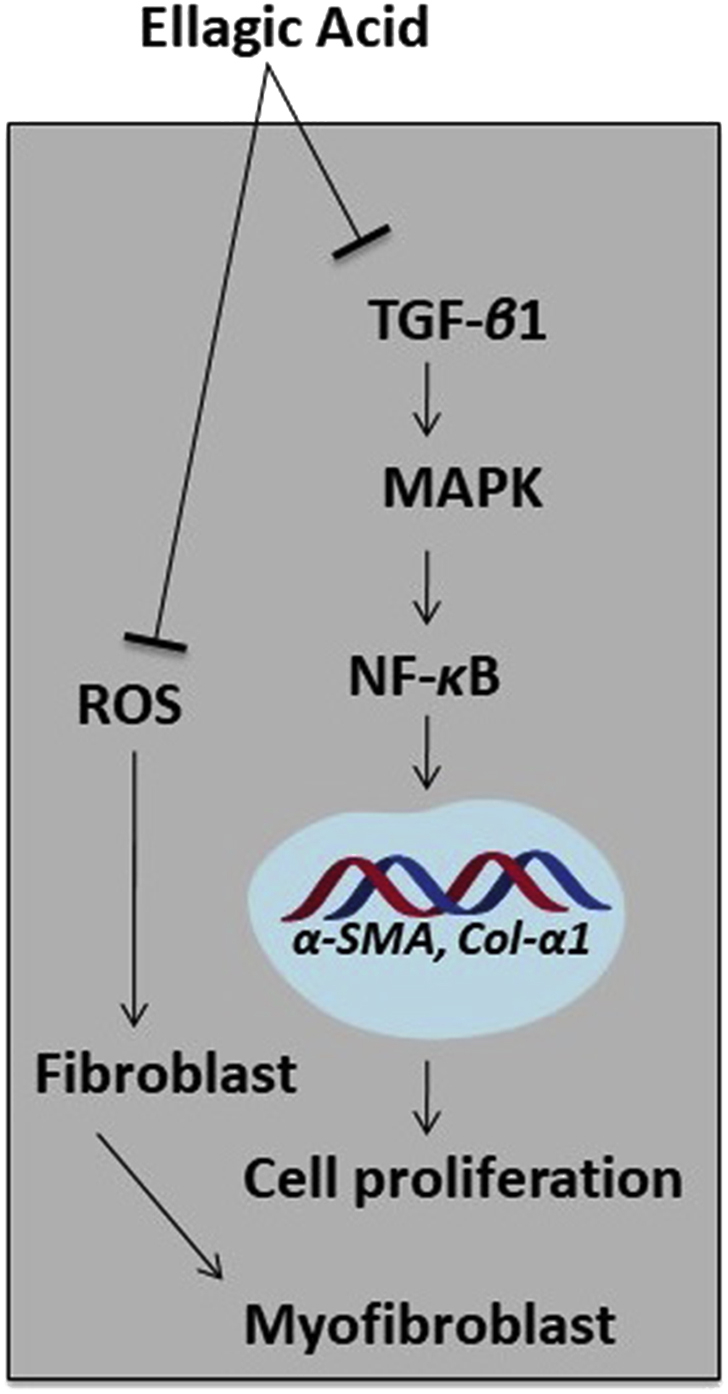
Activated pancreatic stellate cells (PSCs) have been widely accepted as a key precursor of excessive pancreatic fibrosis, which is a crucial hallmark of chronic pancreatitis (CP) and its formidable associated disease, pancreatic cancer (PC). Hence, anti-fibrotic therapy has been identified as a novel therapeutic strategy for treating CP and PC by targeting PSCs. Most of the anti-fibrotic agents have been limited to phase I/II clinical trials involving vitamin analogs, which are abundant in medicinal plants and have proved to be promising for clinical application. The use of phytomedicines, as new anti-fibrotic agents, has been applied to a variety of complementary and alternative approaches. The aim of this review was to present a focused update on the selective new potential anti-fibrotic agents, including curcumin, resveratrol, rhein, emodin, green tea catechin derivatives, metformin, eruberin A, and ellagic acid, in combating PSC in CP and PC models. It aimed to describe the mechanism(s) of the phytochemicals used, either alone or in combination, and the associated molecular targets. Most of them were tested in PC models with similar mechanism of actions, and curcumin was tested intensively. Future research may explore the issues of bioavailability, drug design, and nano-formulation, in order to achieve successful clinical outcomes with promising activity and tolerability.
活化的胰腺星状细胞(PSCs)已被广泛认为是胰腺过度纤维化的关键前体,而胰腺过度纤维化是慢性胰腺炎(CP)及其严重相关疾病胰腺癌(PC)的关键标志。因此,抗纤维化治疗已被确定为一种通过靶向PSCs治疗CP和PC的新型治疗策略。大多数抗纤维化药物仅限于涉及维生素类似物的I/II期临床试验,这些维生素类似物在药用植物中含量丰富,并且已被证明具有临床应用前景。作为新的抗纤维化药物,植物药已被应用于多种补充和替代方法中。本综述的目的是重点介绍选择性新的潜在抗纤维化药物,包括姜黄素、白藜芦醇、大黄酸、大黄素、绿茶儿茶素衍生物、二甲双胍、刺囊酸A和鞣花酸,在CP和PC模型中对抗PSC的情况。它旨在描述单独或联合使用的植物化学物质的作用机制以及相关的分子靶点。它们中的大多数在具有相似作用机制的PC模型中进行了测试,并且对姜黄素进行了深入测试。未来的研究可能会探索生物利用度、药物设计和纳米制剂等问题,以便通过有前景的活性和耐受性实现成功的临床结果。