Graduate Institute of Educational Information and Measurement, National Taichung University of Education, 140 Minsheng Road, West District, Taichung City 40306, Taiwan.
Department of Psychology | Assessment Research Centre, The Education University of Hong Kong, 10 Lo Ping Road, Taipo, N.T., Hong Kong.
Int J Environ Res Public Health. 2020 Mar 4;17(5):1666. doi: 10.3390/ijerph17051666.
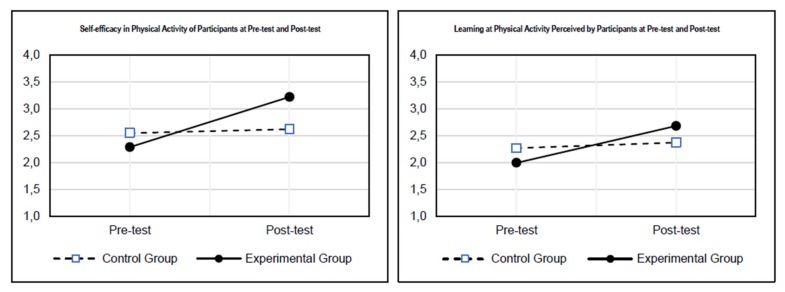
Classroom-based physical activity (PA) interventions have received considerable attention due to improvements seen in academic achievement, classroom behaviors, and attitude toward PA. The purpose of this study was to evaluate the effectiveness of the Brain Breaks® Physical Activity Solutions in changing children's attitudes toward PA. Students ( = 3036) aged 8-11 years from schools in Croatia, Lithuania, Macedonia, Poland, Romania, Serbia, South Africa, and Turkey were randomly assigned to either a control or an experimental group. The experimental group received Brain Breaks® videos during classroom sessions throughout the four months of intervention. Student attitudes toward PA were measured using the Attitudes toward Physical Activity Scale (APAS) before and after the intervention. Repeated measures ANOVA indicated a time interaction effect for all APAS variables except fitness. Time-by-group interaction effects with different effect sizes were found for most APAS variables, with the greatest gain effect noted in the experimental group for self-efficacy, followed by learning from the videos concerning PA benefits, exercise importance, and enjoyment from engaging in PA. This study provides evidence supporting Brain Breaks® in terms of learning experience, attitudes towards PA, and personal motivation. Using exercise videos is recommended as an interactive, technology-based PA solution that can be easily integrated into the school setting.
基于课堂的身体活动 (PA) 干预措施受到了相当多的关注,因为它们在学业成绩、课堂行为和对 PA 的态度方面都有所改善。本研究的目的是评估 Brain Breaks® 身体活动解决方案在改变儿童对 PA 的态度方面的有效性。来自克罗地亚、立陶宛、马其顿、波兰、罗马尼亚、塞尔维亚、南非和土耳其的 8-11 岁学生(=3036 人)被随机分配到对照组或实验组。实验组在干预的四个月期间在课堂上观看 Brain Breaks® 视频。在干预前后使用身体活动态度量表 (APAS) 测量学生对 PA 的态度。重复测量方差分析表明,除了健身之外,所有 APAS 变量都存在时间交互效应。对于大多数 APAS 变量,都发现了时间-组交互效应,且实验组的自我效能、从视频中学习 PA 益处、锻炼的重要性和参与 PA 的乐趣等变量的效果最大。这项研究为 Brain Breaks® 在学习体验、对 PA 的态度和个人动机方面提供了证据。建议使用运动视频作为一种互动的、基于技术的 PA 解决方案,可以很容易地融入学校环境。