Polo-Recuero Beatriz, Ordóñez-Dios Alfonso, Rojo-Tirado Miguel Ángel, Lorenzo Alberto
Department of Sports, Faculty of Physical Activity and Sport Sciences, Universidad Politécnica de Madrid, 28040 Madrid, Spain.
Faculty of Health Sciences, Universidad Rey Juan Carlos, 28933 Madrid, Spain.
Children (Basel). 2023 Sep 30;10(10):1641. doi: 10.3390/children10101641.
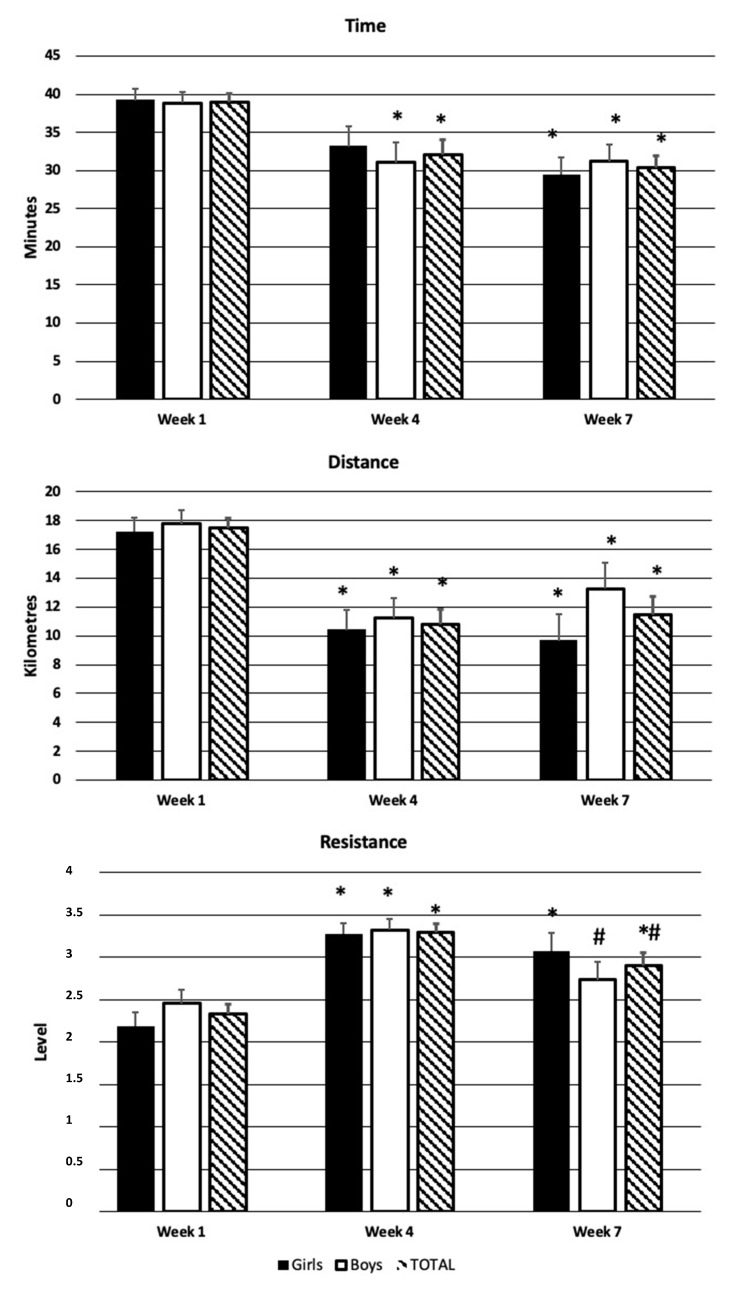
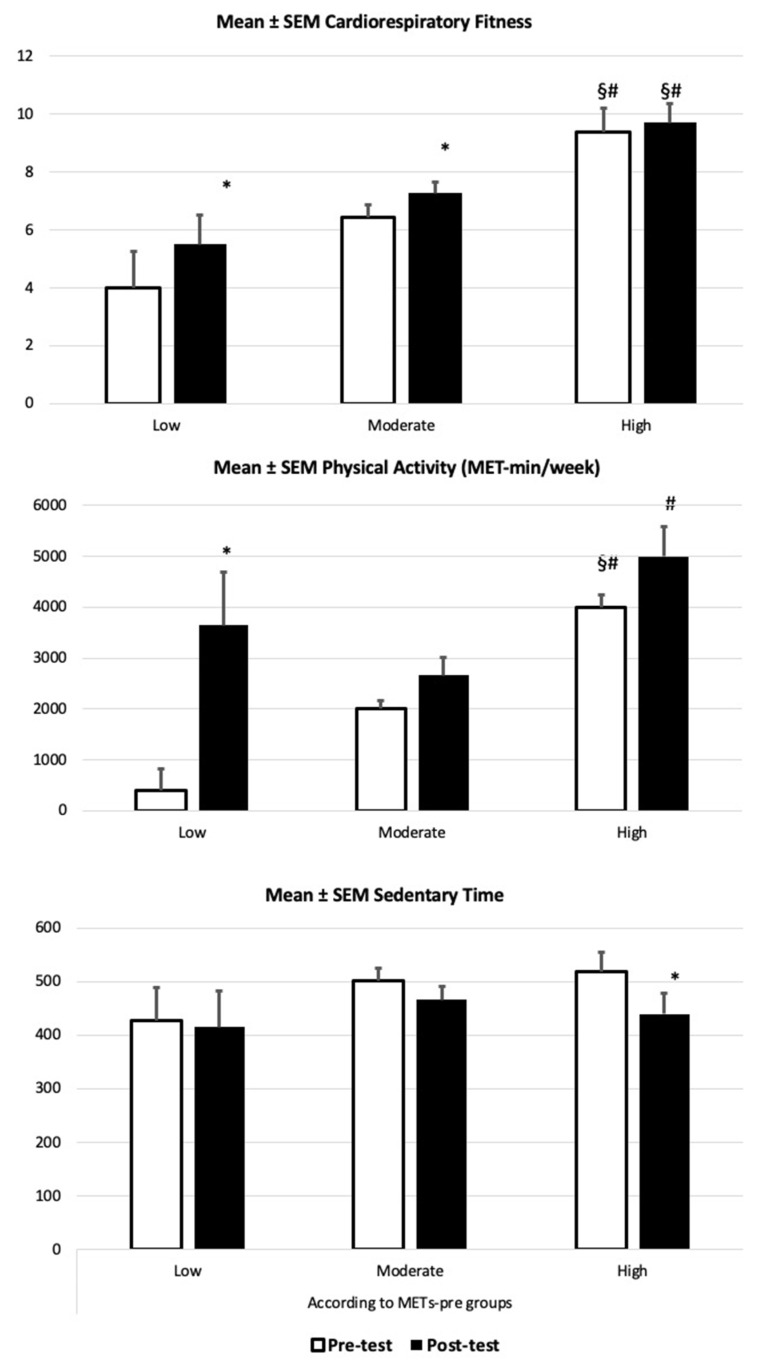
The aim of this study was to assess the effects of a classroom-based physical activity program, using bike desks, on academic and physical performance in adolescents. The Program to Enhance and Develop Active Lessons (PEDAL) was designed for this purpose, expecting an increase in students' physical activity without any decrease in academic performance. This intervention based on pedal or bike desks-stationary bikes that integrate with a desk workspace-was conducted with 55 high- school students who were randomly assigned to two groups: a PEDAL group ( = 28, 14.86 ± 0.65 years old, 46.4% girls) and a control group ( = 27, 15 ± 0.68 years old, 51.9% girls). Throughout the intervention, the PEDAL students pedaled 4 days a week for 10 weeks during their Spanish-language arts lessons. The comparisons between the PEDAL group and the control group, as well as the pre- and post-test results, were statistically analyzed to verify the students' physical activity (i.e., IPAQ-SF, heart rate monitors, polar OH1), cardiorespiratory capacity (20 m shuttle run test), and academic performance (d2 test of attention and language proficiency test). Regarding the physical aspect, only the PEDAL group showed significant growth in their physical activity levels as compared to the pre-test data ( = 0.001), and they achieved higher results compared with the control group ( = 0.022) and less sedentary time than control students ( = 0.012). Concerning cardiorespiratory fitness, there were no post-test differences between the two groups ( = 0.697), probably because the physical activity performed with the bike desks was light-moderate. As far as academic performance is concerned, no significant post-test effects were discovered in either group on the levels of language competence ( = 0.48), attention (TOT, = 0.432), and concentration (CON, = 0.216). In conclusion, adolescents who move while learning, using bike desks, increase their light and moderate physical activity without any detriment to academic performance.
本研究的目的是评估一项基于教室的体育活动计划(使用自行车书桌)对青少年学业成绩和身体表现的影响。为此设计了增强和发展积极课堂计划(PEDAL),期望在不降低学业成绩的情况下增加学生的体育活动。这项基于踏板或自行车书桌(与书桌工作区集成的固定自行车)的干预措施,对55名高中生进行,他们被随机分为两组:PEDAL组(n = 28,14.86±0.65岁,46.4%为女生)和对照组(n = 27,15±0.68岁,51.9%为女生)。在整个干预过程中,PEDAL组的学生在西班牙语艺术课期间每周踩踏板4天,共持续10周。对PEDAL组和对照组之间以及前后测试结果进行了统计分析,以验证学生的体育活动(即国际体力活动问卷简表、心率监测器、polar OH1)、心肺能力(20米穿梭跑测试)和学业成绩(注意力d2测试和语言能力测试)。在身体方面,与测试前数据相比,只有PEDAL组的体育活动水平有显著提高(p = 0.001),与对照组相比他们取得了更高的成绩(p = 0.022),并且比对照组学生久坐时间更少(p = 0.012)。关于心肺适能,两组在测试后没有差异(p = 0.697),可能是因为使用自行车书桌进行的体育活动为轻度至中度。就学业成绩而言,两组在语言能力水平(p = 0.48)、注意力(总分,p = 0.432)和注意力集中程度(CON,p = 0.216)方面在测试后均未发现显著影响。总之,使用自行车书桌在学习时进行活动的青少年,增加了他们的轻度和中度体育活动,且对学业成绩没有任何损害。