Yu Ilhan, Chen Roland K
School of Mechanical and Materials Engineering, Washington State University, Pullman, WA 99164, USA.
J Pers Med. 2020 Mar 4;10(1):16. doi: 10.3390/jpm10010016.
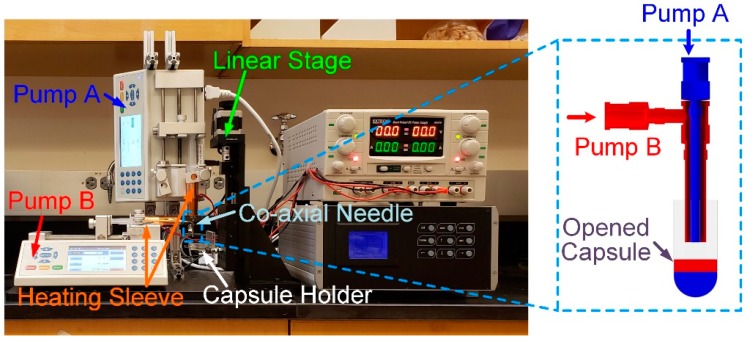
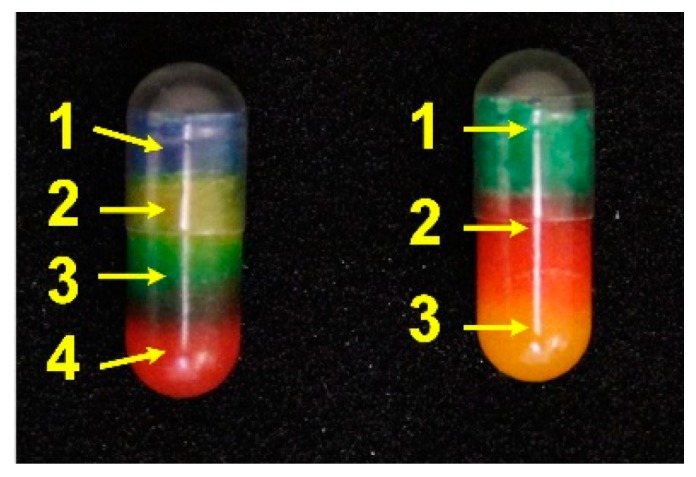
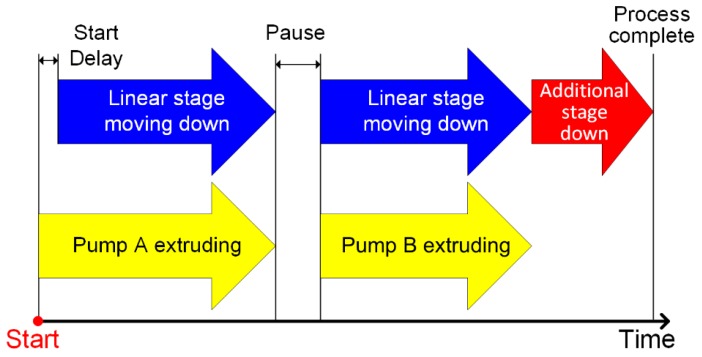
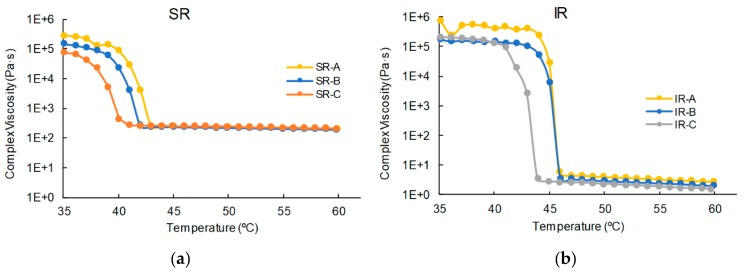
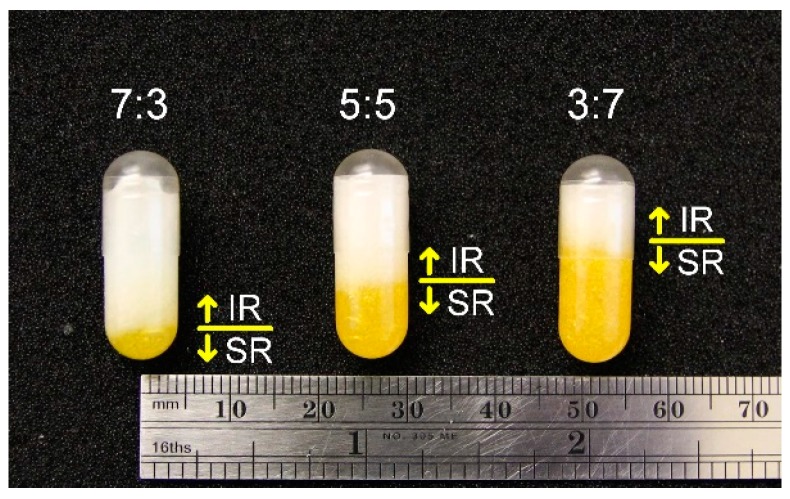
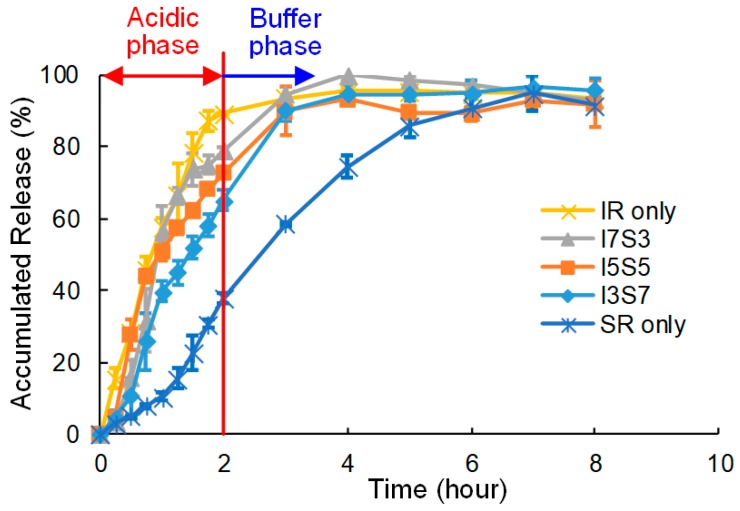
Developing a high-efficiency manufacturing system for personalized medicine plays an important role in increasing the feasibility of personalized medication. The purpose of this study is to investigate the feasibility of a new extrusion-based fabrication process for personalized drugs with a faster production rate. This process uses two syringe pumps with a coaxial needle as an extruder, which extrudes two materials with varying ratios into a capsule. The mixture of hydrogel, polyethylene glycol (PEG), hydroxypropyl methylcellulose, poly acrylic acid and the simulated active pharmaceutical ingredient, Aspirin, was used. To validate the method, samples with different ratios of immediate release (IR) and sustained release (SR) mixtures were fabricated. The results of a dissolution test show that it is feasible to control the release profile by changing the IR and SR ratio using this fabrication setup. The fabrication time for each capsule is about 20 seconds, which is significantly faster than the current 3D printing methods. In conclusion, the proposed fabrication method shows a clear potential to step toward the feasibility of personalized medication.
开发用于个性化药物的高效制造系统对提高个性化用药的可行性具有重要作用。本研究的目的是探讨一种基于挤出的新型制造工艺用于生产速率更快的个性化药物的可行性。该工艺使用两个带有同轴针头的注射泵作为挤出机,将两种不同比例的材料挤入胶囊中。使用了水凝胶、聚乙二醇(PEG)、羟丙基甲基纤维素、聚丙烯酸和模拟活性药物成分阿司匹林的混合物。为验证该方法,制备了不同速释(IR)和缓释(SR)混合物比例的样品。溶出度测试结果表明,使用这种制造装置通过改变IR和SR比例来控制释放曲线是可行的。每个胶囊的制造时间约为20秒,这明显快于当前的3D打印方法。总之,所提出的制造方法显示出朝着个性化用药可行性迈出重要一步的明显潜力。