Institute of Biomedical Problems, Russian Academy of Sciences, Khoroshevskoye Shosse, 76a, 123007 Moscow, Russia.
Int J Mol Sci. 2020 Mar 5;21(5):1802. doi: 10.3390/ijms21051802.
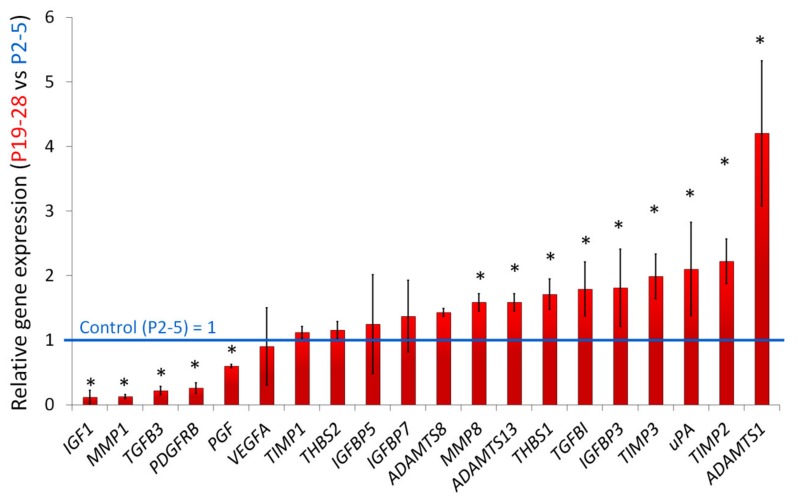
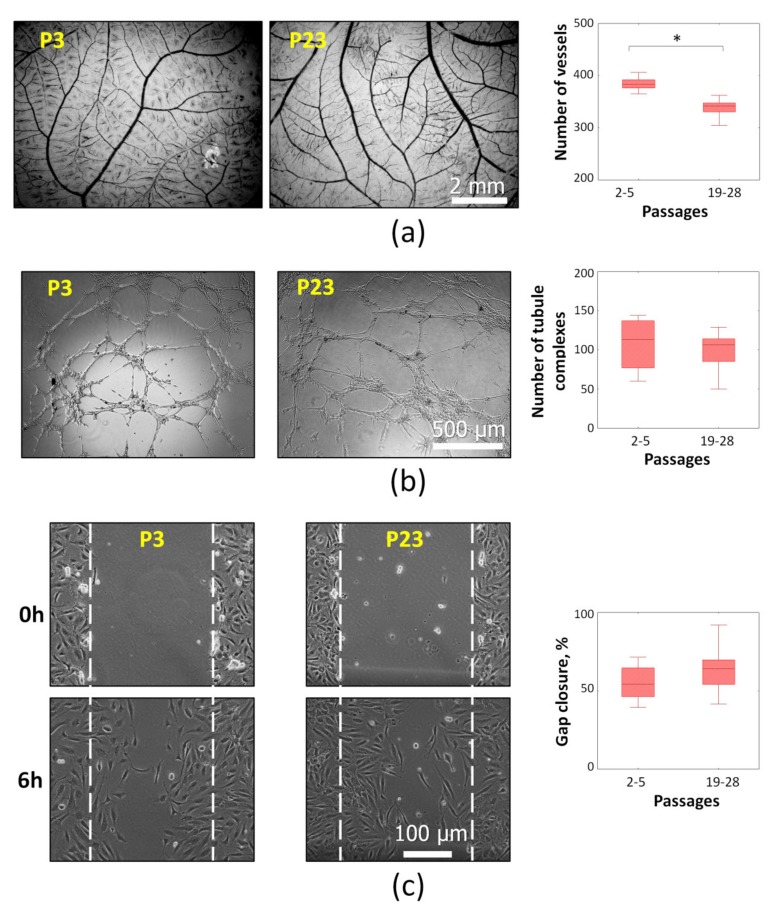
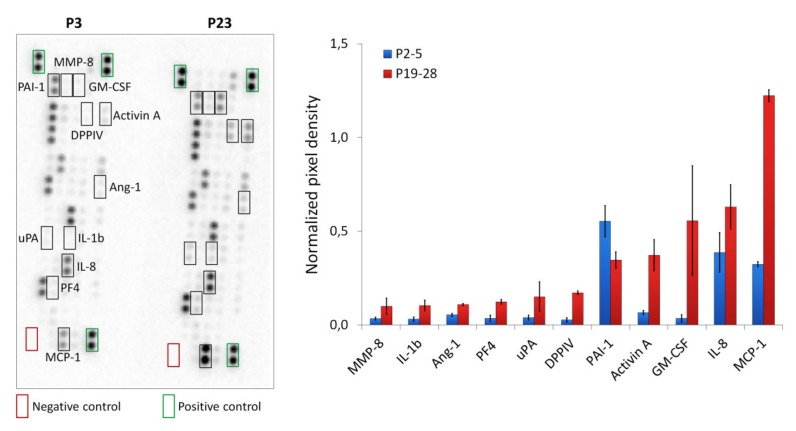
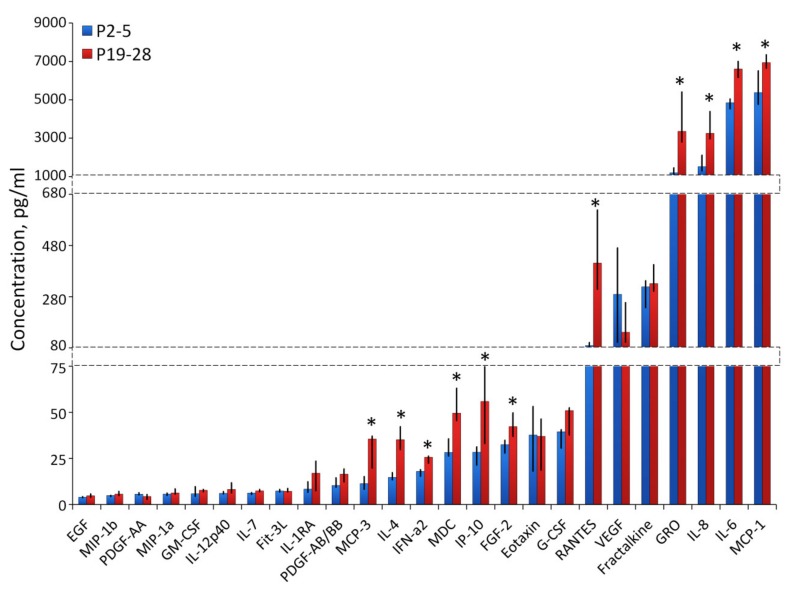
Nowadays, paracrine regulation is considered as a major tool of mesenchymal stem cell (MSC) involvement in tissue repair and renewal in adults. Aging results in alteration of tissue homeostasis including neovascularization. In this study, we examined the influence of replicative senescence on the angiogenic potential of adipose-derived MSCs (ASCs). Angiogenic activity of conditioned medium (CM) from senescent and "young" ASCs was evaluated in chorioallantoic membrane (CAM) assay in ovo using Japanese quail embryos. Also, the formation of capillary-like tubes by human umbilical vein endothelial cells (HUVECs) in 3D basement membrane matrix ''Matrigel'' and HUVEC migration capacity were analyzed. Multiplex, dot-blot and gene expression analysis were performed to characterize transcription and production of about 100 angiogenesis-associated proteins. The results point to decreased angiogenic potential of senescent ASC secretome in ovo. A number of angiogenesis-associated proteins demonstrated elevation in CM after long-term cultivation. Meanwhile, VEGF (key positive regulator of angiogenesis) did not change transcription level and concentration in CM. Increasing both pro- (FGF-2, uPA, IL-6, IL-8 etc.) and antiangiogenic (IL-4, IP-10, PF4, Activin A, DPPIV etc.) factors was observed. Some proangiogenic genes were downregulated (). Senescence-associated secretory phenotype (SASP) modifications after long-term cultivation lead to attenuation of angiogenic potential of ASC.
如今,旁分泌调节被认为是间充质干细胞(MSC)参与成体组织修复和更新的主要工具。衰老会导致组织内稳态的改变,包括新生血管化。在这项研究中,我们研究了复制性衰老对脂肪来源的间充质干细胞(ASCs)的血管生成潜能的影响。通过鸡胚绒毛尿囊膜(CAM)试验评估来自衰老和“年轻”ASCs 的条件培养基(CM)的血管生成活性。还分析了人脐静脉内皮细胞(HUVEC)在 3D 基底膜基质“Matrigel”中形成毛细血管样管的能力和 HUVEC 迁移能力。进行多重、斑点印迹和基因表达分析,以表征约 100 种与血管生成相关的蛋白质的转录和产生。结果表明,衰老 ASC 分泌组的血管生成潜力在鸡胚中降低。大量与血管生成相关的蛋白质在长期培养后 CM 中表达升高。同时,VEGF(血管生成的关键正调节剂)在 CM 中的转录水平和浓度没有变化。观察到促血管生成(FGF-2、uPA、IL-6、IL-8 等)和抗血管生成(IL-4、IP-10、PF4、激活素 A、DPPIV 等)因子的增加。一些促血管生成基因下调()。长期培养后衰老相关分泌表型(SASP)的改变导致 ASC 的血管生成潜能减弱。