Department of Periodontology, School and Hospital of Stomatology, Shandong University, No.44-1 Wenhua Road West, Jinan, 250012, Shandong, China.
Shandong Provincial Key Laboratory of Oral Tissue Regeneration, Jinan, Shandong, China.
Stem Cell Res Ther. 2020 Feb 18;11(1):68. doi: 10.1186/s13287-020-1584-3.
Angiogenesis plays an important role in tissue repair and regeneration, and conditioned medium (CM) derived from mesenchymal stem cells (MSC-CM) possesses pro-angiogenesis. Nevertheless, the profile and concentration of growth factors in MSC-CM remain to be optimized. Fibroblast growth factor-2 (FGF-2) has been proven to be an effective angiogenic factor. Thus, the aim of this study was to verify whether FGF-2 gene overexpression optimized CM from human gingival mesenchymal stem cells (hGMSCs) and whether such optimized CM possessed more favorable pro-angiogenesis effect.
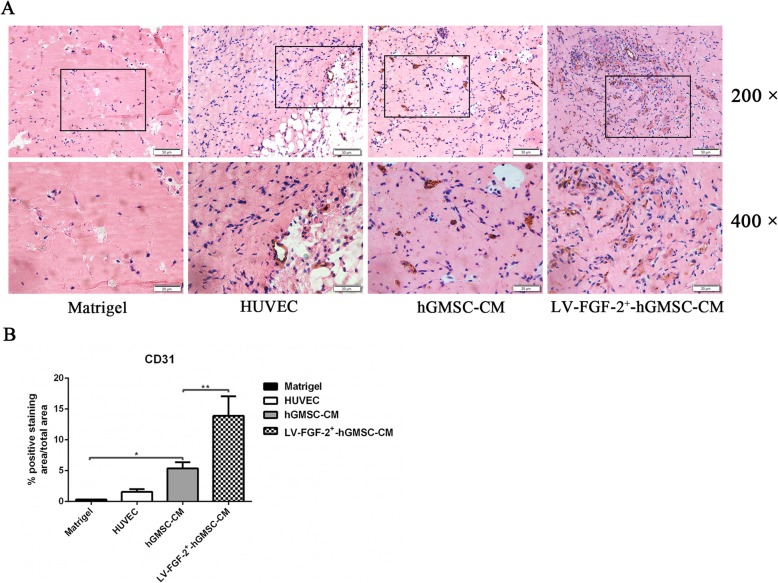
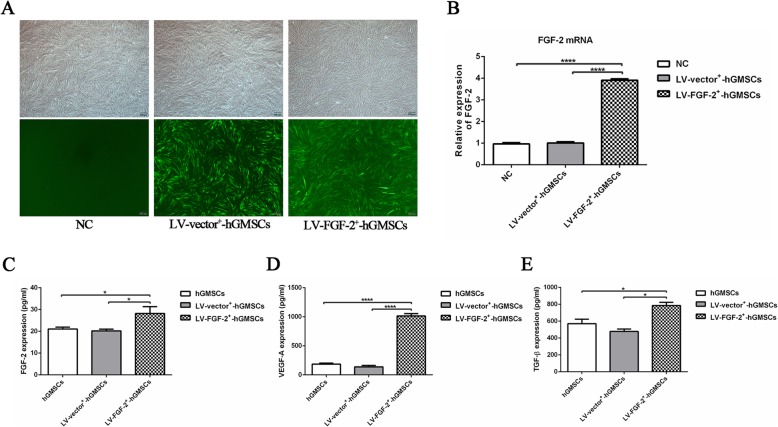
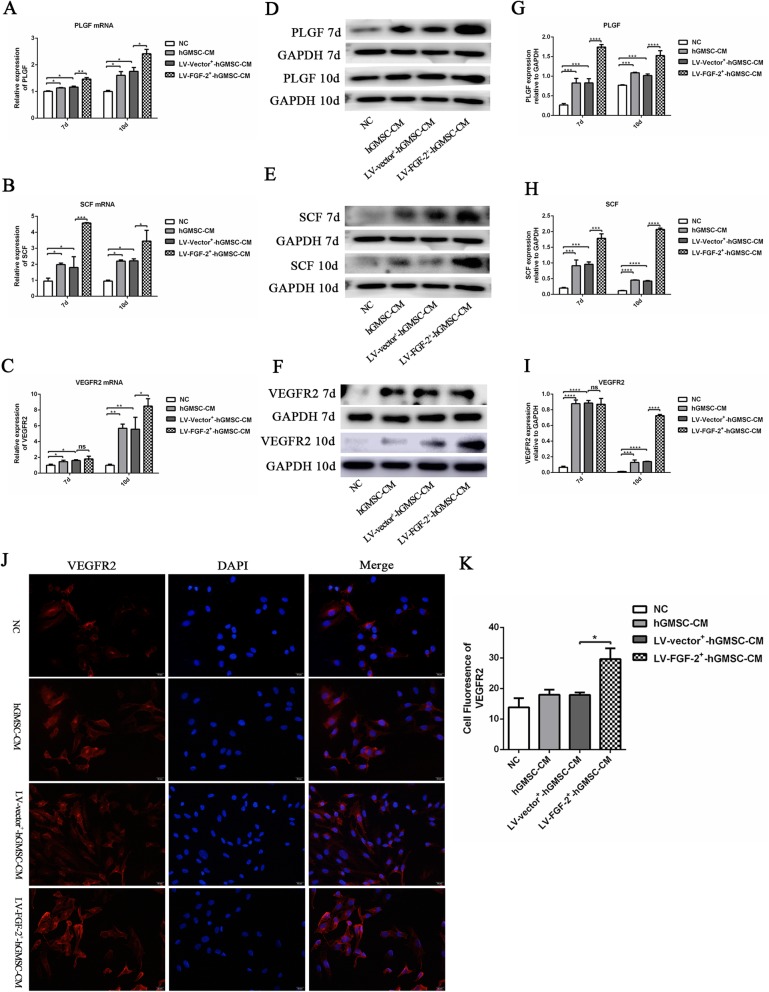
First, FGF-2 gene-modified hGMSCs were constructed using lentiviral transfection technology (LV-FGF-2-hGMSCs) and the concentration of angiogenesis-related factors in LV-FGF-2-hGMSC-CM was determined by ELISA. Then, human umbilical vein endothelial cells (HUVECs) were co-cultured for 3 days with LV-FGF-2-hGMSC-CM, and the expression level of placenta growth factor (PLGF), stem cell factor (SCF), vascular endothelial growth factor receptor 2 (VEGFR2) in HUVECs were determined by qRT-PCR, western blot, and cellular immunofluorescence techniques. The migration assay using transwell and in vitro tube formation experiments on matrigel matrix was conducted to determine the chemotaxis and angiogenesis enhanced by LV-FGF-2-hGMSC-CM. Finally, NOD-SCID mice were injected with matrigel mixed LV-FGF-2-hGMSC-CM, and the plug sections were analyzed by immunohistochemistry staining with anti-human CD31 antibody.
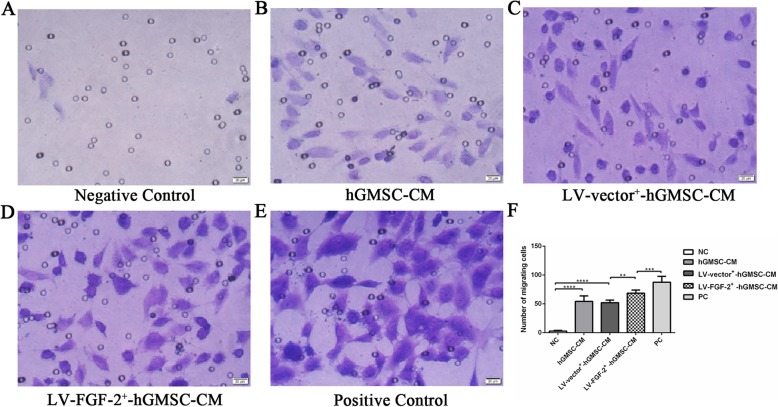
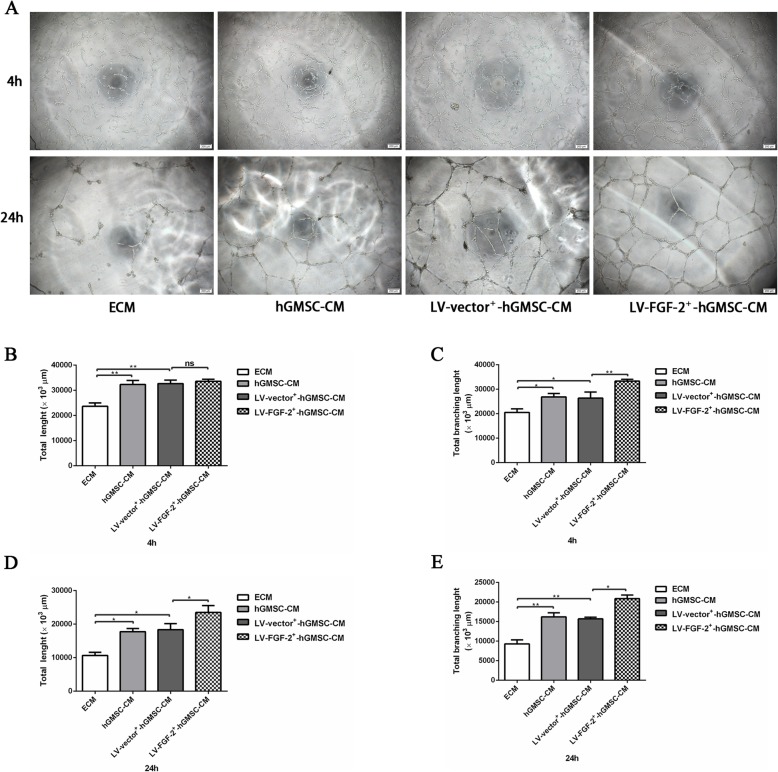
LV-FGF-2-hGMSC-CM contained significantly more FGF-2, vascular endothelial growth factor A (VEGF-A), and transforming growth factor β (TGF-β) than hGMSC-CM. HUVECs pretreated with LV-FGF-2-hGMSC-CM expressed significantly more PLGF, SCF, and VEGFR2 at gene and protein level than hGMSC-CM pretreated HUVECs. Compared with hGMSC-CM, LV-FGF-2-hGMSC-CM presented significantly stronger chemotaxis to HUVECs and significantly strengthened HUVECs mediated in vitro tube formation ability. In vivo, LV-FGF-2-hGMSC-CM also possessed stronger promoting angiogenesis ability than hGMSC-CM.
Overexpression of FGF-2 gene promotes hGMSCs paracrine of angiogenesis-related growth factors, thereby obtaining an optimized conditioned medium for angiogenesis promotion.
血管生成在组织修复和再生中起着重要作用,间充质干细胞(MSC)来源的条件培养基(CM)具有促血管生成作用。然而,MSC-CM 中的生长因子谱和浓度仍需优化。成纤维细胞生长因子 2(FGF-2)已被证明是一种有效的血管生成因子。因此,本研究旨在验证 FGF-2 基因过表达是否优化了人牙龈间充质干细胞(hGMSCs)的 CM,以及这种优化的 CM 是否具有更有利的促血管生成作用。
首先,使用慢病毒转染技术构建 FGF-2 基因修饰的 hGMSCs(LV-FGF-2-hGMSCs),并通过 ELISA 测定 LV-FGF-2-hGMSC-CM 中与血管生成相关的因子浓度。然后,将 LV-FGF-2-hGMSC-CM 与人脐静脉内皮细胞(HUVEC)共培养 3 天,通过 qRT-PCR、western blot 和细胞免疫荧光技术检测 HUVEC 中胎盘生长因子(PLGF)、干细胞因子(SCF)、血管内皮生长因子受体 2(VEGFR2)的表达水平。通过 Transwell 迁移实验和 Matrigel 基质体外管形成实验来确定 LV-FGF-2-hGMSC-CM 增强的趋化性和血管生成作用。最后,将 Matrigel 混合的 LV-FGF-2-hGMSC-CM 注射到 NOD-SCID 小鼠体内,用抗人 CD31 抗体进行免疫组织化学染色分析塞子切片。
LV-FGF-2-hGMSC-CM 中 FGF-2、血管内皮生长因子 A(VEGF-A)和转化生长因子β(TGF-β)的含量明显高于 hGMSC-CM。与 hGMSC-CM 预处理的 HUVEC 相比,用 LV-FGF-2-hGMSC-CM 预处理的 HUVEC 在基因和蛋白水平上表达的 PLGF、SCF 和 VEGFR2 明显更多。与 hGMSC-CM 相比,LV-FGF-2-hGMSC-CM 对 HUVEC 的趋化作用明显增强,体外增强 HUVEC 介导的管形成能力明显增强。体内,LV-FGF-2-hGMSC-CM 也具有比 hGMSC-CM 更强的促血管生成能力。
FGF-2 基因的过表达促进了 hGMSCs 旁分泌与血管生成相关的生长因子,从而获得了促进血管生成的优化条件培养基。