Ding Xiang, Duan Houyu, Luo Hesheng
Department of Gastroenterology, Renmin Hospital, Wuhan University, Wuhan, China.
Front Genet. 2020 Feb 21;11:45. doi: 10.3389/fgene.2020.00045. eCollection 2020.
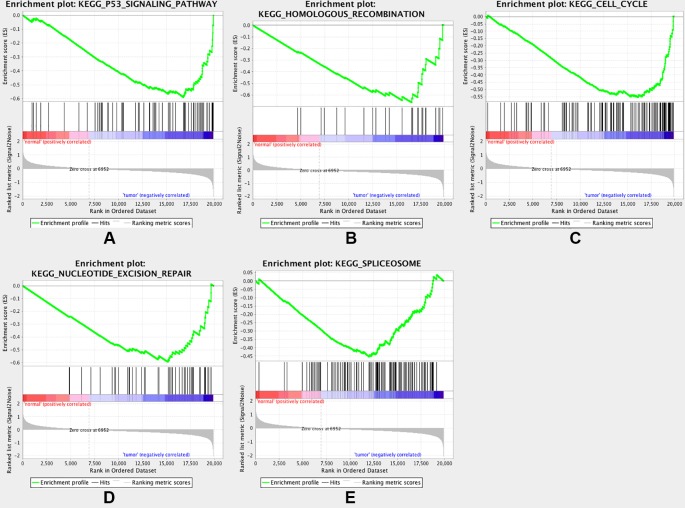
Colorectal cancer (CRC) is considered the most prevalent malignant tumor that contributes to high cancer-related mortality. However, the signaling pathways involved in CRC and CRC-driven genes are largely unknown. We sought to discover a novel biomarker in CRC.
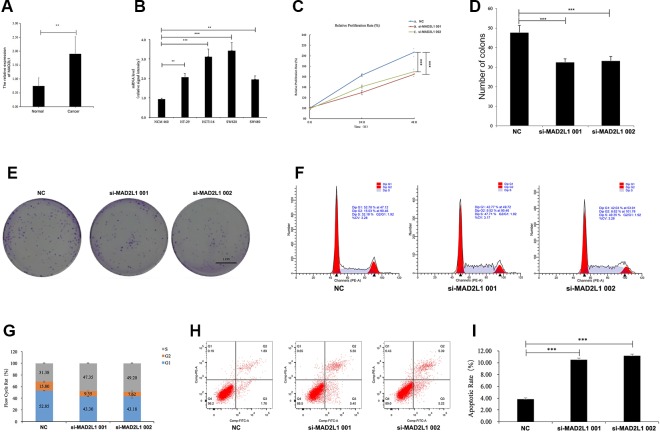
All clinical CRC samples (n = 20) were from Renmin Hospital of Wuhan University. We first selected MAD2L1 by integrated bioinformatics analysis of a GSE dataset. Next, the expression of MAD2L1 in tissues and cell lines was verified by quantitative real-time PCR. The effects of MAD2L1 on cell growth, proliferation, the cell cycle, and apoptosis were examined by assays.
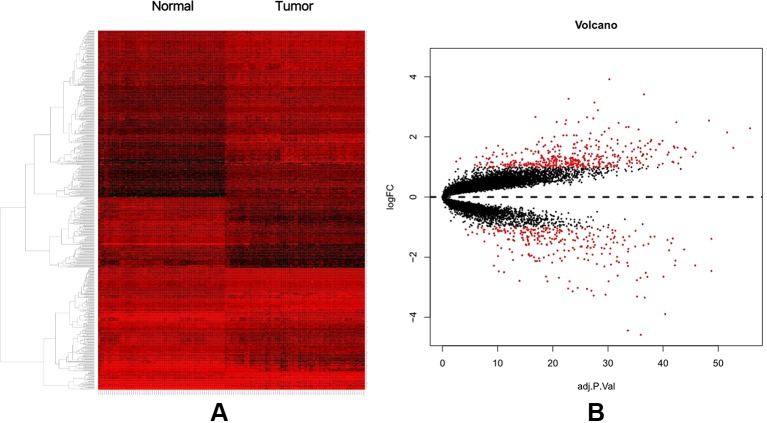
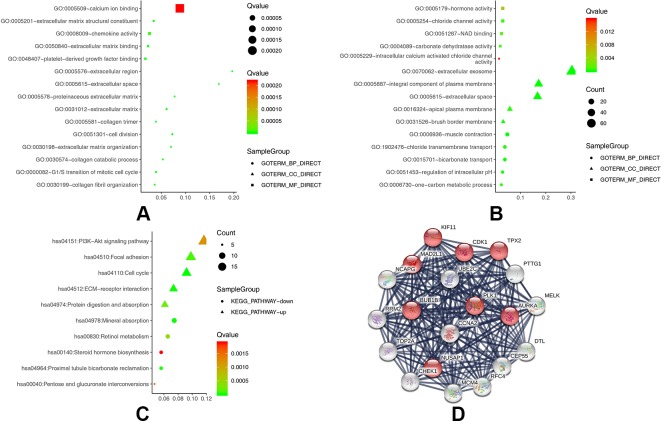
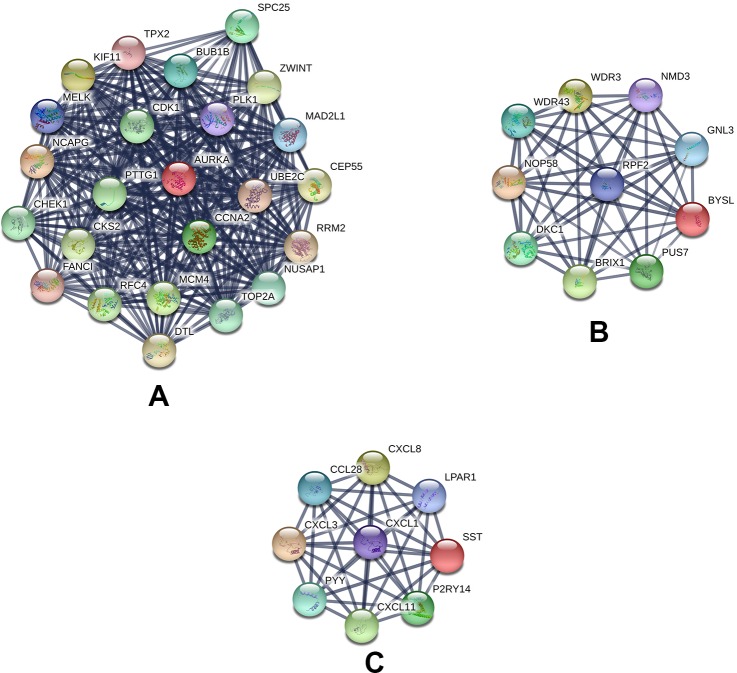
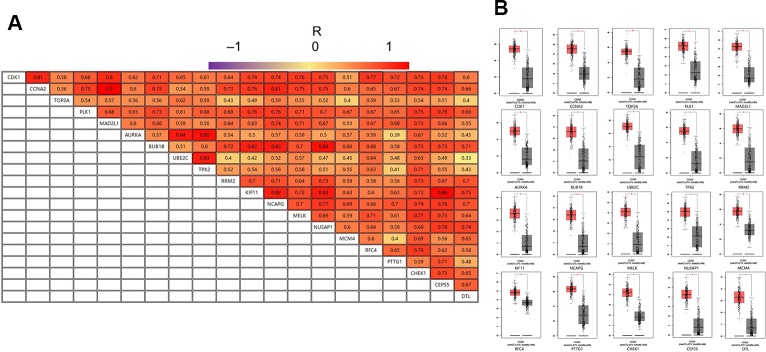
We identified 683 shared DEGs (420 upregulated and 263 downregulated), and the top twenty genes (CDK1, CCNA2, TOP2A, PLK1, MAD2L1, AURKA, BUB1B, UBE2C, TPX2, RRM2, KIF11, NCAPG, MELK, NUSAP1, MCM4, RFC4, PTTG1, CHEK1, CEP55, DTL) were selected by integrated analysis. These hub genes were significantly overexpressed in CRC samples and were positively correlated. Our data revealed that the expression of MAD2L1 in CRC tissues is higher than that in normal tissues. MAD2L1 knockdown significantly suppressed CRC cell growth by impairing cell cycle progression and inducing cell apoptosis.
MAD2L1, as a novel oncogenic gene, plays a role in regulating cancer cell growth and apoptosis and could be used as a new biomarker for diagnosis and therapy in CRC.
结直肠癌(CRC)被认为是导致癌症相关高死亡率的最常见恶性肿瘤。然而,CRC涉及的信号通路以及CRC驱动基因在很大程度上尚不清楚。我们试图在CRC中发现一种新的生物标志物。
所有临床CRC样本(n = 20)均来自武汉大学人民医院。我们首先通过对一个GSE数据集进行综合生物信息学分析来选择MAD2L1。接下来,通过定量实时PCR验证MAD2L1在组织和细胞系中的表达。通过实验检测MAD2L1对细胞生长、增殖、细胞周期和凋亡的影响。
我们鉴定出683个共享的差异表达基因(DEGs)(420个上调和263个下调),并通过综合分析选择了前二十个基因(CDK1、CCNA2、TOP2A、PLK1、MAD2L1、AURKA、BUB1B、UBE2C、TPX2、RRM2、KIF11、NCAPG、MELK、NUSAP1、MCM4、RFC4、PTTG1、CHEK1、CEP55、DTL)。这些枢纽基因在CRC样本中显著过表达且呈正相关。我们的数据显示,MAD2L1在CRC组织中的表达高于正常组织。MAD2L1敲低通过损害细胞周期进程和诱导细胞凋亡显著抑制CRC细胞生长。
MAD2L1作为一种新的致癌基因,在调节癌细胞生长和凋亡中发挥作用,可作为CRC诊断和治疗的新生物标志物。