Peterson Victoria, Galván Catalina, Hernández Hugo, Spies Ruben
Instituto de Matemática Aplicada del Litoral, IMAL, CONICET-UNL, Santa Fe, Argentina.
Facultad de Ingeniería, Universidad Nacional de Entre Ríos, FIUNER, Oro Verde, Entre Ríos, Argentina.
Heliyon. 2020 Mar 3;6(3):e03425. doi: 10.1016/j.heliyon.2020.e03425. eCollection 2020 Mar.
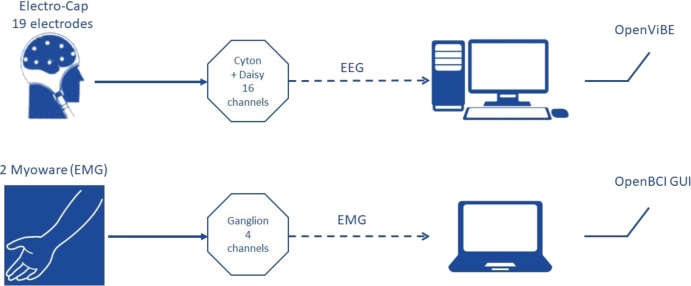
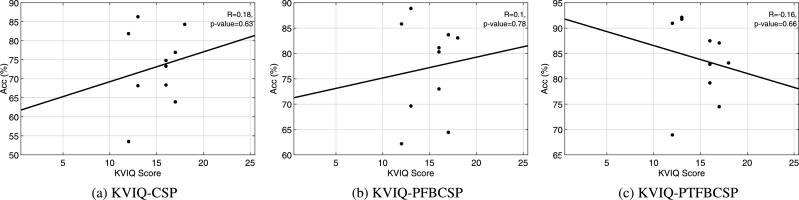
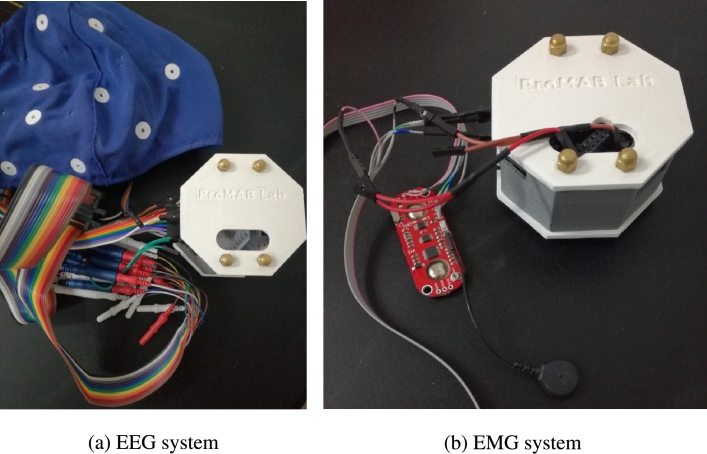
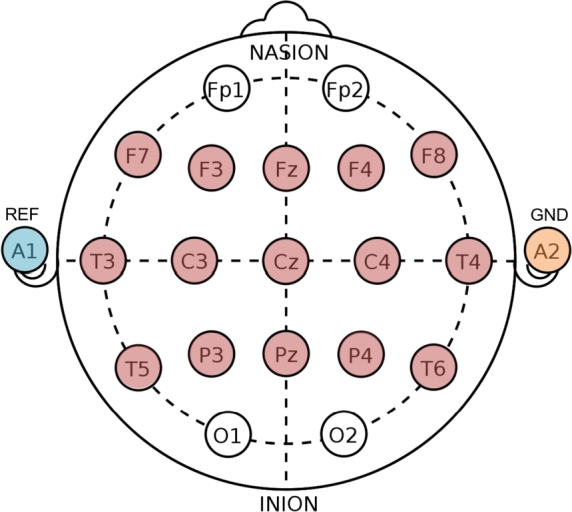
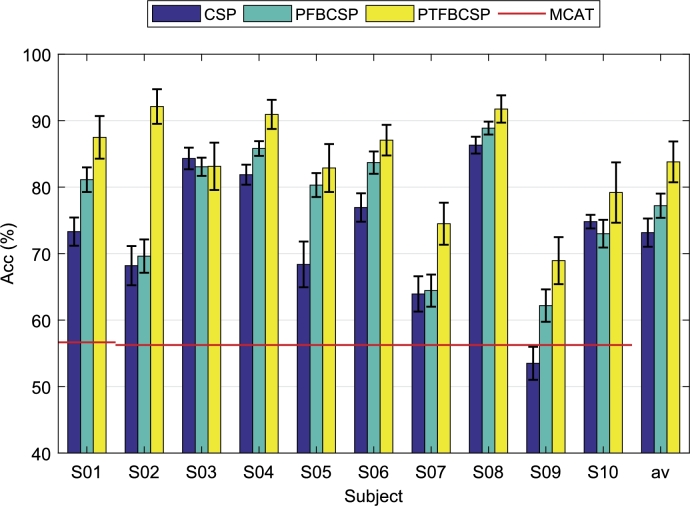
Brain-computer interfaces (BCIs) are technologies that provide the user with an alternative way of communication. A BCI measures brain activity (e.g. EEG) and converts it into output commands. Motor imagery (MI), the mental simulation of movements, can be used as a BCI paradigm, where the movement intention of the user can be translated into a real movement, helping patients in motor recovery rehabilitation. One of the main limitations for the broad use of such devices is the high cost associated with the high-quality equipment used for capturing the biomedical signals. Different low-cost consumer-grade alternatives have emerged with the objective of bringing these systems closer to the final users. The quality of the signals obtained with such equipments has already been evaluated and found to be competitive with those obtained with well-known clinical-grade devices. However, how these consumer-grade technologies can be integrated and used for practical MI-BCIs has not yet been explored. In this work, we provide a detailed description of the advantages and disadvantages of using OpenBCI boards, low-cost sensors and open-source software for constructing an entirely consumer-grade MI-BCI system. An analysis of the quality of the signals acquired and the MI detection ability is performed. Even though communication between the computer and the OpenBCI board is not always stable and the signal quality is sometimes affected by ambient noise, we find that by means of a filter-bank based method, similar classification performances can be achieved with an MI-BCI built under low-cost consumer-grade devices as compared to when clinical-grade systems are used. By means of this work we share with the BCI community our experience on working with emerging low-cost technologies, providing evidence that an entirely low-cost MI-BCI can be built. We believe that if communication stability and artifact rejection are improved, these technologies will become a valuable alternative to clinical-grade devices.
脑机接口(BCIs)是为用户提供另一种交流方式的技术。脑机接口测量大脑活动(如脑电图)并将其转换为输出命令。运动想象(MI),即对运动的心理模拟,可以用作脑机接口范式,其中用户的运动意图可以转化为实际运动,有助于患者进行运动恢复康复。此类设备广泛应用的主要限制之一是与用于捕捉生物医学信号的高质量设备相关的高成本。为了让这些系统更接近最终用户,已经出现了不同的低成本消费级替代品。已经对使用此类设备获得的信号质量进行了评估,发现其与使用知名临床级设备获得的信号质量具有竞争力。然而,这些消费级技术如何集成并用于实际的运动想象脑机接口尚未得到探索。在这项工作中,我们详细描述了使用OpenBCI板、低成本传感器和开源软件构建完全消费级运动想象脑机接口系统的优缺点。对采集到的信号质量和运动想象检测能力进行了分析。尽管计算机与OpenBCI板之间的通信并不总是稳定,信号质量有时会受到环境噪声的影响,但我们发现通过基于滤波器组的方法,与使用临床级系统时相比,在低成本消费级设备下构建的运动想象脑机接口可以实现类似的分类性能。通过这项工作,我们与脑机接口社区分享了我们使用新兴低成本技术的经验,证明可以构建完全低成本的运动想象脑机接口。我们相信,如果通信稳定性和伪迹抑制得到改善,这些技术将成为临床级设备的有价值替代品。