Department of Physical Education, University of Las Palmas de Gran Canaria, Campus Universitario de Tafira s/n, 35017, Las Palmas de Gran Canaria, Spain; Research Institute of Biomedical and Health Sciences (IUIBS), University of Las Palmas de Gran Canaria, Paseo Blas Cabrera Felipe "Físico" (s/n), 35017, Las Palmas de Gran Canaria, Canary Islands, Spain; Department of Physical Performance, The Norwegian School of Sport Sciences, Postboks, 4014 Ulleval Stadion, 0806 Oslo, Norway.
Department of Physical Education, University of Las Palmas de Gran Canaria, Campus Universitario de Tafira s/n, 35017, Las Palmas de Gran Canaria, Spain; Research Institute of Biomedical and Health Sciences (IUIBS), University of Las Palmas de Gran Canaria, Paseo Blas Cabrera Felipe "Físico" (s/n), 35017, Las Palmas de Gran Canaria, Canary Islands, Spain.
Redox Biol. 2020 Aug;35:101478. doi: 10.1016/j.redox.2020.101478. Epub 2020 Feb 25.
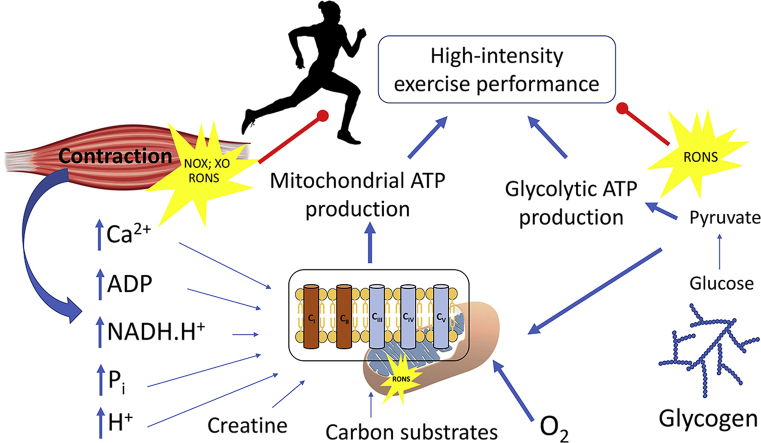
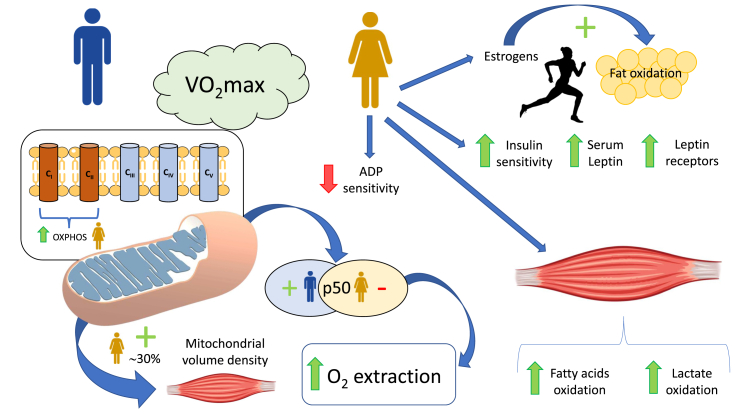
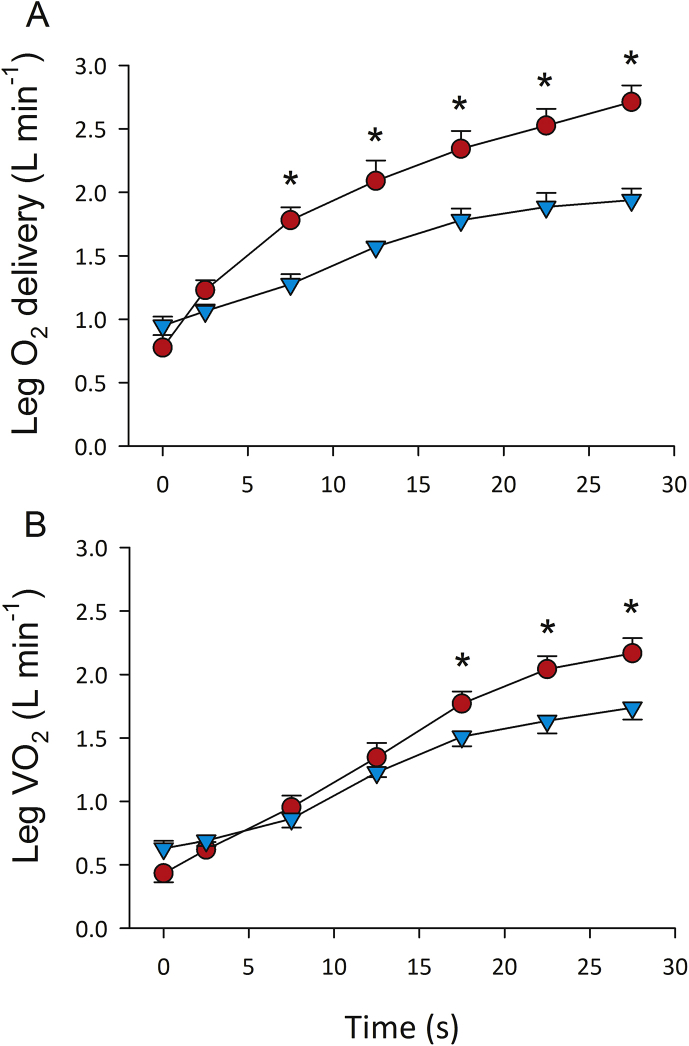
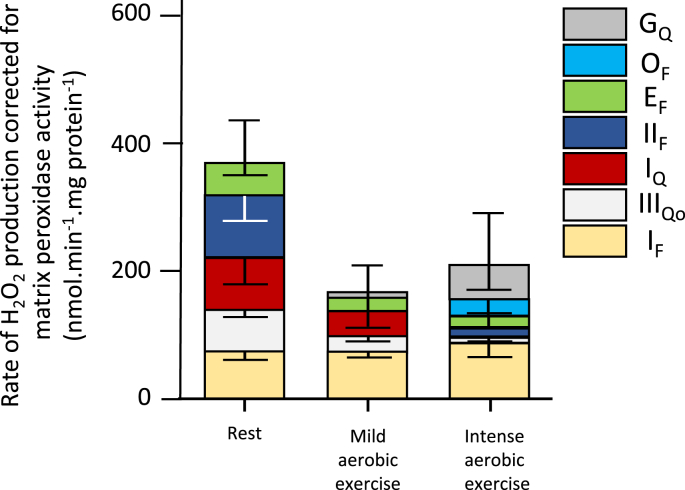
During exercise, muscle ATP demand increases with intensity, and at the highest power output, ATP consumption may increase more than 100-fold above the resting level. The rate of mitochondrial ATP production during exercise depends on the availability of O, carbon substrates, reducing equivalents, ADP, P, free creatine, and Ca. It may also be modulated by acidosis, nitric oxide and reactive oxygen and nitrogen species (RONS). During fatiguing and repeated sprint exercise, RONS production may cause oxidative stress and damage to cellular structures and may reduce mitochondrial efficiency. Human studies indicate that the relatively low mitochondrial respiratory rates observed during sprint exercise are not due to lack of O, or insufficient provision of Ca, reduced equivalents or carbon substrates, being a suboptimal stimulation by ADP the most plausible explanation. Recent in vitro studies with isolated skeletal muscle mitochondria, studied in conditions mimicking different exercise intensities, indicate that ROS production during aerobic exercise amounts to 1-2 orders of magnitude lower than previously thought. In this review, we will focus on the mechanisms regulating mitochondrial respiration, particularly during high-intensity exercise. We will analyze the factors that limit mitochondrial respiration and those that determine mitochondrial efficiency during exercise. Lastly, the differences in mitochondrial respiration between men and women will be addressed.
在运动过程中,肌肉的 ATP 需求会随着强度的增加而增加,在最大功率输出时,ATP 的消耗可能会比静息状态下增加 100 多倍。运动过程中线粒体 ATP 的产生速度取决于 O2、碳底物、还原当量、ADP、P、游离肌酸和 Ca 的可用性。它还可能受到酸中毒、一氧化氮和活性氧和氮物质 (RONS) 的调节。在疲劳和重复冲刺运动中,RONS 的产生可能会导致氧化应激和细胞结构损伤,并可能降低线粒体效率。人体研究表明,在冲刺运动中观察到的相对较低的线粒体呼吸率并不是由于缺乏 O2,或者 Ca、还原当量或碳底物供应不足,ADP 的刺激不足是最合理的解释。最近在模拟不同运动强度的条件下对分离的骨骼肌线粒体进行的体外研究表明,在有氧运动过程中产生的 ROS 数量比之前认为的要低 1-2 个数量级。在这篇综述中,我们将重点讨论调节线粒体呼吸的机制,特别是在高强度运动期间。我们将分析限制线粒体呼吸的因素和决定运动期间线粒体效率的因素。最后,将讨论男性和女性之间线粒体呼吸的差异。