Ashammakhi N, Ahadian S, Xu C, Montazerian H, Ko H, Nasiri R, Barros N, Khademhosseini A
Center for Minimally Invasive Therapeutics (C-MIT), University of California - Los Angeles, Los Angeles, CA, 90095, USA.
Department of Bioengineering, University of California - Los Angeles, Los Angeles, CA, 90095, USA.
Mater Today Bio. 2019 May 25;1:100008. doi: 10.1016/j.mtbio.2019.100008. eCollection 2019 Jan.
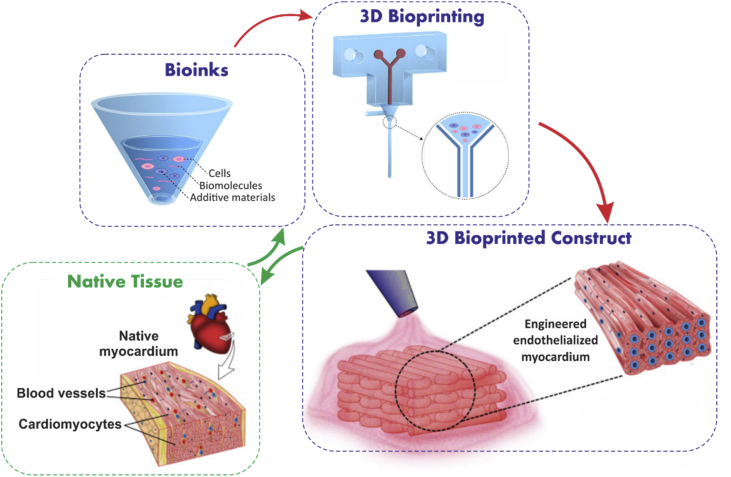
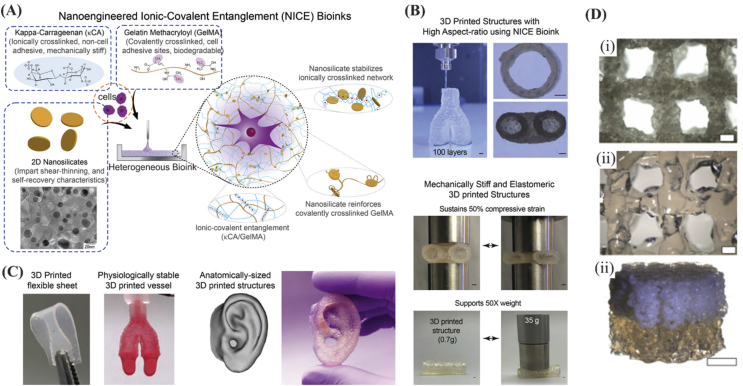
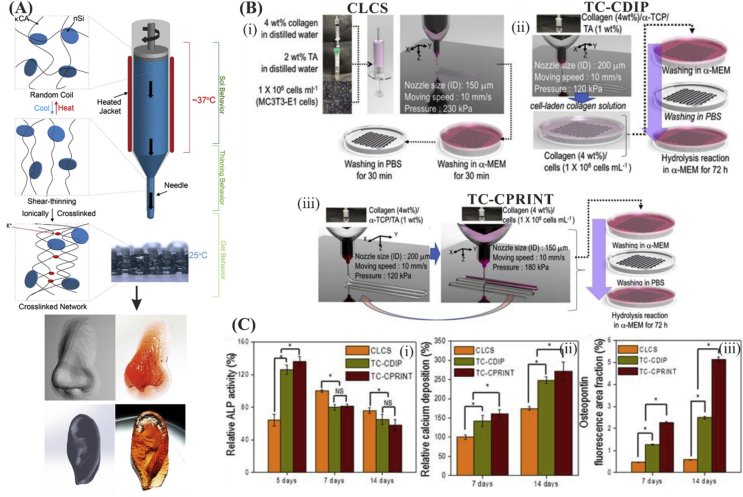
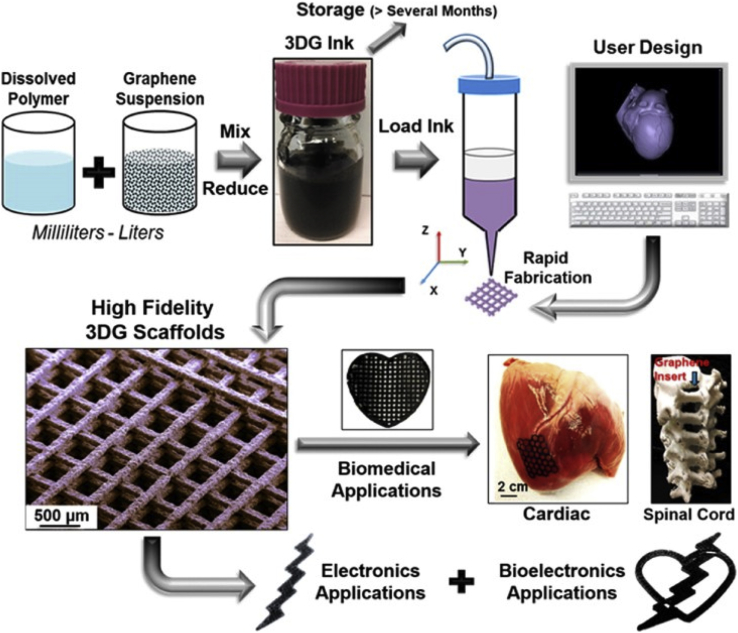
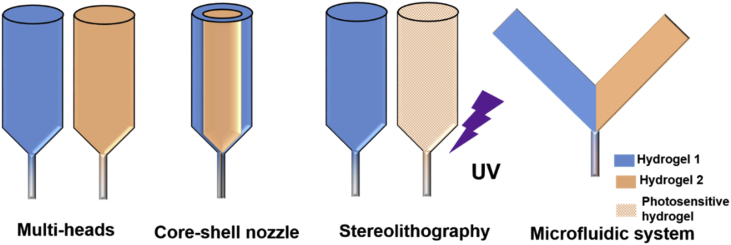
The native tissues are complex structures consisting of different cell types, extracellular matrix materials, and biomolecules. Traditional tissue engineering strategies have not been able to fully reproduce biomimetic and heterogeneous tissue constructs because of the lack of appropriate biomaterials and technologies. However, recently developed three-dimensional bioprinting techniques can be leveraged to produce biomimetic and complex tissue structures. To achieve this, multicomponent bioinks composed of multiple biomaterials (natural, synthetic, or hybrid natural-synthetic biomaterials), different types of cells, and soluble factors have been developed. In addition, advanced bioprinting technologies have enabled us to print multimaterial bioinks with spatial and microscale resolution in a rapid and continuous manner, aiming to reproduce the complex architecture of the native tissues. This review highlights important advances in heterogeneous bioinks and bioprinting technologies to fabricate biomimetic tissue constructs. Opportunities and challenges to further accelerate this research area are also described.
天然组织是由不同细胞类型、细胞外基质材料和生物分子组成的复杂结构。由于缺乏合适的生物材料和技术,传统的组织工程策略未能完全复制仿生和异质的组织构建体。然而,最近开发的三维生物打印技术可用于制造仿生和复杂的组织结构。为实现这一目标,已开发出由多种生物材料(天然、合成或天然 - 合成混合生物材料)、不同类型细胞和可溶性因子组成的多组分生物墨水。此外,先进的生物打印技术使我们能够以快速连续的方式打印具有空间和微观尺度分辨率的多材料生物墨水,旨在重现天然组织的复杂结构。本综述重点介绍了用于制造仿生组织构建体的异质生物墨水和生物打印技术的重要进展。还描述了进一步加速该研究领域的机遇与挑战。