Institute of Neurology, University College London, London, UK.
Institute of Cellular Neurosciences, Medical Faculty, University of Bonn, Bonn, Germany.
Cell Rep. 2020 Mar 10;30(10):3466-3477.e4. doi: 10.1016/j.celrep.2020.02.043.
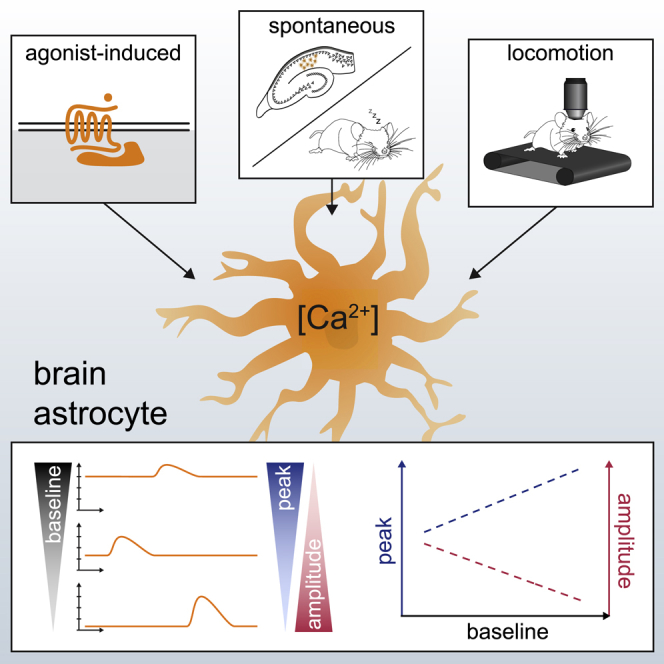
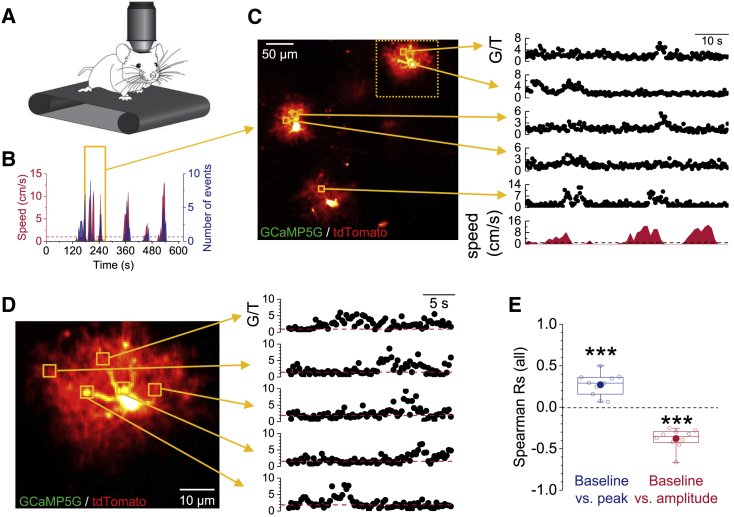
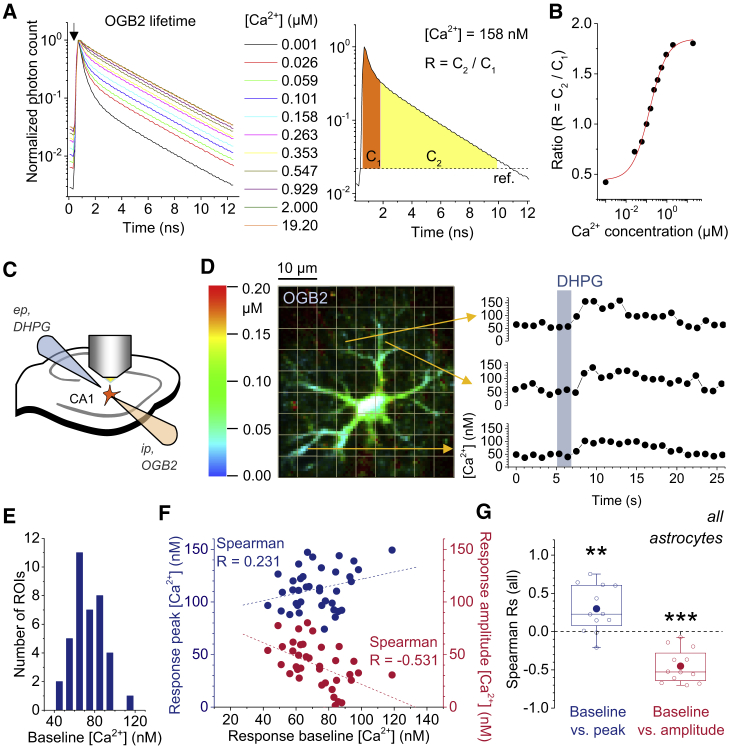
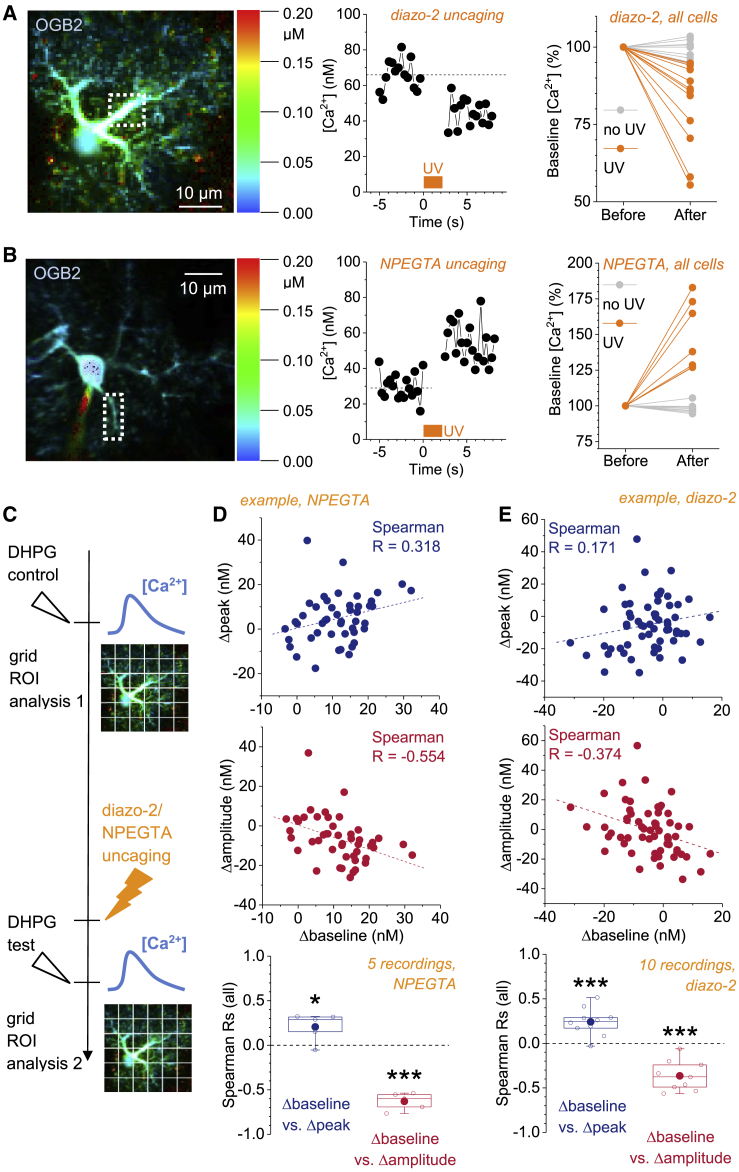
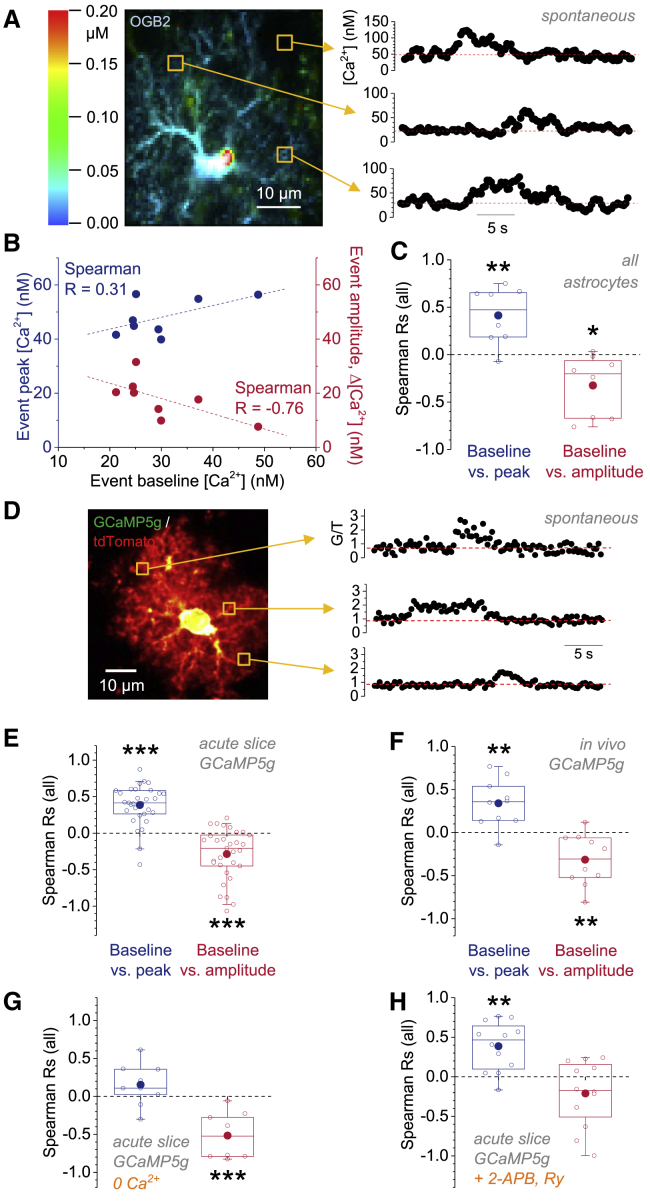
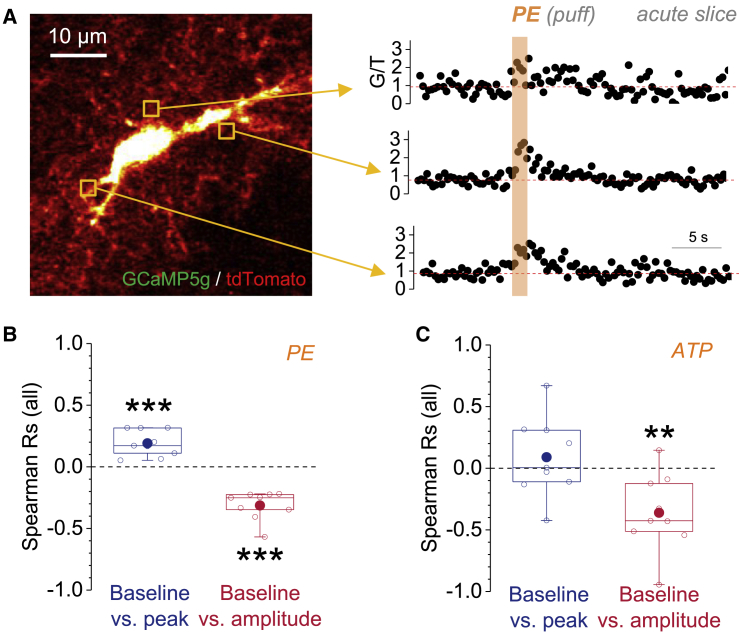
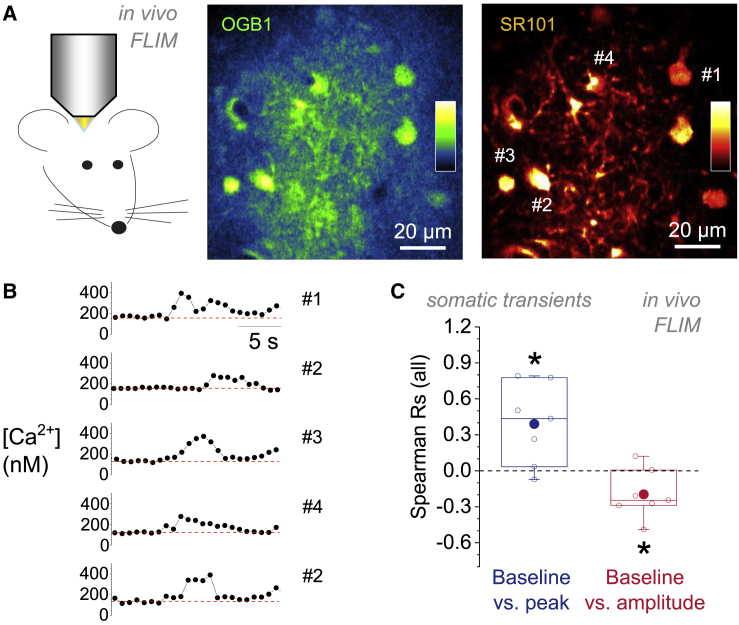
Astroglia regulate neurovascular coupling while engaging in signal exchange with neurons. The underlying cellular machinery is thought to rely on astrocytic Ca signals, but what controls their amplitude and waveform is poorly understood. Here, we employ time-resolved two-photon excitation fluorescence imaging in acute hippocampal slices and in cortex in vivo to find that resting [Ca] predicts the scale (amplitude) and the maximum (peak) of astroglial Ca elevations. We bidirectionally manipulate resting [Ca] by uncaging intracellular Ca or Ca buffers and use ratiometric imaging of a genetically encoded Ca indicator to establish that alterations in resting [Ca] change co-directionally the peak level and anti-directionally the amplitude of local Ca transients. This relationship holds for spontaneous and for induced (for instance by locomotion) Ca signals. Our findings uncover a basic generic rule of Ca signal formation in astrocytes, thus also associating the resting Ca level with the physiological "excitability" state of astroglia.
星形胶质细胞在与神经元进行信号交换的同时调节神经血管耦联。据认为,其潜在的细胞机制依赖于星形胶质细胞的 Ca 信号,但控制其幅度和波形的因素知之甚少。在这里,我们采用时间分辨双光子激发荧光成像技术,在急性海马脑片和活体皮层中发现,静息 [Ca] 可预测星形胶质细胞 Ca 升高的幅度(幅度)和最大值(峰值)。我们通过 uncaging 细胞内 Ca 或 Ca 缓冲剂双向操纵静息 [Ca],并使用遗传编码 Ca 指示剂的比率成像来确定静息 [Ca] 的改变与局部 Ca 瞬变的峰值水平同向变化,与幅度反向变化。这种关系适用于自发和诱导(例如通过运动)的 Ca 信号。我们的发现揭示了星形胶质细胞中 Ca 信号形成的基本通用规则,从而将静息 Ca 水平与星形胶质细胞的生理“兴奋性”状态联系起来。