• 文献检索
  • 文档翻译
  • 深度研究
  • 学术资讯
  • Suppr Zotero 插件Zotero 插件
  • 邀请有礼
  • 套餐&价格
  • 历史记录
应用&插件
Suppr Zotero 插件Zotero 插件浏览器插件Mac 客户端Windows 客户端微信小程序
定价
高级版会员购买积分包购买API积分包
服务
文献检索文档翻译深度研究API 文档MCP 服务
关于我们
关于 Suppr公司介绍联系我们用户协议隐私条款
关注我们

Suppr 超能文献

核心技术专利:CN118964589B侵权必究
粤ICP备2023148730 号-1Suppr @ 2026

文献检索

告别复杂PubMed语法,用中文像聊天一样搜索,搜遍4000万医学文献。AI智能推荐,让科研检索更轻松。

立即免费搜索

文件翻译

保留排版,准确专业,支持PDF/Word/PPT等文件格式,支持 12+语言互译。

免费翻译文档

深度研究

AI帮你快速写综述,25分钟生成高质量综述,智能提取关键信息,辅助科研写作。

立即免费体验

新型 H1 流感 A 病毒在猪群中的抗原特征。

Antigenic characterization of novel H1 influenza A viruses in swine.

机构信息

Departamento de Medicina Preventiva Animal, Facultad de Ciencias Veterinarias y Pecuarias, Universidad de Chile, Santiago, 8820808, Chile.

Department of Veterinary Population Medicine, College of Veterinary Medicine, University of Minnesota, St. Paul, 55108, USA.

出版信息

Sci Rep. 2020 Mar 11;10(1):4510. doi: 10.1038/s41598-020-61315-5.

DOI:10.1038/s41598-020-61315-5
PMID:32161289
原文链接:https://pmc.ncbi.nlm.nih.gov/articles/PMC7066140/
Abstract

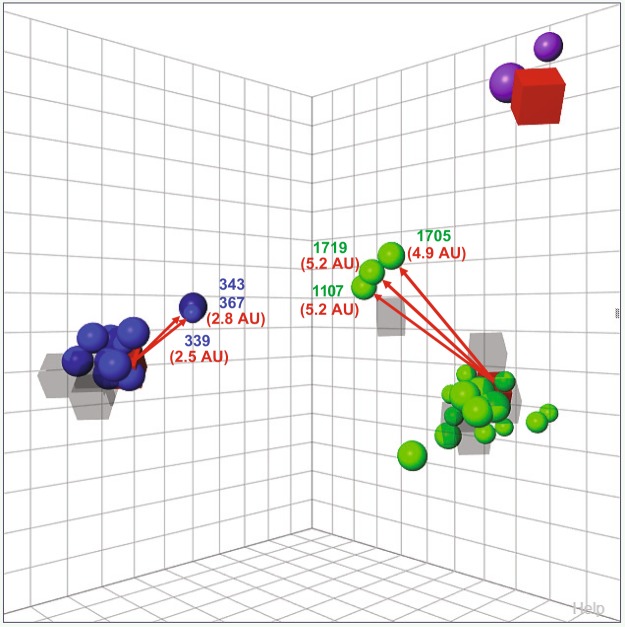
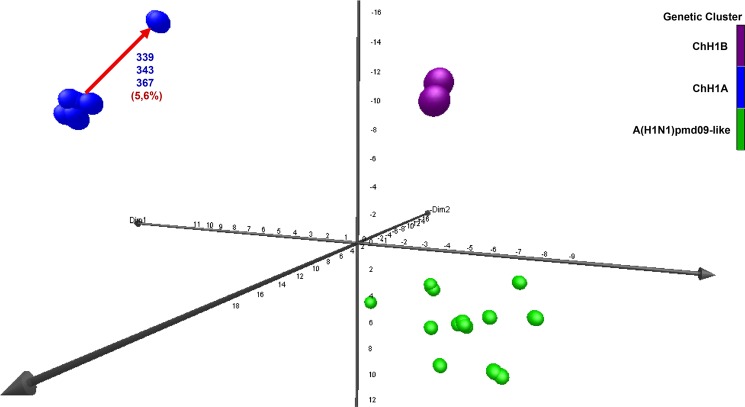
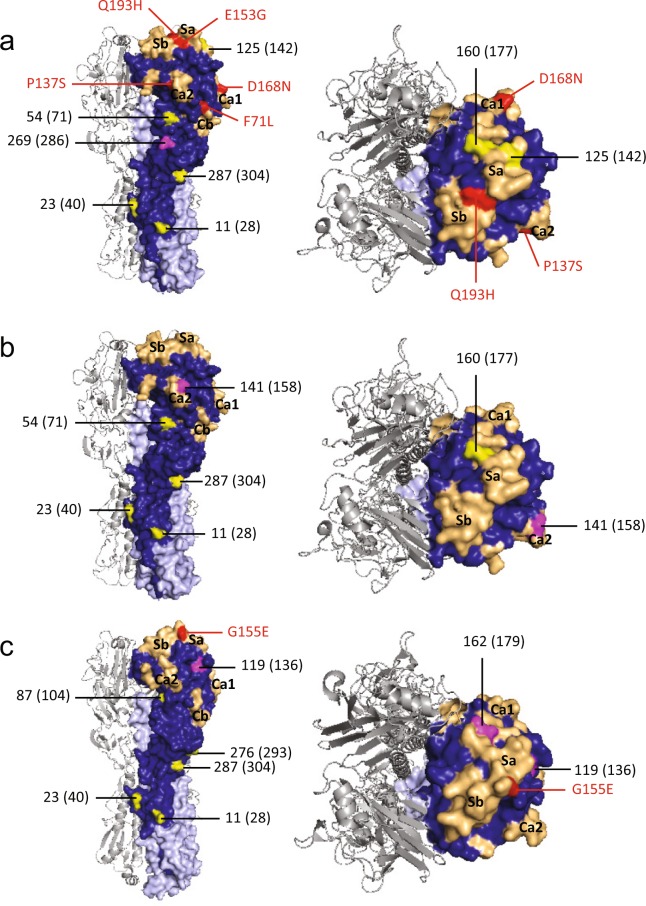
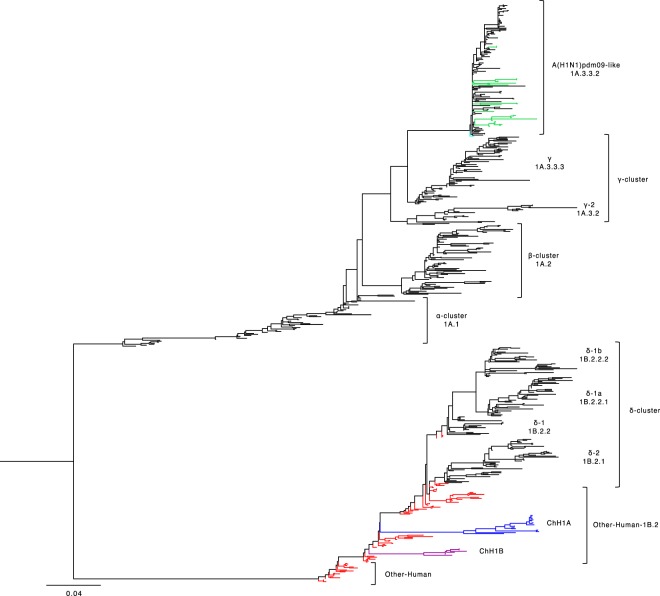
Novel H1N2 influenza A viruses (IAVs) in swine have been identified in Chile co-circulating with pandemic H1N1 2009-like (A(H1N1)pdm09-like) viruses. The objective of this study was to characterize antigenically the swine H1 IAVs circulating in Chile. Genetic analysis based on the HA1 domain and antigenic analysis by hemagglutination inhibition assay were carried out. Three antigenic clusters were identified, named Chilean H1 A (ChH1A), Chilean H1 B (ChH1B), and A(H1N1)pdm09-like. The antigenic sites of ChH1A and ChH1B strains were 10-60% distant from those of commercial vaccine strains at the amino acid sequence level. Antigenic variants were identified within the clusters ChH1A and A(H1N1)pdm09-like. Substitutions in the main antigenic sites (E153G in Sa, Q193H in Sb, D168N in Ca1, P137S in Ca2, and F71L in Cb) were detected in variants from the ChH1A cluster, whereas only a single substitution in antigenic site Sa (G155E) was detected in variants from A(H1N1)pdm09-like cluster, which confirms the importance to carrying out antigenic analyses in addition to genetic analyses to evaluate control measures such as vaccination. These results highlight the need to update vaccines for swine in Chile and the importance of continued surveillance to determine the onward transmission of antigenic variants in Chilean pig populations.

摘要

在智利,与大流行 H1N1 2009 样(A(H1N1)pdm09 样)病毒共同流行的猪中已鉴定出新型 H1N2 甲型流感病毒(IAV)。本研究的目的是对在智利流行的猪 H1 IAV 进行抗原特征分析。基于 HA1 结构域进行遗传分析,并通过血凝抑制试验进行抗原分析。确定了三个抗原簇,分别命名为智利 H1 A(ChH1A)、智利 H1 B(ChH1B)和 A(H1N1)pdm09 样。ChH1A 和 ChH1B 株的抗原位点在氨基酸序列水平上与商业疫苗株的距离为 10-60%。在 ChH1A 和 A(H1N1)pdm09 样簇内鉴定出抗原变体。在 ChH1A 簇内的变体中检测到主要抗原位点(Sa 中的 E153G、Sb 中的 Q193H、Ca1 中的 D168N、Ca2 中的 P137S 和 Cb 中的 F71L)中的取代,而在 A(H1N1)pdm09 样簇内的变体中仅检测到抗原位点 Sa 中的单个取代(G155E),这证实了除了遗传分析之外,进行抗原分析以评估控制措施(如疫苗接种)的重要性。这些结果强调了需要更新智利猪用疫苗,并需要继续监测以确定抗原变体在智利猪群中的传播情况。
https://cdn.ncbi.nlm.nih.gov/pmc/blobs/da77/7066140/e9a3a7f37575/41598_2020_61315_Fig4_HTML.jpg
https://cdn.ncbi.nlm.nih.gov/pmc/blobs/da77/7066140/fc6c57239f5d/41598_2020_61315_Fig1_HTML.jpg
https://cdn.ncbi.nlm.nih.gov/pmc/blobs/da77/7066140/401b58228f1d/41598_2020_61315_Fig2_HTML.jpg
https://cdn.ncbi.nlm.nih.gov/pmc/blobs/da77/7066140/ce481266539f/41598_2020_61315_Fig3_HTML.jpg
https://cdn.ncbi.nlm.nih.gov/pmc/blobs/da77/7066140/e9a3a7f37575/41598_2020_61315_Fig4_HTML.jpg
https://cdn.ncbi.nlm.nih.gov/pmc/blobs/da77/7066140/fc6c57239f5d/41598_2020_61315_Fig1_HTML.jpg
https://cdn.ncbi.nlm.nih.gov/pmc/blobs/da77/7066140/401b58228f1d/41598_2020_61315_Fig2_HTML.jpg
https://cdn.ncbi.nlm.nih.gov/pmc/blobs/da77/7066140/ce481266539f/41598_2020_61315_Fig3_HTML.jpg
https://cdn.ncbi.nlm.nih.gov/pmc/blobs/da77/7066140/e9a3a7f37575/41598_2020_61315_Fig4_HTML.jpg

相似文献

1
Antigenic characterization of novel H1 influenza A viruses in swine.新型 H1 流感 A 病毒在猪群中的抗原特征。
Sci Rep. 2020 Mar 11;10(1):4510. doi: 10.1038/s41598-020-61315-5.
2
Antigenically Diverse Swine Origin H1N1 Variant Influenza Viruses Exhibit Differential Ferret Pathogenesis and Transmission Phenotypes.抗原多样化的猪源 H1N1 变异流感病毒表现出不同的雪貂发病机制和传播表型。
J Virol. 2018 May 14;92(11). doi: 10.1128/JVI.00095-18. Print 2018 Jun 1.
3
Genetic and antigenic dynamics of influenza A viruses of swine on pig farms in Thailand.泰国养猪场甲型流感病毒的遗传和抗原动态
Arch Virol. 2019 Feb;164(2):457-472. doi: 10.1007/s00705-018-4091-4. Epub 2018 Nov 10.
4
Identification of amino acid substitutions supporting antigenic change of influenza A(H1N1)pdm09 viruses.支持甲型H1N1pdm09流感病毒抗原性变化的氨基酸替换的鉴定
J Virol. 2015 Apr;89(7):3763-75. doi: 10.1128/JVI.02962-14. Epub 2015 Jan 21.
5
Antigenic variation of H1N1, H1N2 and H3N2 swine influenza viruses in Japan and Vietnam.日本和越南的 H1N1、H1N2 和 H3N2 猪流感病毒的抗原变异。
Arch Virol. 2013 Apr;158(4):859-76. doi: 10.1007/s00705-013-1616-8. Epub 2013 Feb 23.
6
Antigenic Characterization and Pandemic Risk Assessment of North American H1 Influenza A Viruses Circulating in Swine.北美猪流感病毒的抗原特征和大流行风险评估。
Microbiol Spectr. 2022 Dec 21;10(6):e0178122. doi: 10.1128/spectrum.01781-22. Epub 2022 Nov 1.
7
Characterization of co-circulating swine influenza A viruses in North America and the identification of a novel H1 genetic clade with antigenic significance.鉴定北美洲共同流行的猪流感 A 病毒,并确定具有抗原意义的新型 H1 遗传分支。
Virus Res. 2015 Apr 2;201:24-31. doi: 10.1016/j.virusres.2015.02.009. Epub 2015 Feb 18.
8
Analysis of influenza A viruses of subtype H1 from wild birds, turkeys and pigs in Germany reveals interspecies transmission events.德国野生鸟类、火鸡和猪中 H1 亚型流感病毒的分析显示了种间传播事件。
Influenza Other Respir Viruses. 2011 Jul;5(4):276-84. doi: 10.1111/j.1750-2659.2011.00201.x. Epub 2011 Feb 28.
9
Influenza A Viruses of Swine (IAV-S) in Vietnam from 2010 to 2015: Multiple Introductions of A(H1N1)pdm09 Viruses into the Pig Population and Diversifying Genetic Constellations of Enzootic IAV-S.2010年至2015年越南的猪甲型流感病毒(IAV-S):A(H1N1)pdm09病毒多次传入猪群以及地方性IAV-S的基因组合多样化
J Virol. 2016 Dec 16;91(1). doi: 10.1128/JVI.01490-16. Print 2017 Jan 1.
10
Variation in the HA antigenicity of A(H1N1)pdm09-related swine influenza viruses.A(H1N1)pdm09 相关猪流感病毒血凝素抗原性的变异。
J Gen Virol. 2021 Mar;102(3). doi: 10.1099/jgv.0.001569. Epub 2021 Feb 22.

引用本文的文献

1
Replication kinetics of novel swine influenza A viruses: an approach to vaccine production.新型甲型猪流感病毒的复制动力学:一种疫苗生产方法。
Austral J Vet Sci. 2024 May;56(2):85-90. doi: 10.4206/ajvs.562.01. Epub 2024 May 22.
2
Novel introductions of human-origin H3N2 influenza viruses in swine, Chile.智利猪群中出现源自人类的H3N2流感病毒的新情况。
Front Vet Sci. 2025 Jan 9;11:1505497. doi: 10.3389/fvets.2024.1505497. eCollection 2024.
3
Comprehensive molecular epidemiology of influenza viruses in Brazil: insights from a nationwide analysis.

本文引用的文献

1
Infection of novel reassortant H1N2 and H3N2 swine influenza A viruses in the guinea pig model.新型重配 H1N2 和 H3N2 猪流感 A 病毒在豚鼠模型中的感染。
Vet Res. 2018 Jul 27;49(1):73. doi: 10.1186/s13567-018-0572-4.
2
Influenza.流感。
Nat Rev Dis Primers. 2018 Jun 28;4(1):3. doi: 10.1038/s41572-018-0002-y.
3
A Phylogeny-Based Global Nomenclature System and Automated Annotation Tool for H1 Hemagglutinin Genes from Swine Influenza A Viruses.一种基于系统发育的甲型猪流感病毒H1血凝素基因全球命名系统及自动注释工具。
巴西流感病毒的综合分子流行病学:来自全国性分析的见解
Virus Evol. 2024 Nov 23;11(1):veae102. doi: 10.1093/ve/veae102. eCollection 2025.
4
Influenza A Viruses in the Swine Population: Ecology and Geographical Distribution.猪群中的甲型流感病毒:生态与地理分布。
Viruses. 2024 Nov 1;16(11):1728. doi: 10.3390/v16111728.
5
Genomic diversity and evolutionary dynamics of Influenza A viruses in Colombian swine: implications for one health surveillance and control.哥伦比亚猪流感病毒的基因组多样性和进化动态:对一体健康监测和控制的启示。
Emerg Microbes Infect. 2024 Dec;13(1):2368202. doi: 10.1080/22221751.2024.2368202. Epub 2024 Jul 6.
6
Novel influenza A viruses in pigs with zoonotic potential, Chile.具有人畜共患潜力的新型甲型流感病毒,智利。
Microbiol Spectr. 2024 Apr 2;12(4):e0218123. doi: 10.1128/spectrum.02181-23. Epub 2024 Mar 7.
7
Sequence-Based Antigenic Analyses of H1 Swine Influenza A Viruses from Colombia (2008-2021) Reveals Temporal and Geographical Antigenic Variations.基于序列的 2008-2021 年哥伦比亚 H1 猪流感病毒的抗原性分析显示了时间和地理上的抗原变异。
Viruses. 2023 Sep 30;15(10):2030. doi: 10.3390/v15102030.
8
Cross-protection of commercial vaccines against Chilean swine influenza A virus using the guinea pig model as a surrogate.以豚鼠模型作为替代,评估商业疫苗对智利甲型流感病毒的交叉保护作用。
Front Vet Sci. 2023 Sep 20;10:1245278. doi: 10.3389/fvets.2023.1245278. eCollection 2023.
9
Prediction of Omicron Virus Using Combined Extended Convolutional and Recurrent Neural Networks Technique on CT-Scan Images.基于CT扫描图像利用扩展卷积神经网络与循环神经网络相结合的技术预测奥密克戎病毒
Interdiscip Perspect Infect Dis. 2022 Nov 28;2022:1525615. doi: 10.1155/2022/1525615. eCollection 2022.
10
Testing for genetic mutation of seasonal influenza virus.季节性流感病毒基因突变检测。
J Appl Stat. 2021 Sep 29;50(1):1-18. doi: 10.1080/02664763.2021.1978955. eCollection 2023.
mSphere. 2016 Dec 14;1(6). doi: 10.1128/mSphere.00275-16. eCollection 2016 Nov-Dec.
4
Identification of Low- and High-Impact Hemagglutinin Amino Acid Substitutions That Drive Antigenic Drift of Influenza A(H1N1) Viruses.甲型流感病毒(H1N1)抗原漂移相关的低影响和高影响血凝素氨基酸取代的鉴定
PLoS Pathog. 2016 Apr 8;12(4):e1005526. doi: 10.1371/journal.ppat.1005526. eCollection 2016 Apr.
5
A recommended numbering scheme for influenza A HA subtypes.甲型流感血凝素(HA)亚型的推荐编号方案。
PLoS One. 2014 Nov 12;9(11):e112302. doi: 10.1371/journal.pone.0112302. eCollection 2014.
6
New world bats harbor diverse influenza A viruses.新型世界蝙蝠携带多种甲型流感病毒。
PLoS Pathog. 2013;9(10):e1003657. doi: 10.1371/journal.ppat.1003657. Epub 2013 Oct 10.
7
Glycosylations in the globular head of the hemagglutinin protein modulate the virulence and antigenic properties of the H1N1 influenza viruses.糖基化作用在血凝素蛋白的球状头部调节 H1N1 流感病毒的毒力和抗原特性。
Sci Transl Med. 2013 May 29;5(187):187ra70. doi: 10.1126/scitranslmed.3005996.
8
Antigenic drift of the pandemic 2009 A(H1N1) influenza virus in A ferret model.甲型 H1N1 流感病毒在雪貂模型中的抗原漂移。
PLoS Pathog. 2013;9(5):e1003354. doi: 10.1371/journal.ppat.1003354. Epub 2013 May 9.
9
Antigenic characterization of H3N2 influenza A viruses from Ohio agricultural fairs.俄亥俄州农业展览会上 H3N2 流感 A 病毒的抗原特征。
J Virol. 2013 Jul;87(13):7655-67. doi: 10.1128/JVI.00804-13. Epub 2013 May 1.
10
Swine influenza virus vaccines: to change or not to change-that's the question.猪流感病毒疫苗:改变还是不改变——这是个问题。
Curr Top Microbiol Immunol. 2013;370:173-200. doi: 10.1007/82_2012_266.