Coronel Institute of Occupational Health, Amsterdam Public Health Research Institute, Amsterdam UMC, University of Amsterdam, Amsterdam, The Netherlands.
Department of Health, Social & Welfare Studies, University College of South-Eastern Norway, Notodden, Norway.
J Cancer Surviv. 2020 Apr;14(2):135-150. doi: 10.1007/s11764-020-00862-2. Epub 2020 Mar 11.
Almost half of people diagnosed with cancer are working age. Survivors have increased risk of unemployment, but little is known about long-term work retention. This systematic review and meta-analysis assessed work retention and associated factors in long-term cancer survivors.
We searched Medline/Pubmed, Embase, PsychINFO, and CINAHL for studies published 01/01/2000-08/01/2019 reporting work retention in adult cancer survivors ≥ 2 years post-diagnosis. Survivors had to be in paid work at diagnosis. Pooled prevalence of long-term work retention was estimated. Factors associated with work retention from multivariate analysis were synthesized.
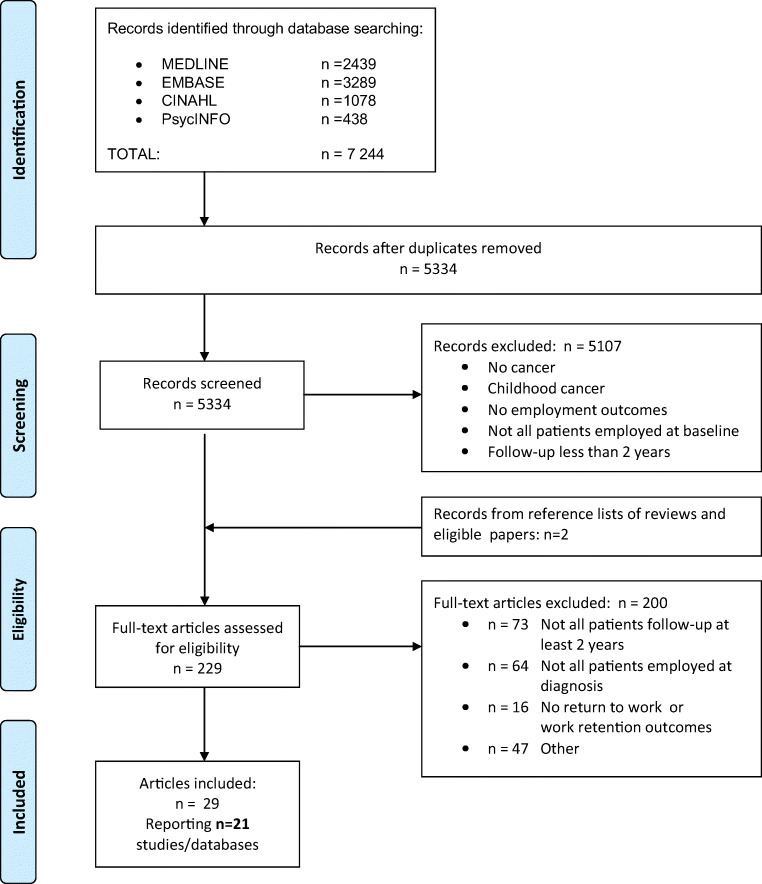
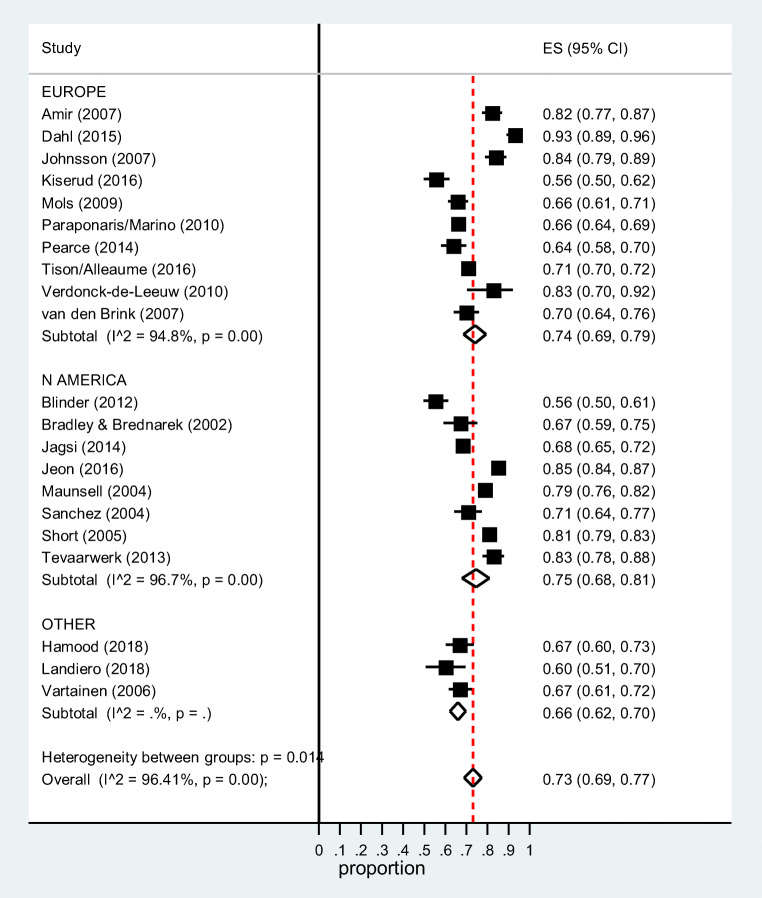
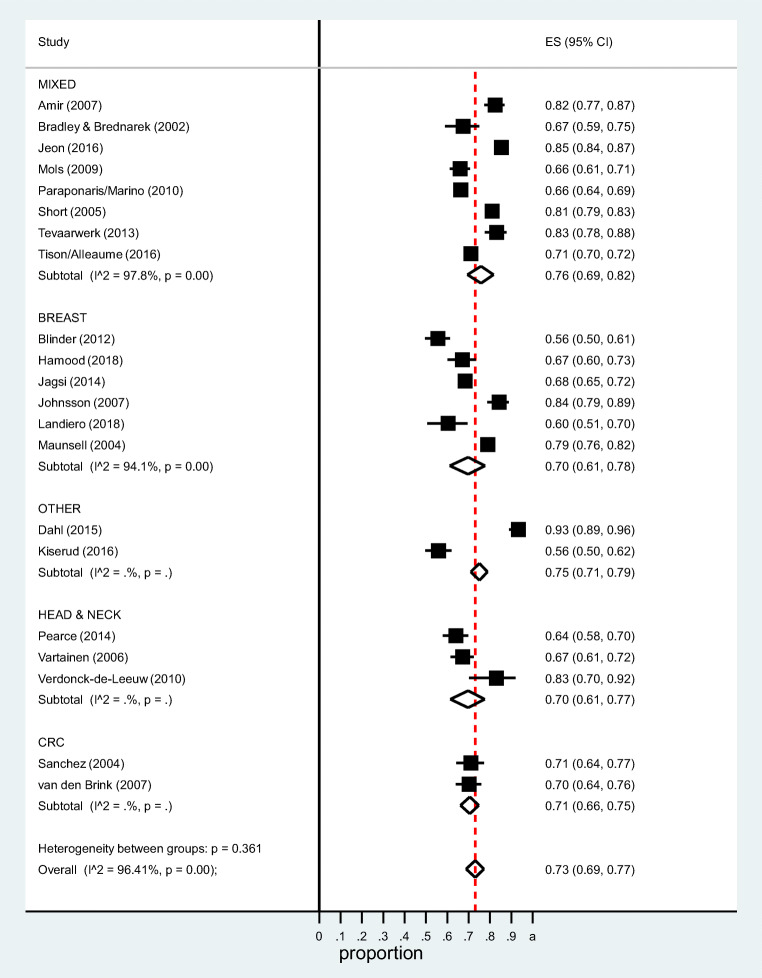
Twenty-nine articles, reporting 21 studies/datasets including 14,207 cancer survivors, were eligible. Work retention was assessed 2-14 years post-diagnosis. Fourteen studies were cross-sectional, five were prospective, and two contained both cross-sectional and prospective elements. No studies were scored as high quality. The pooled estimate of prevalence of long-term work retention in cancer survivors working at diagnosis was 0.73 (95%CI 0.69-0.77). The proportion working at 2-2.9 years was 0.72; at 3-3.9 years 0.80; at 4-4.9 years 0.75; at 5-5.9 years 0.74; and 6+ years 0.65. Pooled estimates did not differ by cancer site, geographical area, or study design. Seven studies assessed prognostic factors for work retention: older age, receiving chemotherapy, negative health outcomes, and lack of work adjustments were associated with not working.
Almost three-quarters of long-term cancer survivors working at diagnosis retain work.
These findings are pertinent for guidelines on cancer survivorship care. Professionals could focus support on survivors most likely to have poor long-term work outcomes.
近一半被诊断患有癌症的人处于工作年龄。幸存者失业的风险增加,但人们对长期工作保留的了解甚少。本系统评价和荟萃分析评估了长期癌症幸存者的工作保留率及其相关因素。
我们检索了 Medline/Pubmed、Embase、PsychINFO 和 CINAHL,以获取 2000 年 1 月 1 日至 2019 年 8 月 1 日期间发表的报告成年癌症幸存者在诊断后≥2 年工作保留情况的研究。幸存者在诊断时必须从事有偿工作。估计长期工作保留的总体流行率。从多变量分析中综合与工作保留相关的因素。
29 篇文章,报告了 21 项研究/数据集,包括 14,207 名癌症幸存者,符合条件。工作保留情况在诊断后 2-14 年内进行评估。14 项研究为横断面研究,5 项为前瞻性研究,2 项包含横断面和前瞻性元素。没有研究被评为高质量。在诊断时正在工作的癌症幸存者长期工作保留的总体估计患病率为 0.73(95%CI 0.69-0.77)。2-2.9 年工作的比例为 0.72;3-3.9 年为 0.80;4-4.9 年为 0.75;5-5.9 年为 0.74;6+ 年为 0.65。癌症部位、地理区域或研究设计不同,总体估计值无差异。有 7 项研究评估了工作保留的预后因素:年龄较大、接受化疗、健康结果不佳和缺乏工作调整与不工作相关。
近四分之三的长期癌症幸存者在诊断时保留工作。
这些发现与癌症生存护理指南相关。专业人员可以将支持重点放在最有可能出现长期工作结果不佳的幸存者身上。