Department of Dermatology and Allergic Diseases, Ulm University, Ulm, Germany.
Aging Research Center (ARC), Ulm, Germany.
EMBO Rep. 2020 May 6;21(5):e48777. doi: 10.15252/embr.201948777. Epub 2020 Mar 12.
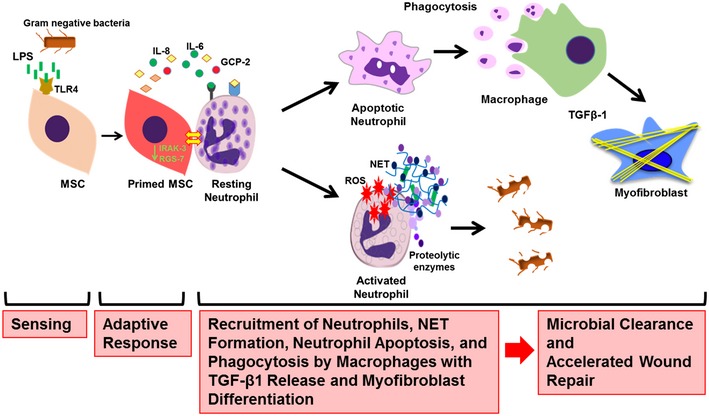
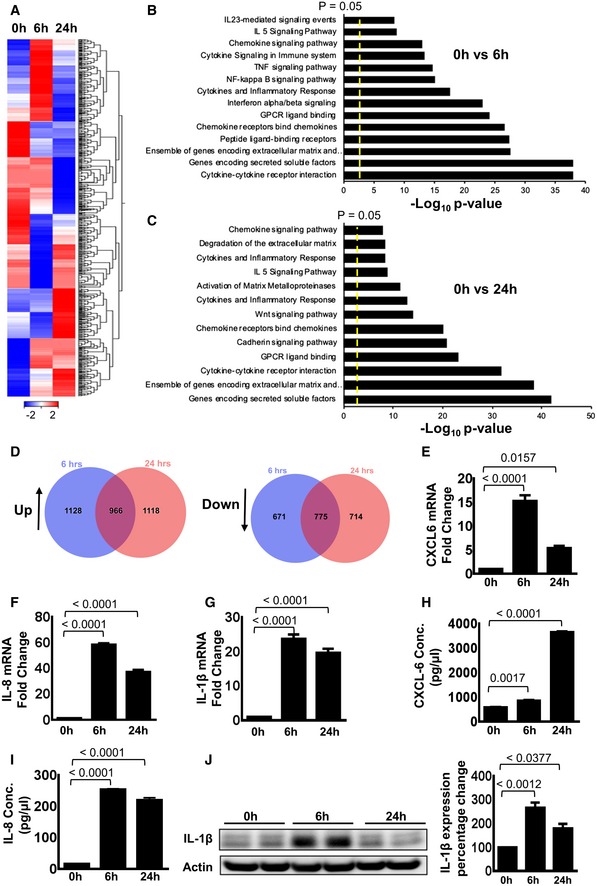
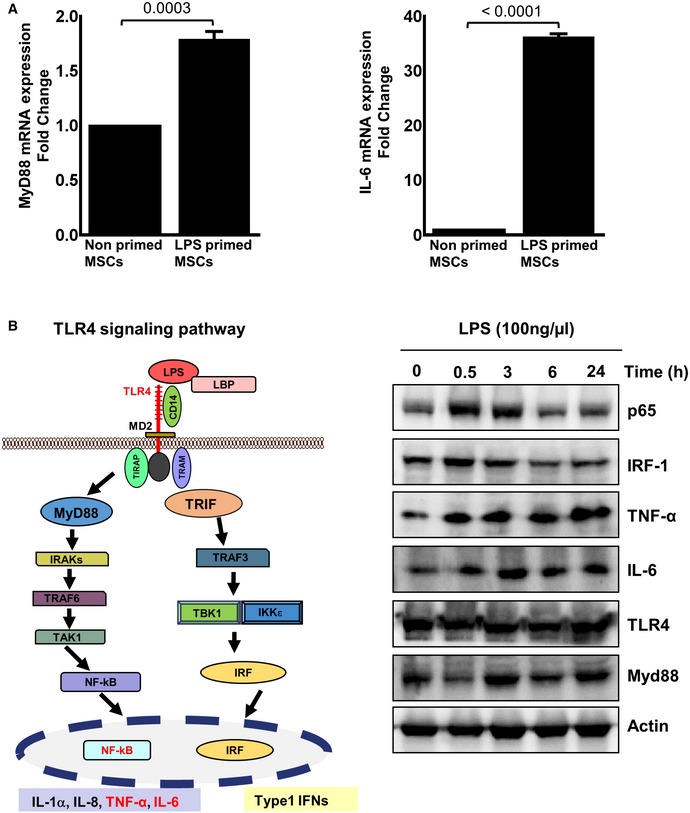
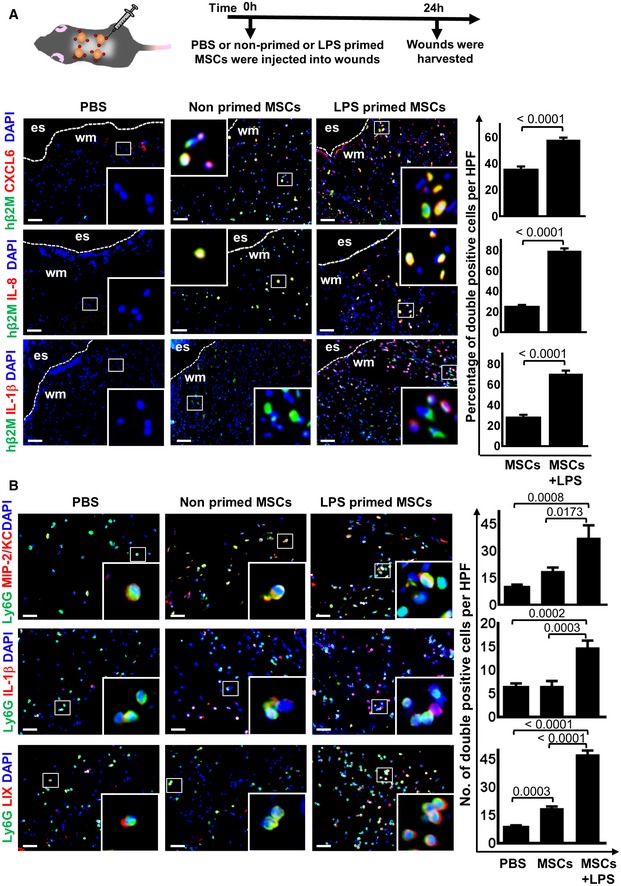
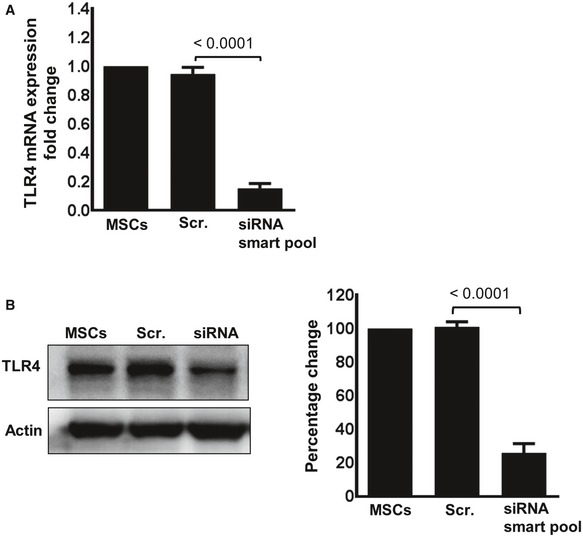
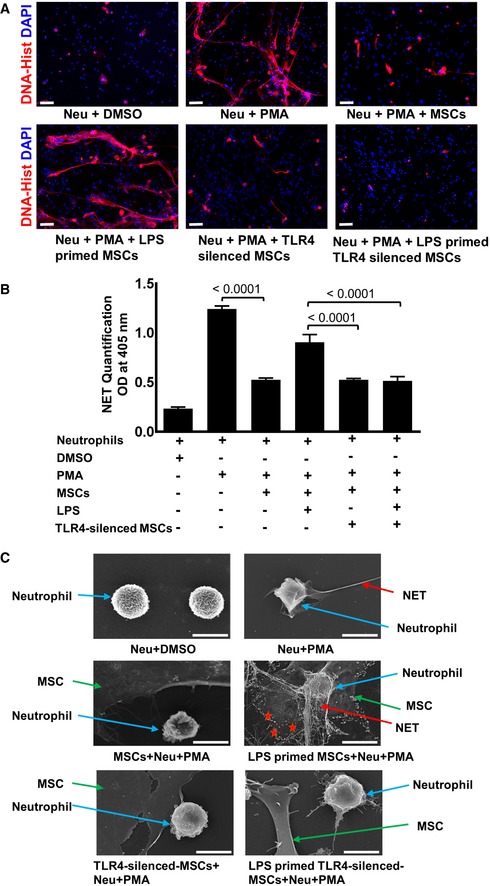
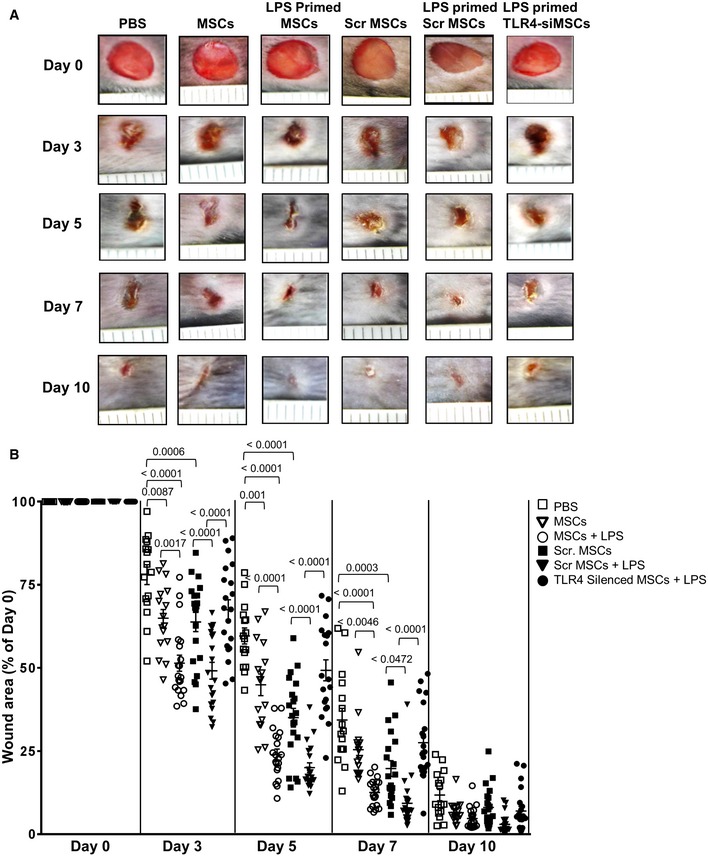
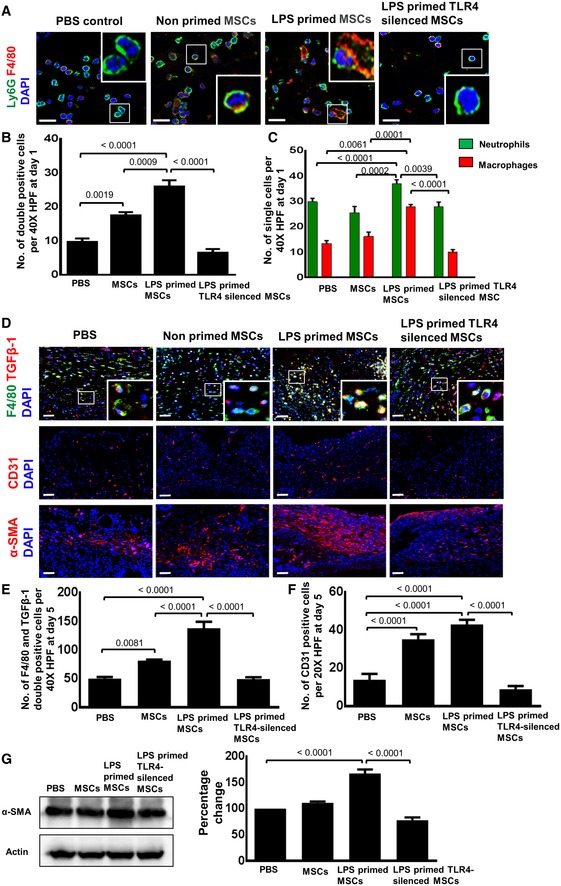
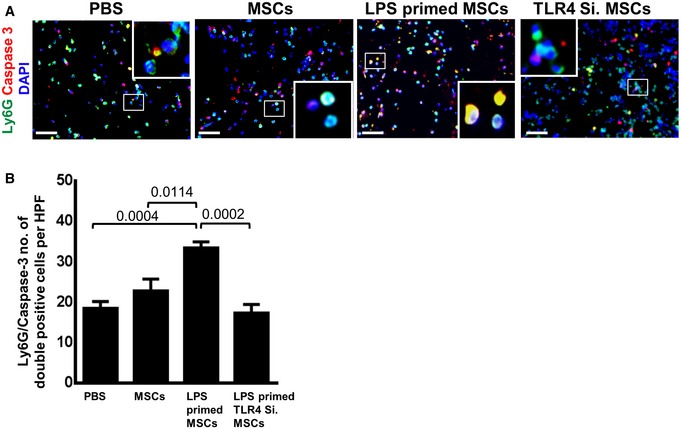
We here address the question whether the unique capacity of mesenchymal stem cells to re-establish tissue homeostasis depends on their potential to sense pathogen-associated molecular pattern and, in consequence, mount an adaptive response in the interest of tissue repair. After injection of MSCs primed with the bacterial wall component LPS into murine wounds, an unexpected acceleration of healing occurs, clearly exceeding that of non-primed MSCs. This correlates with a fundamental reprogramming of the transcriptome in LPS-treated MSCs as deduced from RNAseq analysis and its validation. A network of genes mediating the adaptive response through the Toll-like receptor 4 (TLR4) pathway responsible for neutrophil and macrophage recruitment and their activation profoundly contributes to enhanced wound healing. In fact, injection of LPS-primed MSCs silenced for TLR4 fails to accelerate wound healing. These unprecedented findings hold substantial promise to refine current MSC-based therapies for difficult-to-treat wounds.
我们在这里探讨一个问题,即间充质干细胞重建组织内稳态的独特能力是否取决于它们感知病原体相关分子模式的能力,以及是否因此为了组织修复而产生适应性反应。将用细菌壁成分 LPS 预激活的间充质干细胞注射到小鼠伤口后,会出现意想不到的愈合加速,明显超过未预激活的间充质干细胞。这与从 RNAseq 分析及其验证中推断出的 LPS 处理的间充质干细胞中转录组的基本重编程相关。通过 Toll 样受体 4 (TLR4) 途径介导适应性反应的基因网络负责招募中性粒细胞和巨噬细胞及其激活,这对增强伤口愈合有深远的贡献。事实上,注射沉默 TLR4 的 LPS 预激活间充质干细胞不能加速伤口愈合。这些前所未有的发现为改进目前基于间充质干细胞的治疗难治性伤口的方法提供了巨大的希望。