Bergerhausen Lukas, Grosche Julius, Meißner Juliane, Hecker Christina, Caliandro Michele F, Westerhausen Christoph, Kamenac Andrej, Rezaei Maryam, Mörgelin Matthias, Poschmann Gereon, Vestweber Dietmar, Hanschmann Eva-Maria, Eble Johannes A
Institute of Physiological Chemistry and Pathobiochemistry, University of Münster, 48149 Münster, Germany.
Department of Neurology, Medical Faculty, Heinrich-Heine University Düsseldorf, 40225 Düsseldorf, Germany.
Antioxidants (Basel). 2020 Mar 10;9(3):227. doi: 10.3390/antiox9030227.
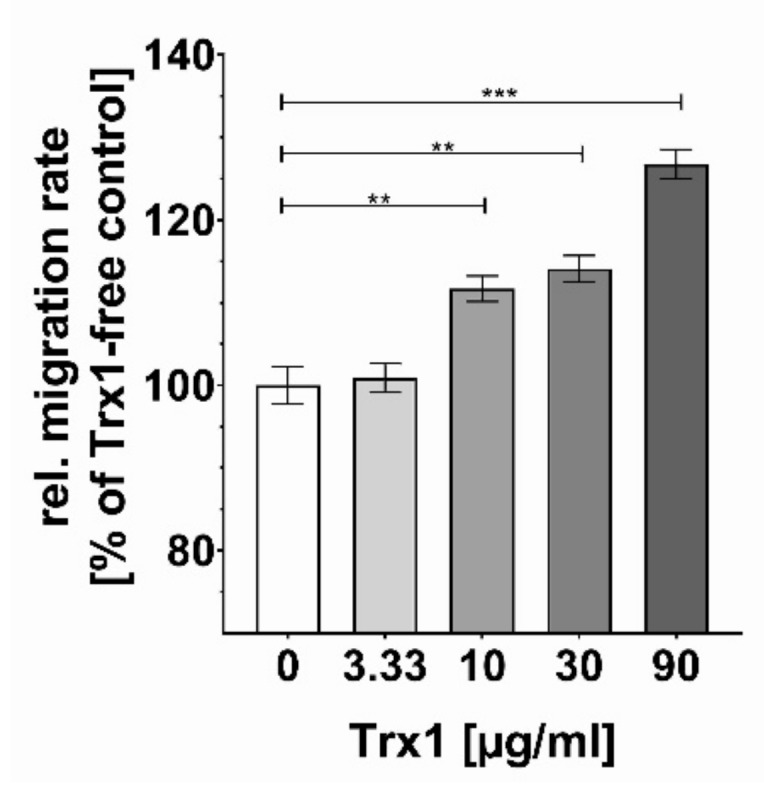
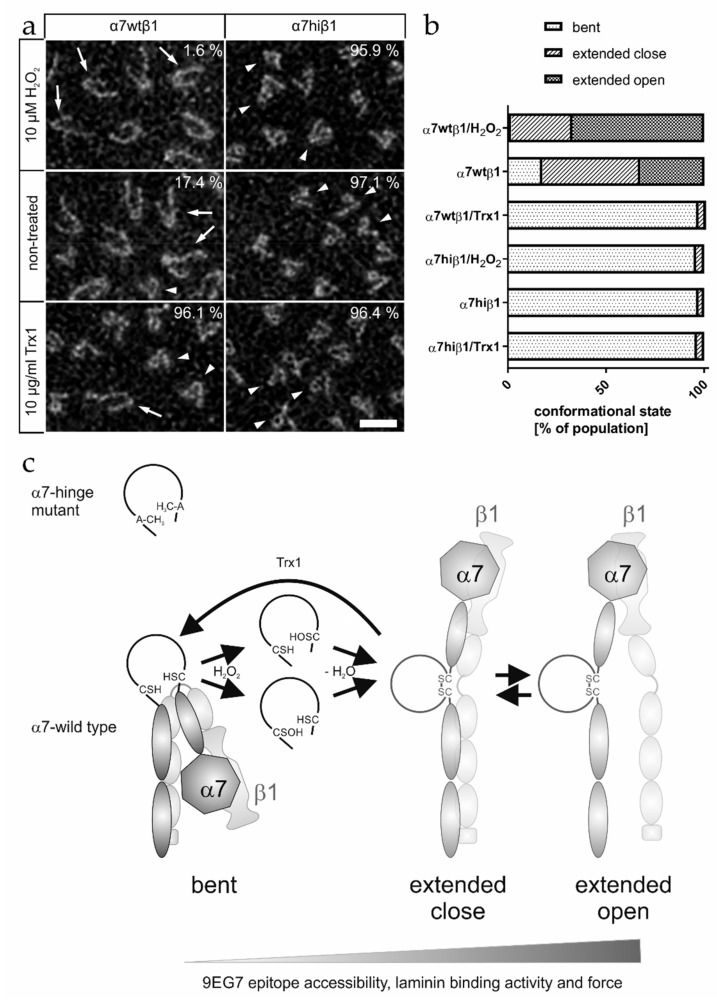
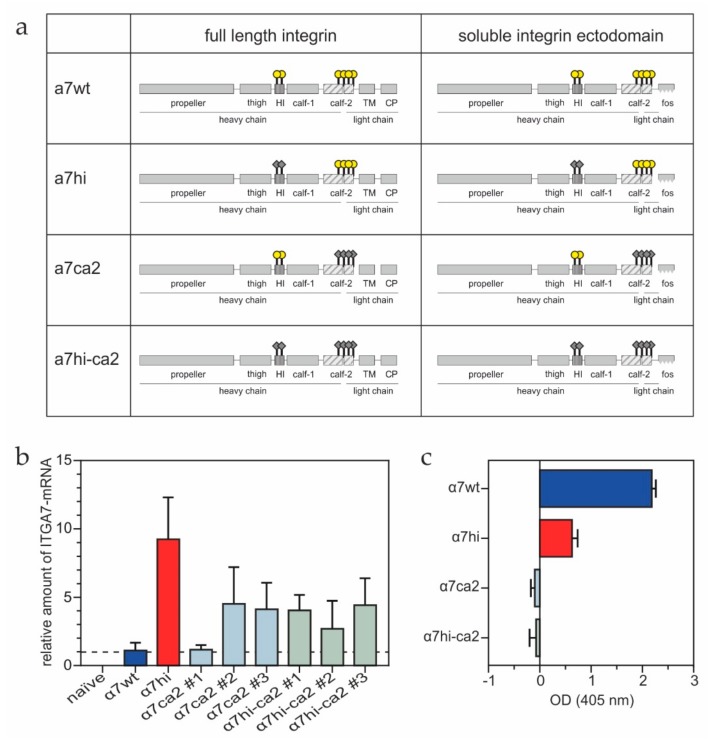
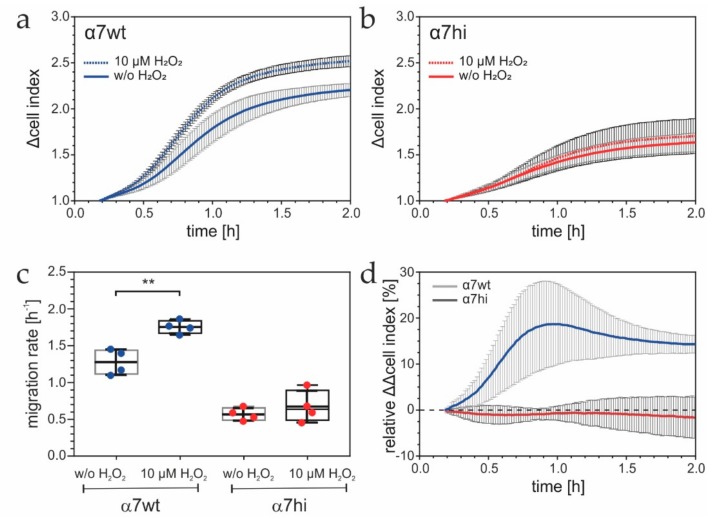
While adhering to extracellular matrix (ECM) proteins, such as laminin-111, cells temporarily produce hydrogen peroxide at adhesion sites. To study the redox regulation of α7β1 integrin-mediated cell adhesion to laminin-111, a conserved cysteine pair within the α-subunit hinge region was replaced for alanines. The molecular and cellular effects were analyzed by electron and atomic force microscopy, impedance-based migration assays, flow cytometry and live cell imaging. This cysteine pair constitutes a thiol-switch, which redox-dependently governs the equilibrium between an extended and a bent integrin conformation with high and low ligand binding activity, respectively. Hydrogen peroxide oxidizes the cysteines to a disulfide bond, increases ligand binding and promotes cell migration toward laminin-111. Inversely, extracellular thioredoxin-1 reduces the disulfide, thereby decreasing laminin binding. Mutation of this cysteine pair into the non-oxidizable hinge-mutant shows molecular and cellular effects similar to the reduced wild-type integrin, but lacks redox regulation. This proves the existence of a dominant thiol-switch within the α subunit hinge of α7β1 integrin, which is sufficient to implement activity regulation by extracellular redox agents in a redox-regulatory circuit. Our data reveal a novel and physiologically relevant thiol-based regulatory mechanism of integrin-mediated cell-ECM interactions, which employs short-lived hydrogen peroxide and extracellular thioredoxin-1 as signaling mediators.
细胞在黏附于细胞外基质(ECM)蛋白(如层粘连蛋白-111)时,会在黏附位点暂时产生过氧化氢。为了研究α7β1整合素介导的细胞与层粘连蛋白-111黏附的氧化还原调节机制,将α亚基铰链区内一对保守的半胱氨酸替换为丙氨酸。通过电子显微镜、原子力显微镜、基于阻抗的迁移分析、流式细胞术和活细胞成像对分子和细胞效应进行了分析。这对半胱氨酸构成了一个硫醇开关,其氧化还原状态分别决定了具有高和低配体结合活性的伸展型和弯曲型整合素构象之间的平衡。过氧化氢将半胱氨酸氧化为二硫键,增加配体结合并促进细胞向层粘连蛋白-111迁移。相反,细胞外硫氧还蛋白-1还原二硫键,从而降低层粘连蛋白结合。将这对半胱氨酸突变为不可氧化的铰链突变体,其分子和细胞效应与还原型野生型整合素相似,但缺乏氧化还原调节。这证明了α7β1整合素α亚基铰链区内存在一个主要的硫醇开关,足以在氧化还原调节回路中通过细胞外氧化还原剂实现活性调节。我们的数据揭示了一种新的、与生理相关的基于硫醇的整合素介导的细胞与细胞外基质相互作用的调节机制,该机制利用短暂存在的过氧化氢和细胞外硫氧还蛋白-1作为信号介质。