Farhadi Zeynab, Abulghasem Gorgi Hasan, Shabaninejad Hosein, Aghajani Delavar Mouloud, Torani Sogand
Department of Health Services Management, School of Health Management and Information Sciences, Iran University of Medical Sciences, Tehran, Iran.
Department of Health Economics, School of Health Management and Information Sciences, Iran University of Medical Sciences, Tehran, Iran.
BMC Public Health. 2020 Mar 12;20(1):314. doi: 10.1186/s12889-020-8262-3.
It is generally assumed that there have been mixed results in the literature regarding the association between ambient particulate matter (PM) and myocardial infarction (MI). The aim of this meta-analysis was to explore the rate of short-term exposure PM with aerodynamic diameters ≤2.5 μm (PM) and examine its potential effect(s) on the risk of MI.
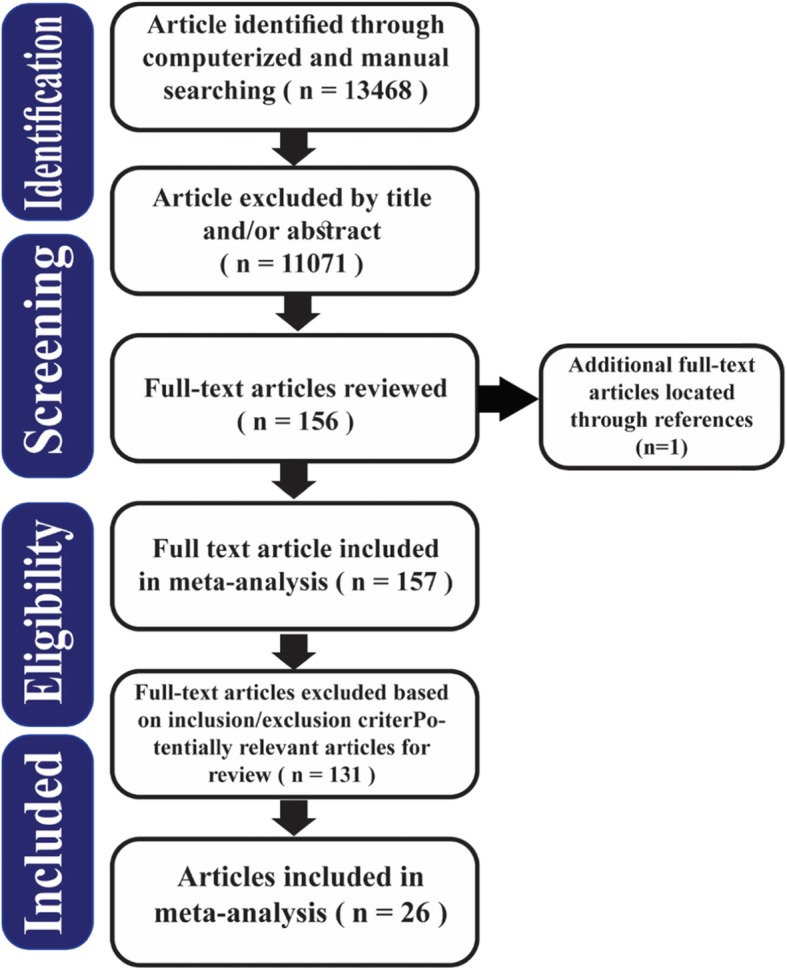
A systematic search was conducted on databases like PubMed, Scopus, Web of Science, and Embase with components: "air pollution" and "myocardial infarction". The summary relative risk (RR) and 95% confidence intervals (95%CI) were also calculated to assess the association between the PM and MI.
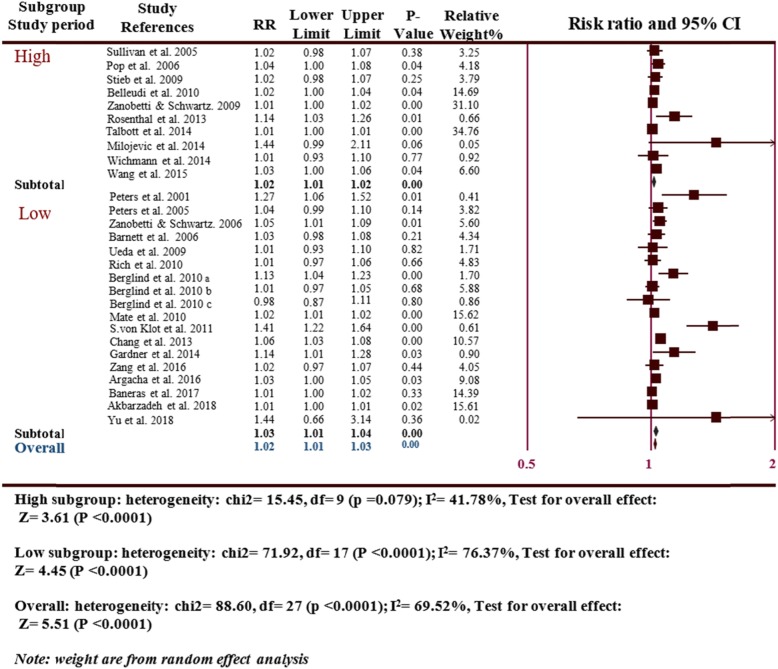
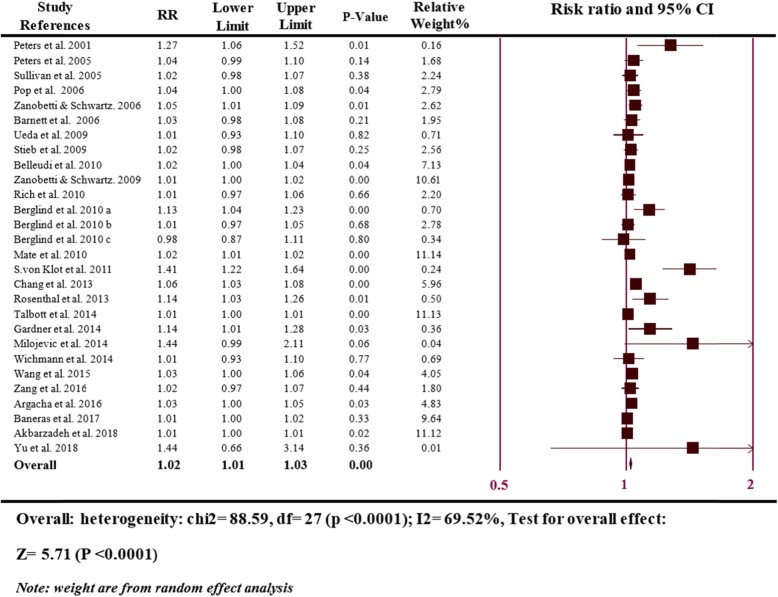
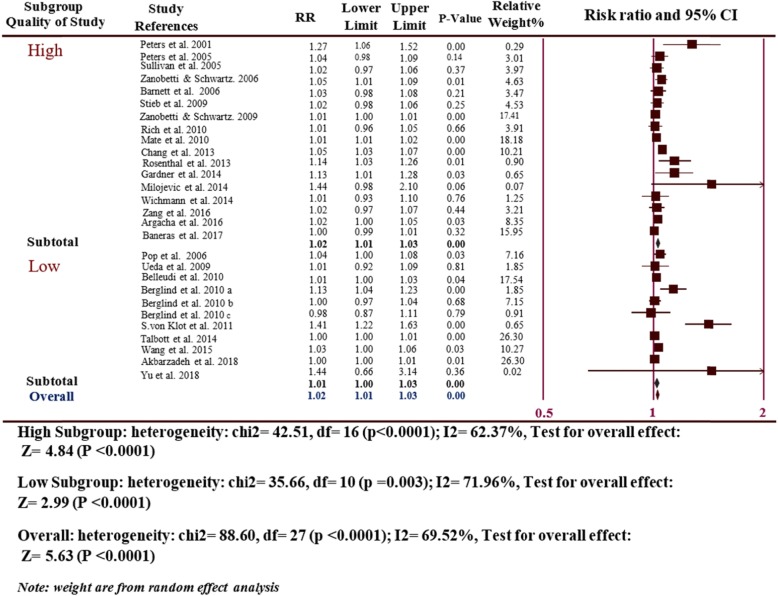
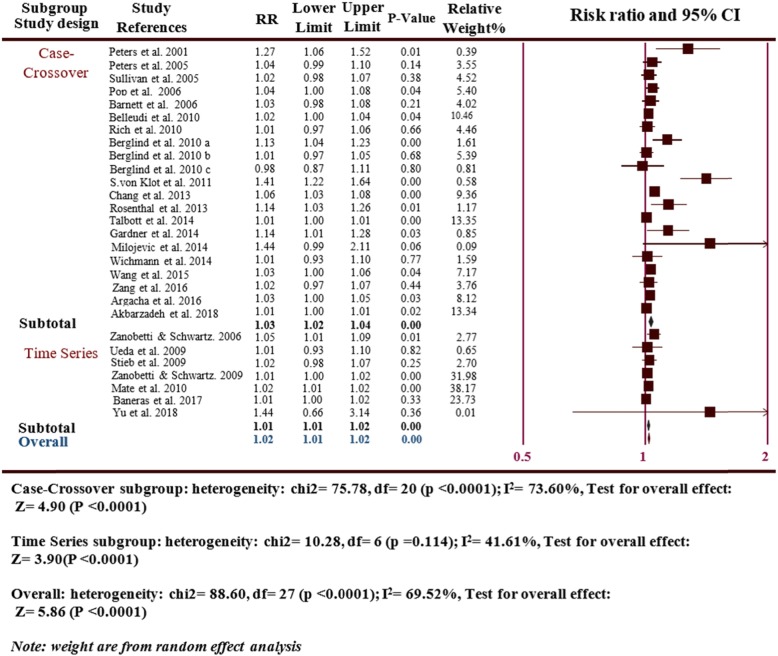
Twenty-six published studies were ultimately identified as eligible candidates for the meta-analysis of MI until Jun 1, 2018. The results illustrated that a 10-μg/m 3 increase in PM was associated with the risk of MI (RR = 1.02; 95% CI 1.01-1.03; P ≤ 0.0001). The heterogeneity of the studies was assessed through a random-effects model with p < 0.0001 and the I was 69.52%, indicating a moderate degree of heterogeneity. We also conducted subgroup analyses including study quality, study design, and study period. Accordingly, it was found that subgroups time series study design and high study period could substantially decrease heterogeneity (I = 41.61, 41.78).
This meta-analysis indicated that exposure - response between PM and MI. It is vital decision makers implement effective strategies to help improve air pollution, especially in developing countries or prevent exposure to PM to protect human health.
一般认为,关于环境颗粒物(PM)与心肌梗死(MI)之间的关联,文献中的结果不一。本荟萃分析的目的是探讨短期暴露于空气动力学直径≤2.5μm的颗粒物(PM)的比例,并研究其对心肌梗死风险的潜在影响。
在PubMed、Scopus、Web of Science和Embase等数据库中进行系统检索,检索词为:“空气污染”和“心肌梗死”。还计算了汇总相对风险(RR)和95%置信区间(95%CI),以评估PM与MI之间的关联。
截至2018年6月1日,最终确定了26项已发表的研究作为心肌梗死荟萃分析的合格候选研究。结果表明,PM每增加10μg/m³与心肌梗死风险相关(RR = 1.02;95%CI 1.01 - 1.03;P≤0.0001)。通过随机效应模型评估研究的异质性,p < 0.0001,I²为69.52%,表明异质性程度中等。我们还进行了亚组分析,包括研究质量、研究设计和研究时期。据此发现,时间序列研究设计和高研究时期的亚组可大幅降低异质性(I² = 41.61,41.78)。
本荟萃分析表明了PM与MI之间的暴露 - 反应关系。至关重要的是,决策者应实施有效策略以帮助改善空气污染,尤其是在发展中国家,或防止暴露于PM以保护人类健康。