Health and Sports Medicine Department, Faculty of Physical Education and Sport Sciences, University of Tehran, Tehran, Iran.
Sport Sciences and Physical Education, Faculty of Humanities Science, University of Hormozgan, Bandar Abbas, Iran.
Trials. 2020 Mar 12;21(1):255. doi: 10.1186/s13063-020-4159-9.
Upper crossed syndrome (UCS) refers to specific altered muscle activation and changed movement patterns along with some postural deviations in the upper quarter of the body. This syndrome might contribute to the dysfunction of the cervicothoracic and glenohumeral joints.
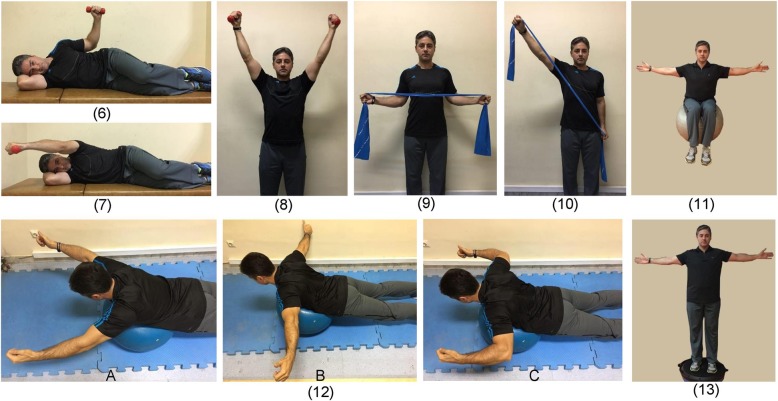
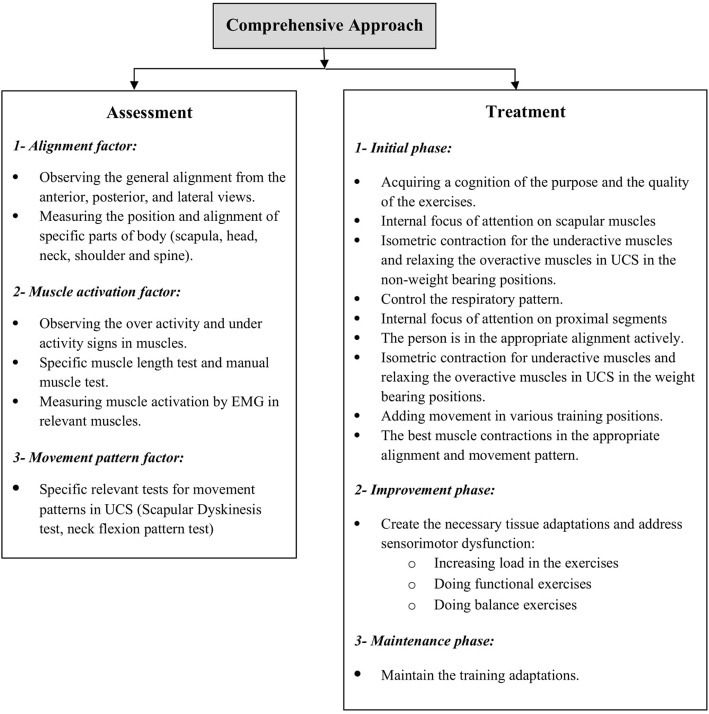
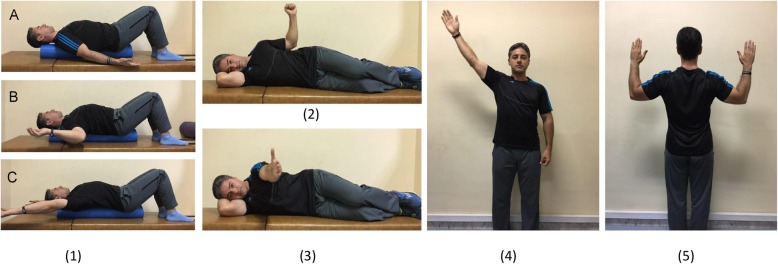
The present study will aim to investigate the effectiveness of a comprehensive corrective exercises program (CCEP) and subsequent detraining on alignment, muscle activation and movement pattern in men with UCS.
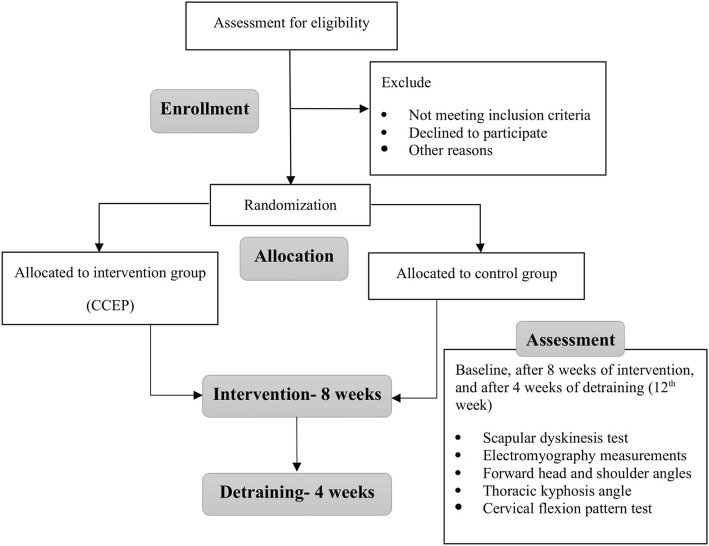
METHODS/DESIGN: This is a parallel-group randomized controlled trial. Participants will be 22 men aged 18 to 28 years who are suffering from UCS. Participants in the intervention group will conduct CCEP (three times a week for 8 weeks), followed by 4 weeks of detraining. The control group will do their daily activities. Participants will be randomized (1:1) into the intervention or the control group. The primary outcome will be upper trapezius activations. Secondary outcomes consist of electromyography of middle and lower trapezius and serratus anterior muscles, scapular dyskinesis test, forward head and shoulder angles, thoracic kyphosis angle, and neck flexion pattern test.
We propose to evaluate the effectiveness of a randomized controlled trial of a CCEP in men with UCS on their alignment, selected muscle activations, and relevant movement patterns. Results from our trial may provide new insights into the effects of exercise not only on the alignment but also on muscle activation and movement patterns that are important outcomes for people with postural malalignments and, if successful, could assist therapists in evidence-based clinical decision-making.
Iranian Registry of Clinical Trials, IRCT20181004041232N1. Registered on 26 October 2018.
上交叉综合征(UCS)是指上半身特定的肌肉激活改变和运动模式变化,以及一些姿势偏差。这种综合征可能导致颈椎和胸锁关节以及肩盂肱关节功能障碍。
本研究旨在探讨综合矫正运动方案(CCEP)及随后的停训对患有 UCS 的男性的姿势、肌肉激活和运动模式的影响。
方法/设计:这是一项平行组随机对照试验。参与者为 22 名年龄在 18 至 28 岁之间患有 UCS 的男性。干预组的参与者将进行 CCEP(每周三次,持续 8 周),随后进行 4 周的停训。对照组将进行日常活动。参与者将被随机(1:1)分配到干预组或对照组。主要结局指标为斜方肌上部的激活情况。次要结局指标包括中下部斜方肌和前锯肌的肌电图、肩胛带运动测试、头前伸和肩部角度、胸椎后凸角度以及颈椎前屈模式测试。
我们拟评估 CCEP 对患有 UCS 的男性的姿势、特定肌肉激活和相关运动模式的随机对照试验的有效性。我们的试验结果可能为运动对姿势的影响提供新的见解,不仅对姿势,而且对肌肉激活和运动模式也有影响,这些都是姿势不正患者的重要结局。如果试验成功,可能有助于治疗师做出基于证据的临床决策。
伊朗临床试验注册中心,IRCT20181004041232N1。注册于 2018 年 10 月 26 日。