Department of Oncology, Mayo Clinic, Rochester, MN, 55905, USA.
Department of Biochemistry and Molecular Biology, Mayo Clinic, Rochester, MN, 55905, USA.
Nat Commun. 2020 Mar 12;11(1):1318. doi: 10.1038/s41467-020-15170-7.
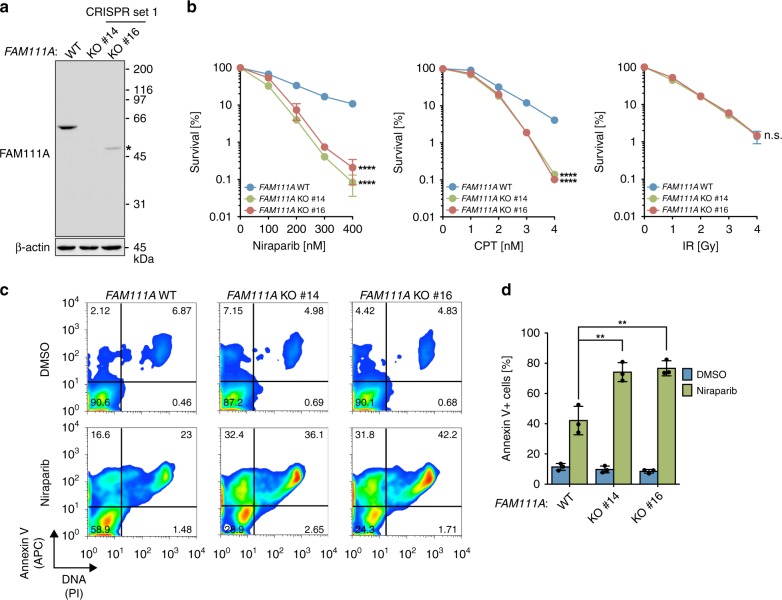
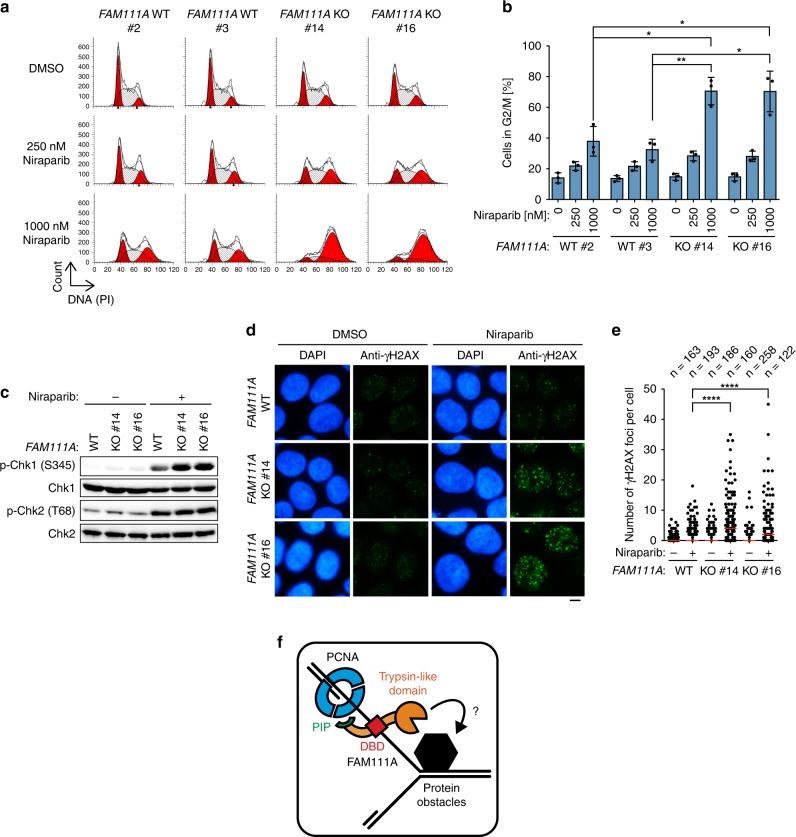
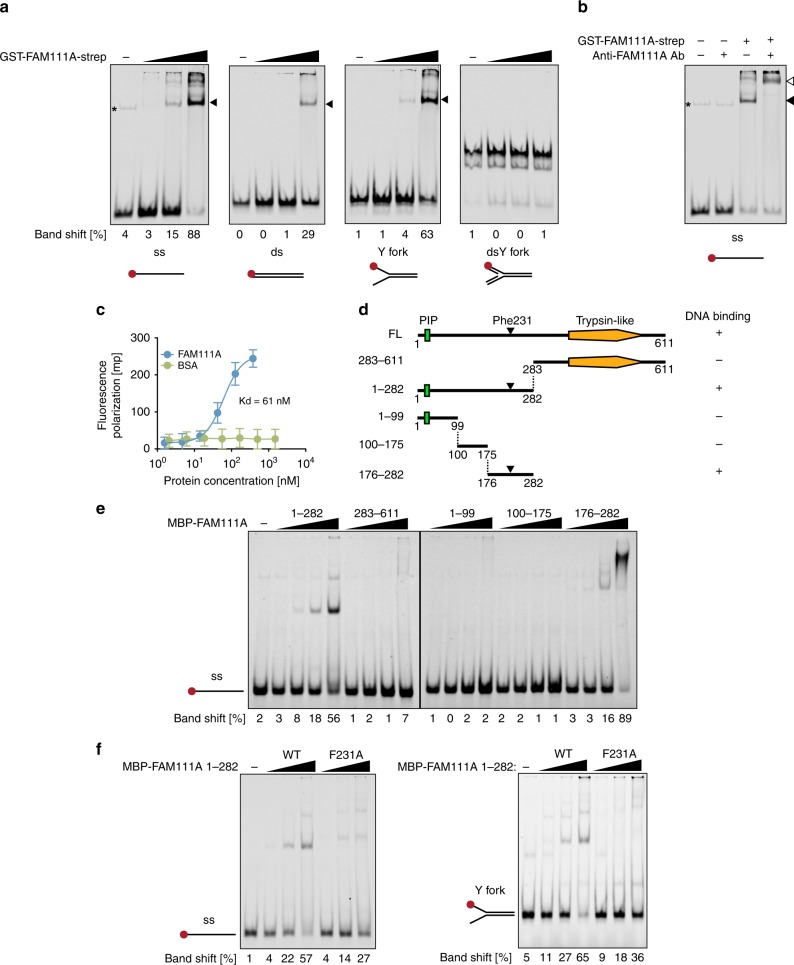
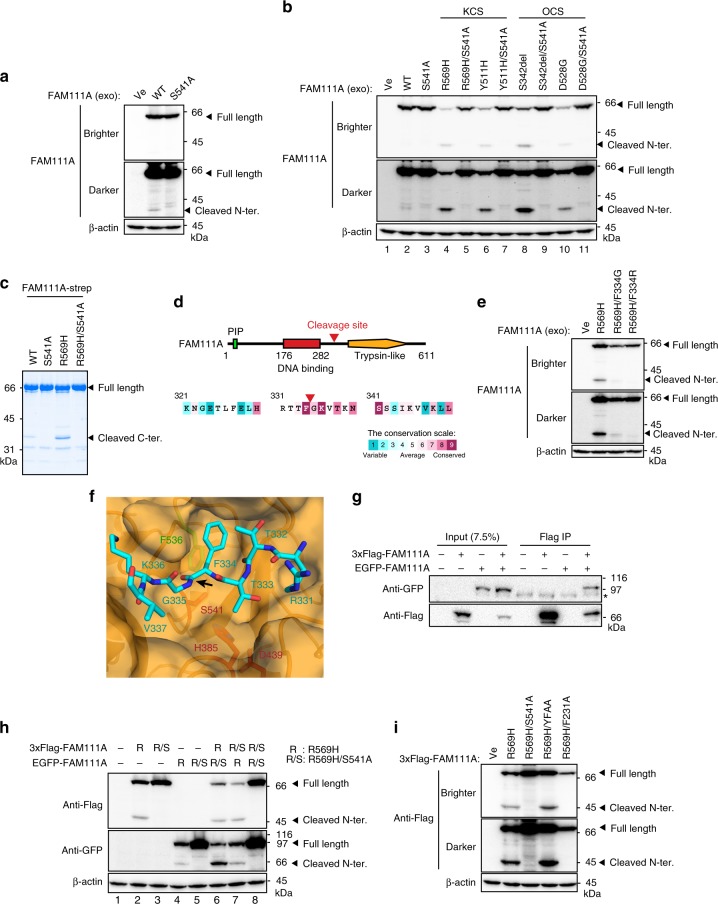
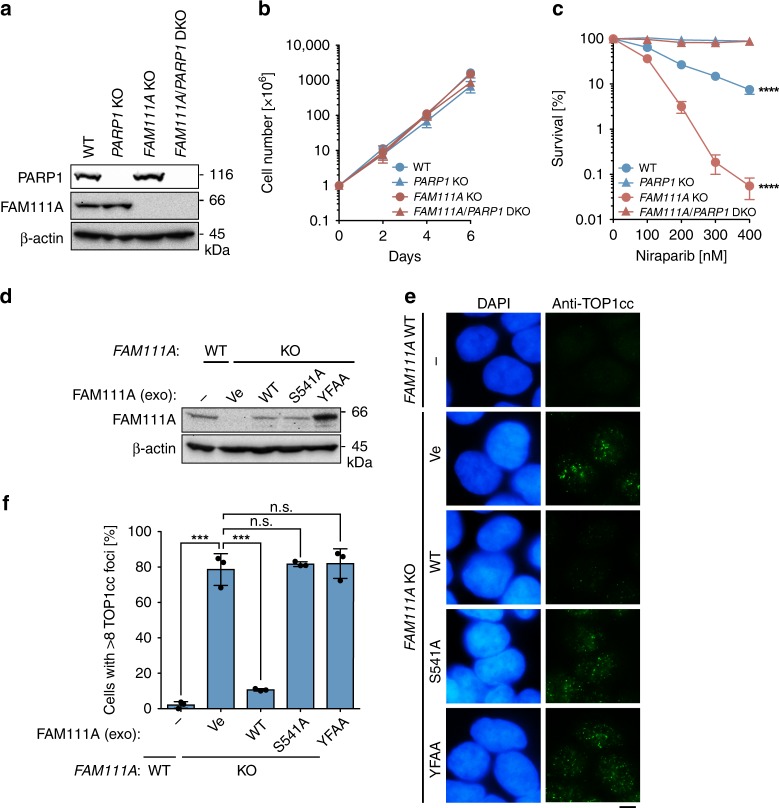
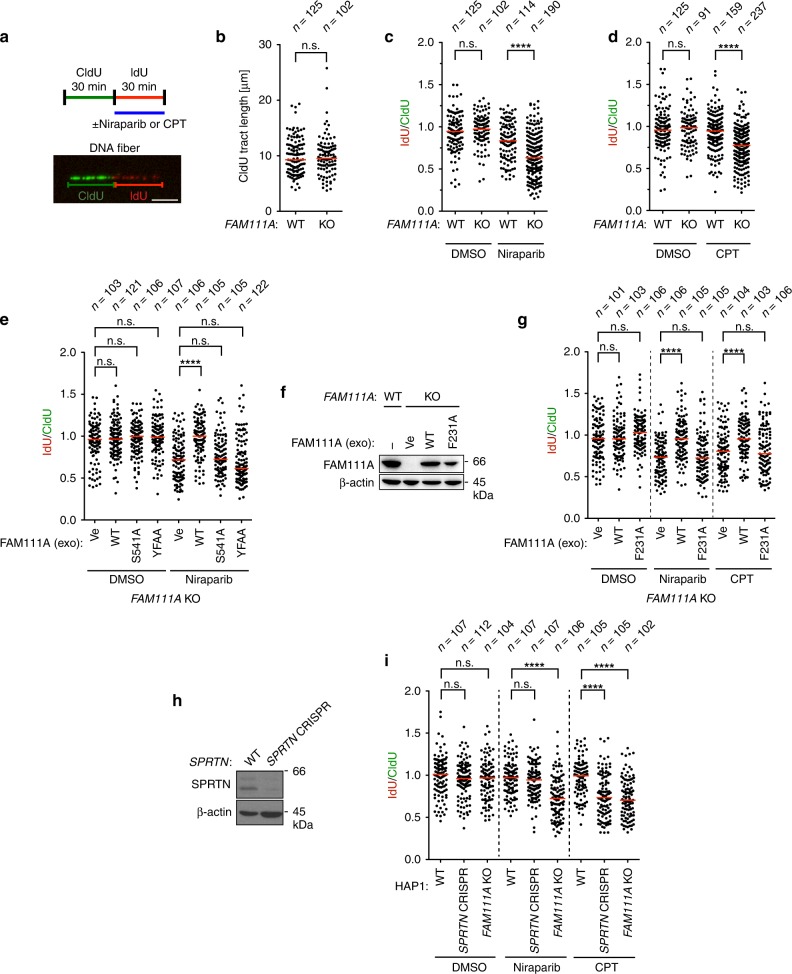
Persistent protein obstacles on genomic DNA, such as DNA-protein crosslinks (DPCs) and tight nucleoprotein complexes, can block replication forks. DPCs can be removed by the proteolytic activities of the metalloprotease SPRTN or the proteasome in a replication-coupled manner; however, additional proteolytic mechanisms may exist to cope with the diversity of protein obstacles. Here, we show that FAM111A, a PCNA-interacting protein, plays an important role in mitigating the effect of protein obstacles on replication forks. This function of FAM111A requires an intact trypsin-like protease domain, the PCNA interaction, and the DNA-binding domain that is necessary for protease activity in vivo. FAM111A, but not SPRTN, protects replication forks from stalling at poly(ADP-ribose) polymerase 1 (PARP1)-DNA complexes trapped by PARP inhibitors, thereby promoting cell survival after drug treatment. Altogether, our findings reveal a role of FAM111A in overcoming protein obstacles to replication forks, shedding light on cellular responses to anti-cancer therapies.
基因组 DNA 上持续存在的蛋白质障碍物,如 DNA-蛋白质交联(DPC)和紧密的核蛋白复合物,可以阻止复制叉前进。DPC 可以通过金属蛋白酶 SPRTN 或蛋白酶体的蛋白水解活性以复制偶联的方式被移除;然而,可能存在其他的蛋白水解机制来应对蛋白质障碍物的多样性。在这里,我们表明,PCNA 相互作用蛋白 FAM111A 在减轻蛋白质障碍物对复制叉的影响方面起着重要作用。FAM111A 的这一功能需要一个完整的胰蛋白酶样蛋白酶结构域、PCNA 相互作用以及体内蛋白酶活性所必需的 DNA 结合结构域。FAM111A 而不是 SPRTN 可以保护复制叉免受 PARP 抑制剂捕获的多聚(ADP-核糖)聚合酶 1(PARP1)-DNA 复合物引起的停滞,从而促进药物治疗后的细胞存活。总之,我们的研究结果揭示了 FAM111A 在克服复制叉蛋白质障碍物方面的作用,为细胞对癌症治疗的反应提供了新的视角。