Center for Molecular Medicine and Genetics, Wayne State University School of Medicine, Detroit, MI 48201, U.S.A.
Department of Internal Medicine, Henry Ford Hospital, Hypertension and Vascular Research Division, Detroit, Michigan 48202, U.S.A.
Biochem J. 2020 Mar 13;477(5):985-1008. doi: 10.1042/BCJ20190468.
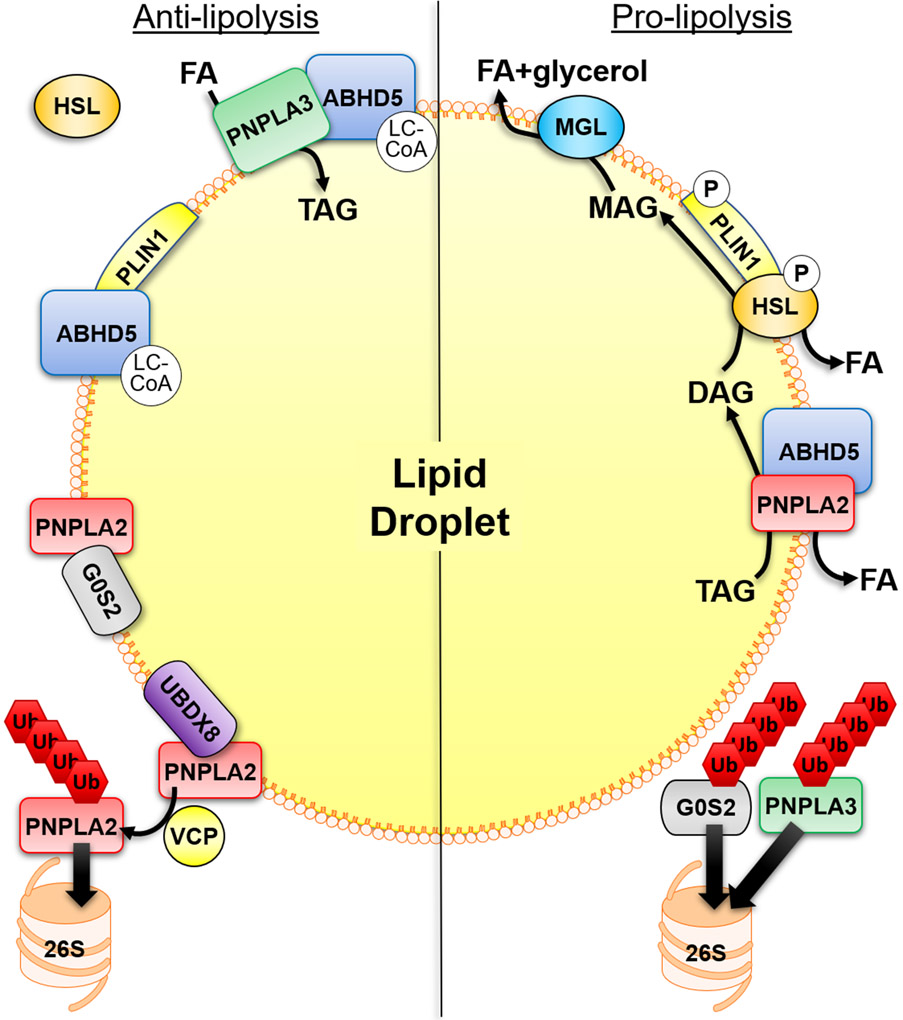
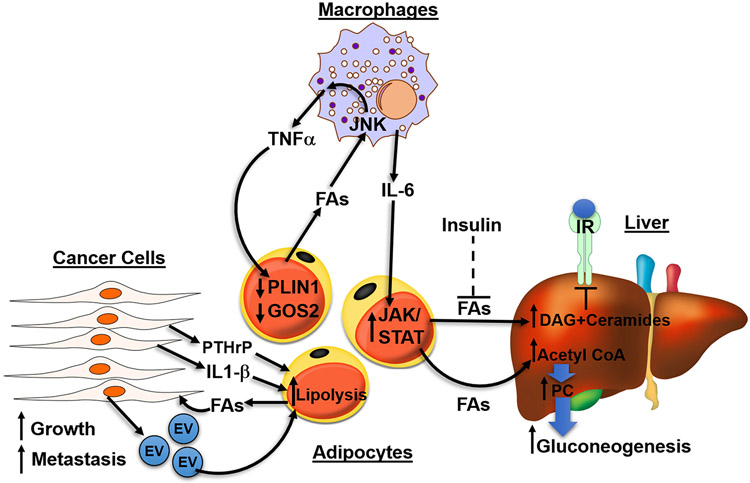
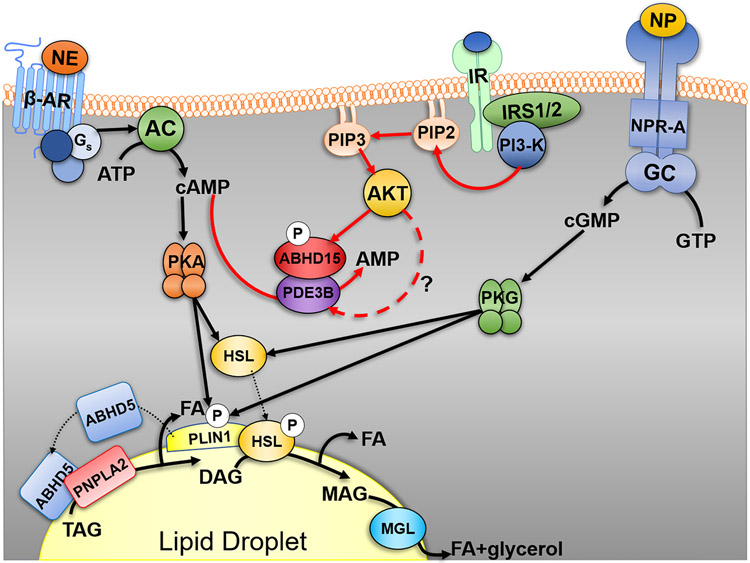
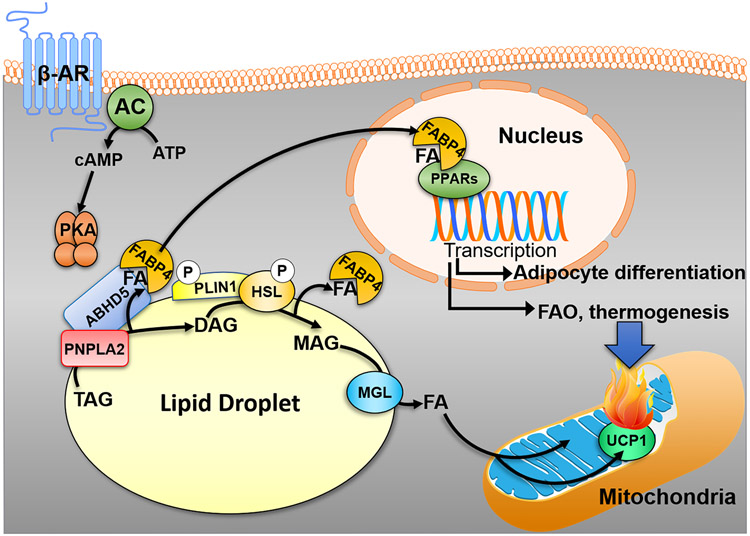
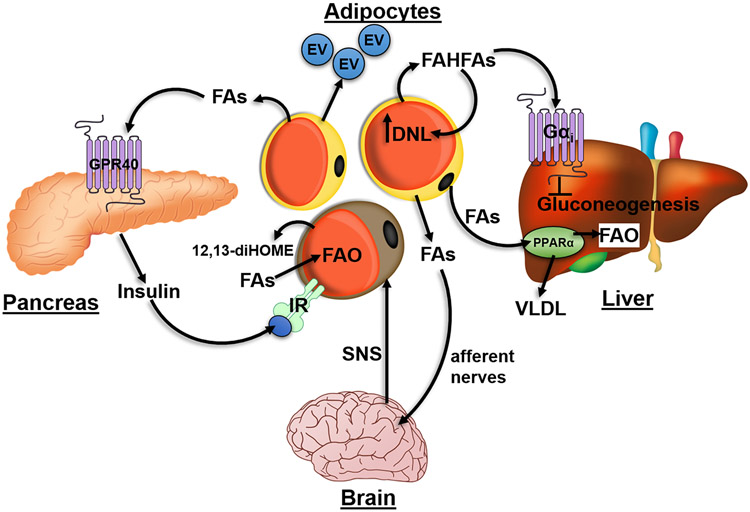
Fatty acids (FAs) are stored safely in the form of triacylglycerol (TAG) in lipid droplet (LD) organelles by professional storage cells called adipocytes. These lipids are mobilized during adipocyte lipolysis, the fundamental process of hydrolyzing TAG to FAs for internal or systemic energy use. Our understanding of adipocyte lipolysis has greatly increased over the past 50 years from a basic enzymatic process to a dynamic regulatory one, involving the assembly and disassembly of protein complexes on the surface of LDs. These dynamic interactions are regulated by hormonal signals such as catecholamines and insulin which have opposing effects on lipolysis. Upon stimulation, patatin-like phospholipase domain containing 2 (PNPLA2)/adipocyte triglyceride lipase (ATGL), the rate limiting enzyme for TAG hydrolysis, is activated by the interaction with its co-activator, alpha/beta hydrolase domain-containing protein 5 (ABHD5), which is normally bound to perilipin 1 (PLIN1). Recently identified negative regulators of lipolysis include G0/G1 switch gene 2 (G0S2) and PNPLA3 which interact with PNPLA2 and ABHD5, respectively. This review focuses on the dynamic protein-protein interactions involved in lipolysis and discusses some of the emerging concepts in the control of lipolysis that include allosteric regulation and protein turnover. Furthermore, recent research demonstrates that many of the proteins involved in adipocyte lipolysis are multifunctional enzymes and that lipolysis can mediate homeostatic metabolic signals at both the cellular and whole-body level to promote inter-organ communication. Finally, adipocyte lipolysis is involved in various diseases such as cancer, type 2 diabetes and fatty liver disease, and targeting adipocyte lipolysis is of therapeutic interest.
脂肪酸(FAs)以三酰基甘油(TAG)的形式安全地储存在脂质滴(LD)细胞器中,由专业的储存细胞,即脂肪细胞储存。这些脂质在脂肪细胞脂解过程中被动员,这是水解 TAG 为 FA 以用于内部或全身能量利用的基本过程。在过去的 50 年里,我们对脂肪细胞脂解的理解从基本的酶促过程大大增加到动态调节过程,涉及到 LD 表面蛋白复合物的组装和拆卸。这些动态相互作用受激素信号的调节,如儿茶酚胺和胰岛素,它们对脂解有相反的影响。在受到刺激时,脂肪酶相关蛋白/脂肪甘油三酯酶(PNPLA2/ATGL),TAG 水解的限速酶,通过与其共激活剂α/β水解酶结构域蛋白 5(ABHD5)的相互作用而被激活,ABHD5 通常与脂滴蛋白 1(PLIN1)结合。最近鉴定的脂解负调节剂包括 G0/G1 开关基因 2(G0S2)和 PNPLA3,它们分别与 PNPLA2 和 ABHD5 相互作用。这篇综述重点介绍了脂解过程中涉及的动态蛋白-蛋白相互作用,并讨论了一些脂解控制的新出现概念,包括变构调节和蛋白质周转。此外,最近的研究表明,参与脂肪细胞脂解的许多蛋白质是多功能酶,脂解可以在细胞和全身水平上介导稳态代谢信号,以促进器官间的通讯。最后,脂肪细胞脂解参与多种疾病,如癌症、2 型糖尿病和脂肪肝疾病,靶向脂肪细胞脂解具有治疗意义。