College of Animal Science and Technology, Northwest A&F University, Yangling 712100, Shaanxi, China.
Department of Animal Production, Faculty of Agriculture, Zagazig University, Zagazig 44511, Egypt.
Genes (Basel). 2020 Mar 11;11(3):295. doi: 10.3390/genes11030295.
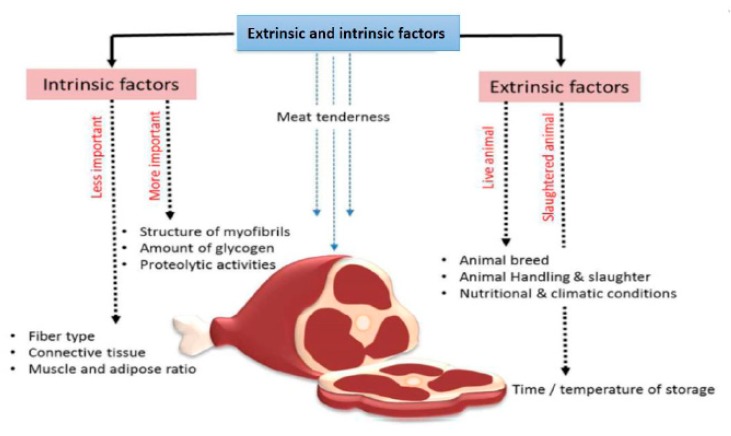
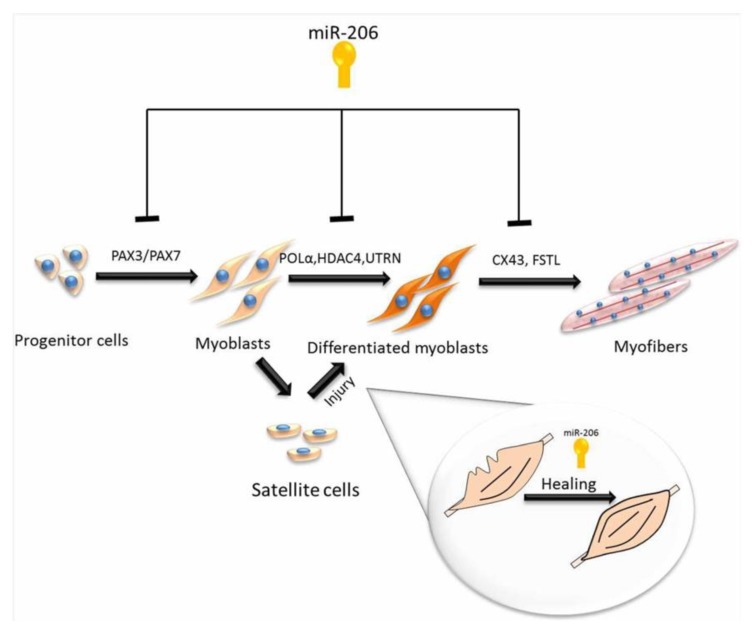
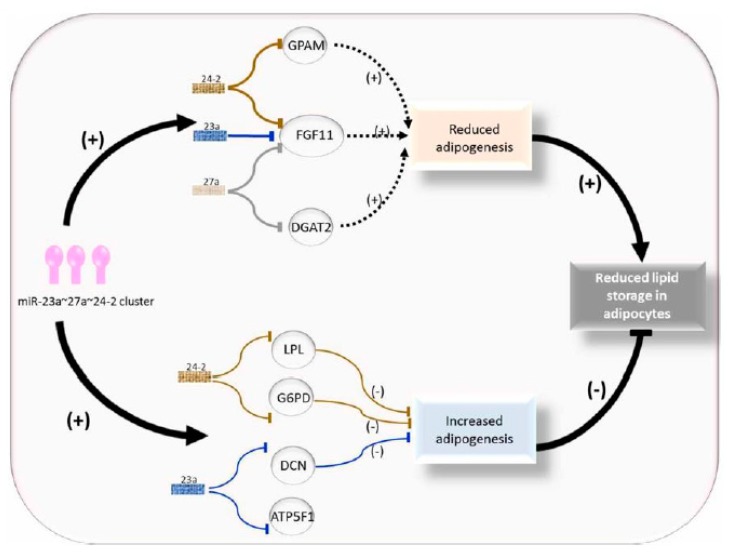
In this review, we highlight information on microRNA (miRNA) identification and functional characterization in the beef for muscle and carcass composition traits, with an emphasis on Qinchuan beef cattle, and discuss the current challenges and future directions for the use of miRNA as a biomarker in cattle for breeding programs to improve meat quality and carcass traits. MicroRNAs are endogenous and non-coding RNA that have the function of making post-transcriptional modifications during the process of preadipocyte differentiation in mammals. Many studies claim that diverse miRNAs have an impact on adipogenesis. Furthermore, their target genes are associated with every phase of adipocyte differentiation. It has been confirmed that, during adipogenesis, several miRNAs are differentially expressed, including miR-204, miR-224, and miR-33. The development of mammalian skeletal muscle is sequentially controlled by somite commitment into progenitor cells, followed by their fusion and migration, the proliferation of myoblasts, and final modification into fast- and slow-twitch muscle fibers. It has been reported that miRNA in the bovine MEG3-DIO3 locus has a regulatory function for myoblast differentiation. Likewise, miR-224 has been associated with controlling the differentiation of bovine adipocytes by targeting lipoprotein lipase. Through the posttranscriptional downregulation of KLF6, miR-148a-3p disrupts the proliferation of bovine myoblasts and stimulates apoptosis while the miR-23a27a24-2 cluster represses adipogenesis. Additional to influences on muscle and fat, bta-mir-182, bta-mir-183, and bta-mir-338 represent regulators of proteolysis in muscle, which influences meat tenderness.
在这篇综述中,我们强调了 miRNA(microRNA)在肌肉和胴体组成性状中的鉴定和功能特征信息,重点介绍了秦川牛肉牛,并讨论了 miRNA 作为牛育种计划中改善肉质和胴体性状的生物标志物的当前挑战和未来方向。miRNA 是内源性和非编码 RNA,在哺乳动物前脂肪细胞分化过程中具有进行转录后修饰的功能。许多研究声称,不同的 miRNA 对脂肪生成有影响。此外,它们的靶基因与脂肪细胞分化的每个阶段都有关联。已经证实,在脂肪生成过程中,一些 miRNA 表达水平不同,包括 miR-204、miR-224 和 miR-33。哺乳动物骨骼肌的发育是由体节承诺进入祖细胞,然后是它们的融合和迁移、成肌细胞的增殖以及最终向快肌和慢肌纤维的转化来依次控制的。据报道,牛 MEG3-DIO3 基因座中的 miRNA 对成肌细胞分化具有调节功能。同样,miR-224 通过靶向脂蛋白脂肪酶来控制牛脂肪细胞的分化。miR-148a-3p 通过转录后下调 KLF6 破坏牛成肌细胞的增殖并刺激凋亡,而 miR-23a27a24-2 簇则抑制脂肪生成。除了对肌肉和脂肪的影响外,bta-mir-182、bta-mir-183 和 bta-mir-338 代表肌肉中蛋白水解的调节剂,影响肉的嫩度。