Figueroa-Lopez Kelly J, Torres-Giner Sergio, Enescu Daniela, Cabedo Luis, Cerqueira Miguel A, Pastrana Lorenzo M, Lagaron Jose M
Novel Materials and Nanotechnology Group, Institute of Agrochemistry and Food Technology (IATA), Spanish National Research Council (CSIC), Calle Catedrático Agustín Escardino Benlloch 7, 46980 Paterna, Spain.
International Iberian Nanotechnology Laboratory (INL), Avenida Mestre José Veiga, 4715-330 Braga, Portugal.
Nanomaterials (Basel). 2020 Mar 11;10(3):506. doi: 10.3390/nano10030506.
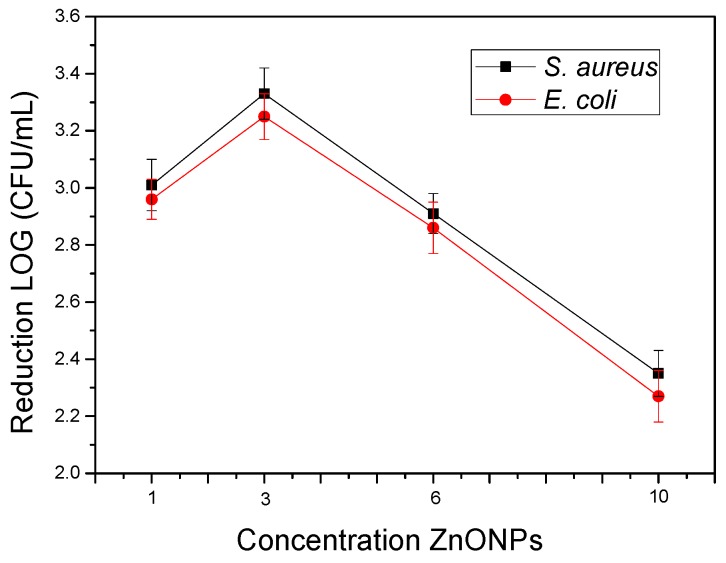
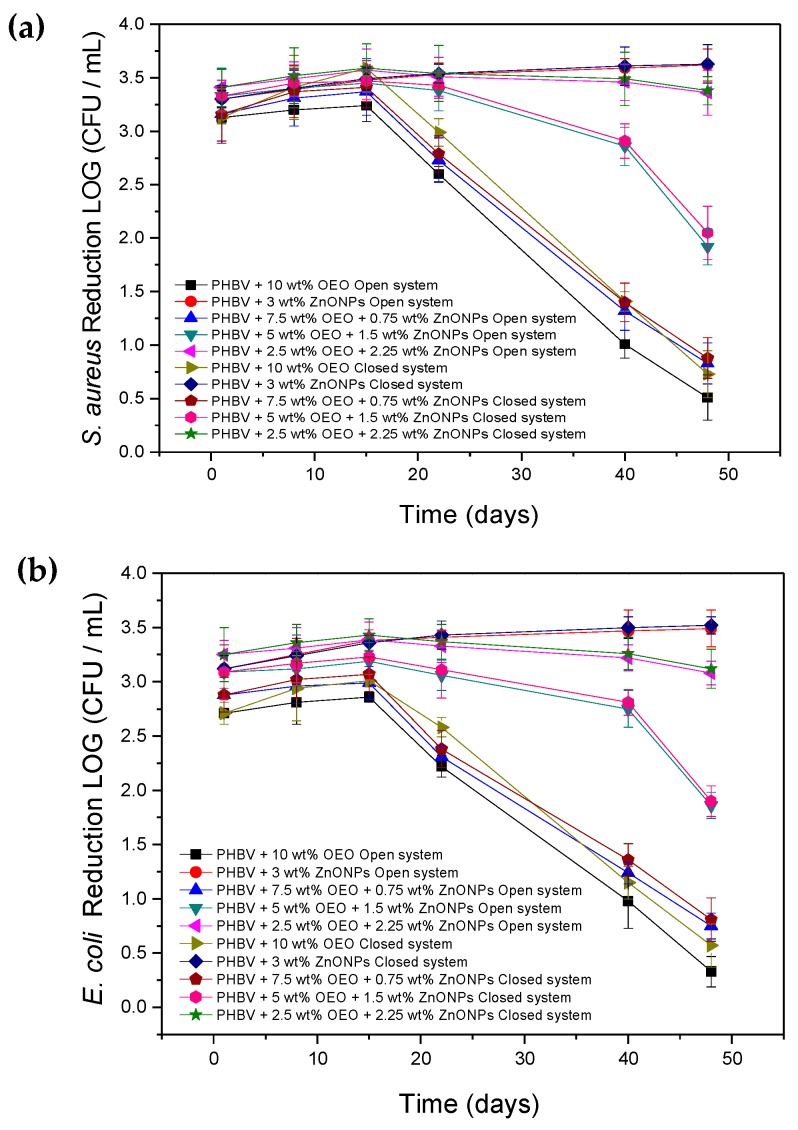
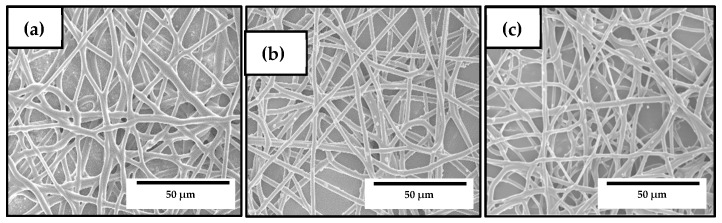
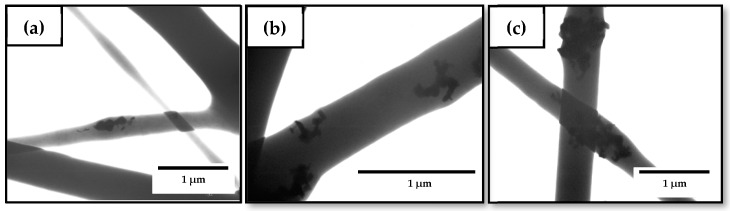
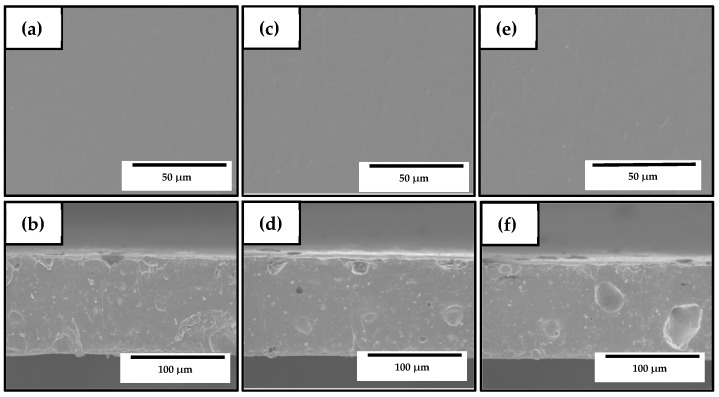
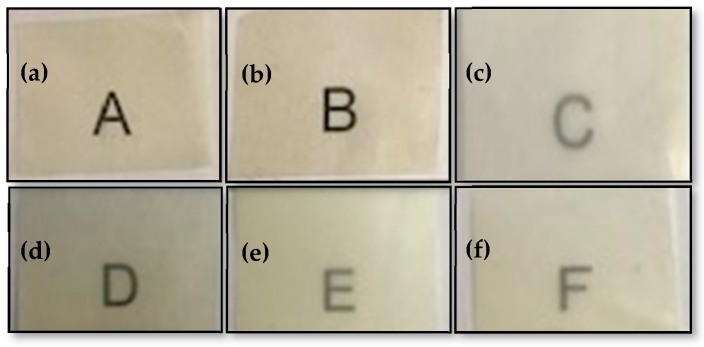
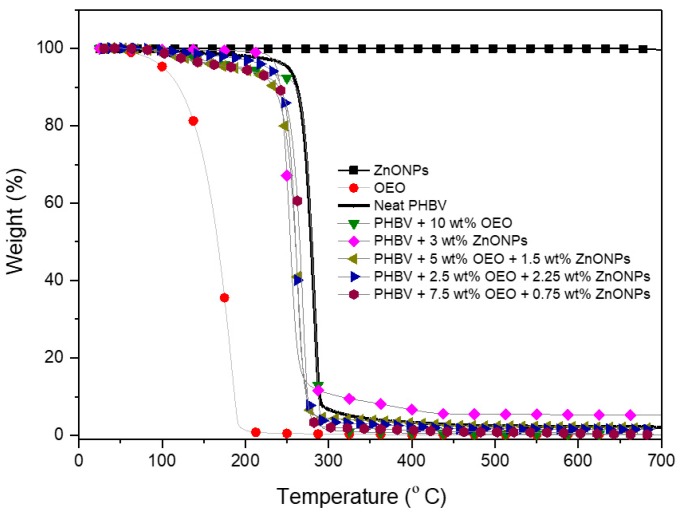
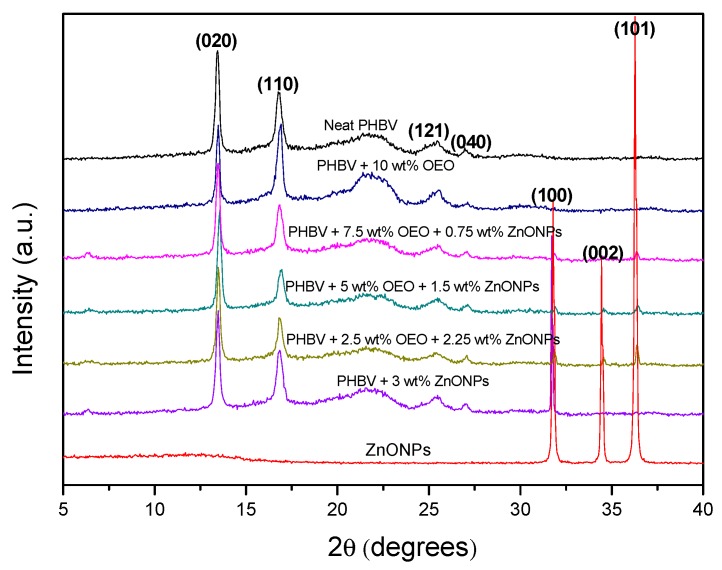
This research reports about the development by electrospinning of fiber-based films made of poly(3-hydroxybutyrate--3-hydroxyvalerate) (PHBV) derived from fermented fruit waste, so-called bio-papers, with enhanced antimicrobial performance. To this end, different combinations of oregano essential oil (OEO) and zinc oxide nanoparticles (ZnONPs) were added to PHBV solutions and electrospun into mats that were, thereafter, converted into homogeneous and continuous films of ~130 μm. The morphology, optical, thermal, mechanical properties, crystallinity, and migration into food simulants of the resultant PHBV-based bio-papers were evaluated and their antimicrobial properties were assessed against () and () in both open and closed systems. It was observed that the antimicrobial activity decreased after 15 days due to the release of the volatile compounds, whereas the bio-papers filled with ZnONPs showed high antimicrobial activity for up to 48 days. The electrospun PHBV biopapers containing 2.5 wt% OEO + 2.25 wt% ZnONPs successfully provided the most optimal activity for short and long periods against both bacteria.
本研究报告了通过静电纺丝法制备由发酵水果废料衍生的聚(3-羟基丁酸酯-3-羟基戊酸酯)(PHBV)制成的纤维基薄膜,即所谓的生物纸,其抗菌性能得到增强。为此,将牛至精油(OEO)和氧化锌纳米颗粒(ZnONPs)的不同组合添加到PHBV溶液中,并静电纺丝成垫子,随后将其转化为约130μm的均匀连续薄膜。对所得基于PHBV的生物纸的形态、光学、热学、力学性能、结晶度以及向食品模拟物中的迁移进行了评估,并在开放和封闭系统中评估了它们对()和()的抗菌性能。观察到由于挥发性化合物的释放,抗菌活性在15天后下降,而填充ZnONPs的生物纸在长达48天的时间内显示出高抗菌活性。含有2.5 wt% OEO + 2.25 wt% ZnONPs的静电纺丝PHBV生物纸成功地在短期和长期内对两种细菌都提供了最优化的活性。