Department of Biological Sciences, Texas Tech University, Lubbock, TX, USA.
Department of Surgery, Texas Tech University Health Sciences Center, Lubbock, TX, USA.
Metabolomics. 2020 Mar 13;16(3):40. doi: 10.1007/s11306-020-01658-2.
Sepsis is a leading cause of mortality in burn patients. One of the major causes of sepsis in burn patients is Pseudomonas aeruginosa. We hypothesized that during dissemination from infected burn wounds and subsequent sepsis, P. aeruginosa affects the metabolome of the blood resulting in changes to specific metabolites that would serve as biomarkers for early diagnosis of sepsis caused by P. aeruginosa.
To identify specific biomarkers in the blood after sepsis caused by P. aeruginosa infection of burns.
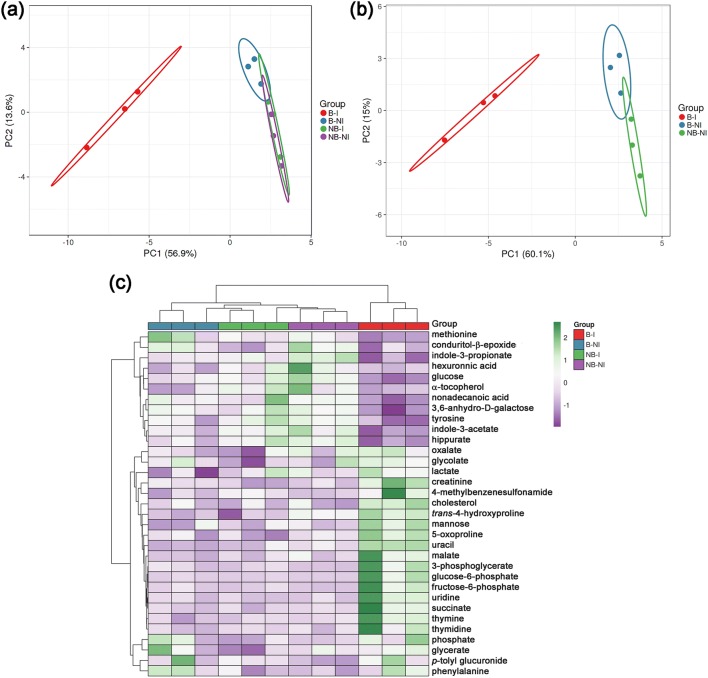
Gas chromatography with time-of-flight mass spectrometry was used to compare the serum metabolome of mice that were thermally injured and infected with P. aeruginosa (B-I) to that of mice that were neither injured nor infected, mice that were injured but not infected, and mice that were infected but not injured.
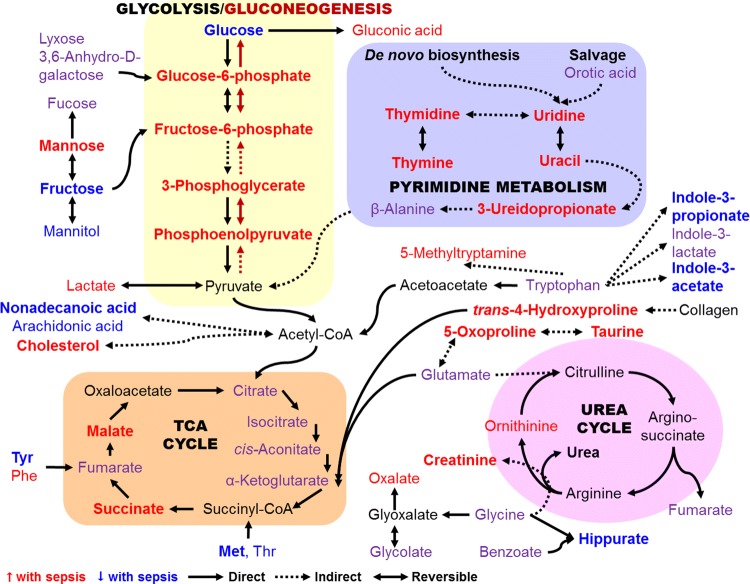
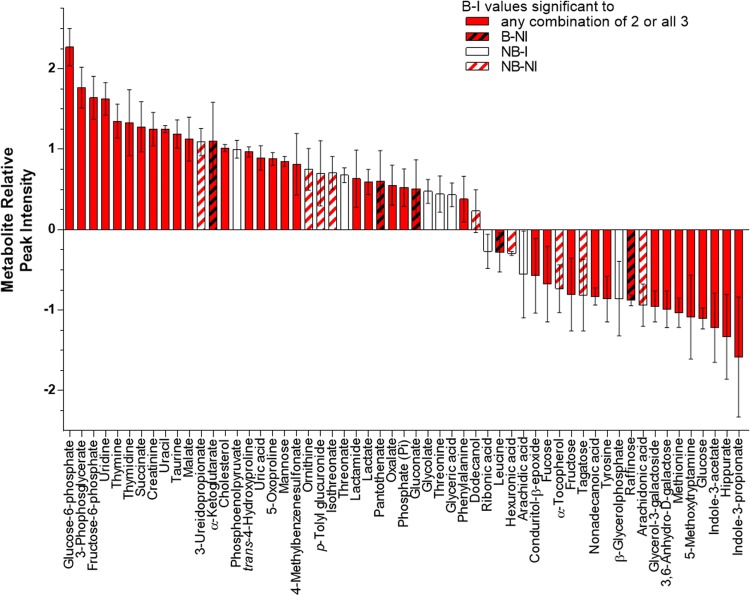
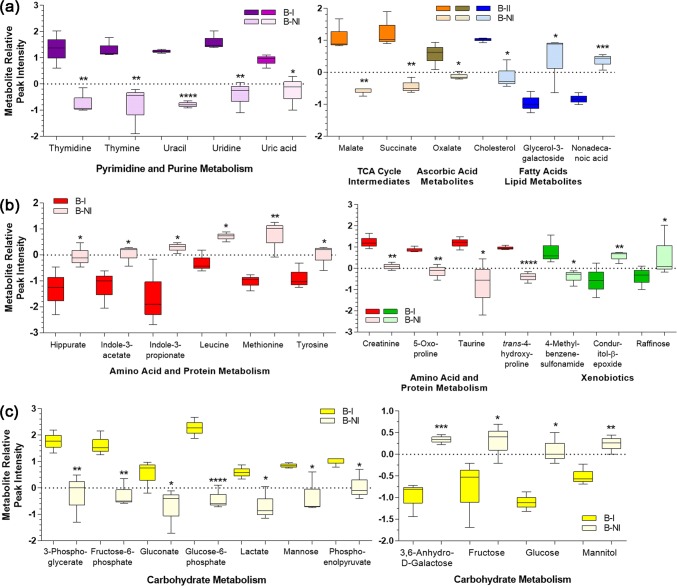
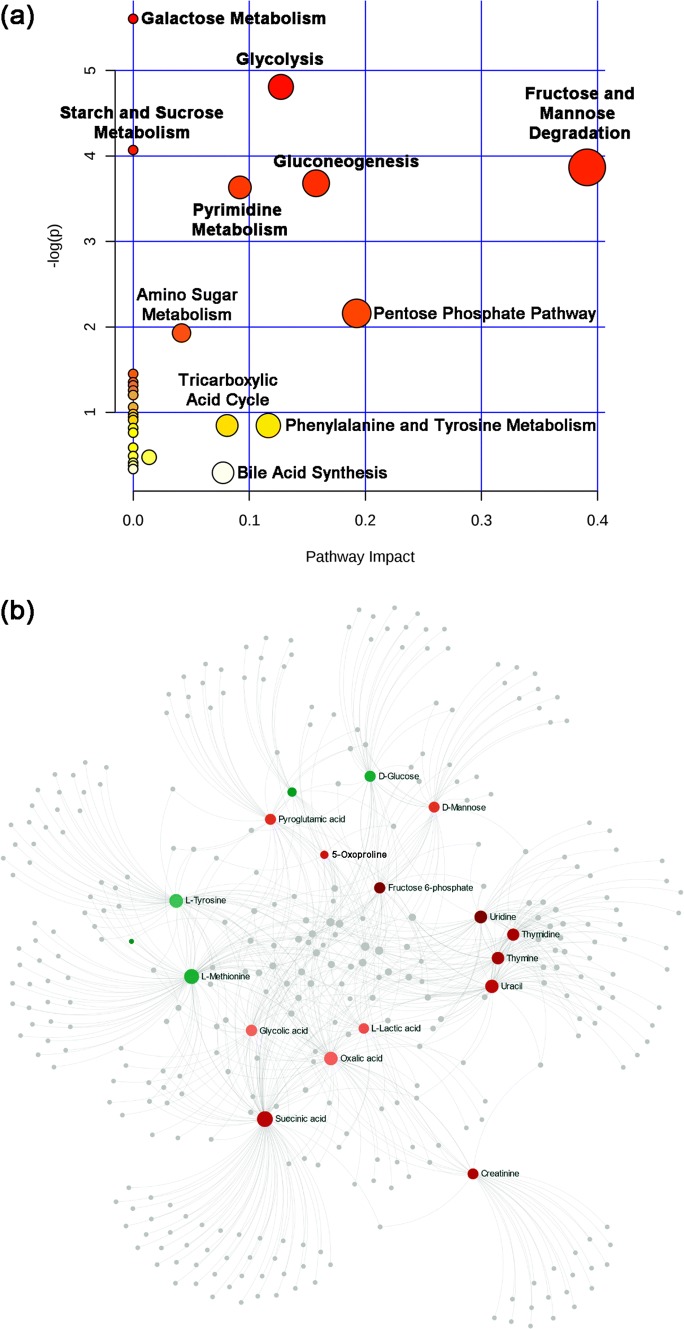
Serum levels of 19 metabolites were significantly increased in the B-I group compared to controls while levels of eight metabolites were significantly decreased. Thymidine, thymine, uridine, and uracil (related to pyrimidine metabolism), malate and succinate (a possible sign of imbalance in the tricarboxylic acid cycle), 5-oxoproline (related to glutamine and glutathione metabolism), and trans-4-hydroxyproline (a major component of the protein collagen) were increased. Products of amino acid metabolism were significantly decreased in the B-I group, including methionine, tyrosine, indole-3-acetate, and indole-3-propionate.
In all, 26 metabolites were identified, including a unique combination of five metabolites (trans-4-hydroxyproline, 5-oxoproline, glycerol-3-galactoside, indole-3-acetate, and indole-3-propionate) that could serve as a set of biomarkers for early diagnosis of sepsis caused by P. aeruginosa in burn patients.
败血症是烧伤患者死亡的主要原因之一。烧伤患者败血症的主要原因之一是铜绿假单胞菌。我们假设,在感染性烧伤创面的传播以及随后的败血症中,铜绿假单胞菌会影响血液的代谢组,导致特定代谢物发生变化,这些变化将作为铜绿假单胞菌引起败血症的早期诊断标志物。
鉴定铜绿假单胞菌感染烧伤引起败血症后血液中的特定生物标志物。
采用气相色谱-飞行时间质谱联用技术,比较了热烧伤合并铜绿假单胞菌感染(B-I)组、未烧伤未感染组、单纯烧伤组、单纯感染组小鼠的血清代谢组。
与对照组相比,B-I 组有 19 种代谢物的血清水平显著升高,而 8 种代谢物的血清水平显著降低。胸苷、胸腺嘧啶、尿苷和尿嘧啶(与嘧啶代谢有关)、苹果酸和琥珀酸(可能是三羧酸循环失衡的标志)、5-氧脯氨酸(与谷氨酰胺和谷胱甘肽代谢有关)和反式-4-羟脯氨酸(蛋白质胶原蛋白的主要成分)升高。B-I 组的氨基酸代谢产物显著减少,包括蛋氨酸、酪氨酸、吲哚-3-乙酸和吲哚-3-丙酸。
共鉴定出 26 种代谢物,包括 5 种独特的代谢物(反式-4-羟脯氨酸、5-氧脯氨酸、甘油-3-半乳糖苷、吲哚-3-乙酸和吲哚-3-丙酸)的组合,可作为烧伤患者铜绿假单胞菌引起败血症早期诊断的一组标志物。