Zhang Jiaxing, Xu Chang, Zheng Wenyi, He Rui, Xie Juan, Qian Xin, Xiong Shijuan, Chen Qi
Department of Pharmacy, Guizhou Provincial People's Hospital, Guiyang, China.
Department of Population Medicine, College of Medicine, Qatar University, Doha, Qatar.
Front Pharmacol. 2020 Feb 27;11:149. doi: 10.3389/fphar.2020.00149. eCollection 2020.
As antimicrobial resistance became an increasing threat to global public health, Clinical Pharmacist-led Consultation (CPC) for Infectious Diseases (ID) was developed in China. We conducted a survey among hospital pharmacies to investigate the present situation and potential determinants of CPC for ID in China's Guizhou Province.
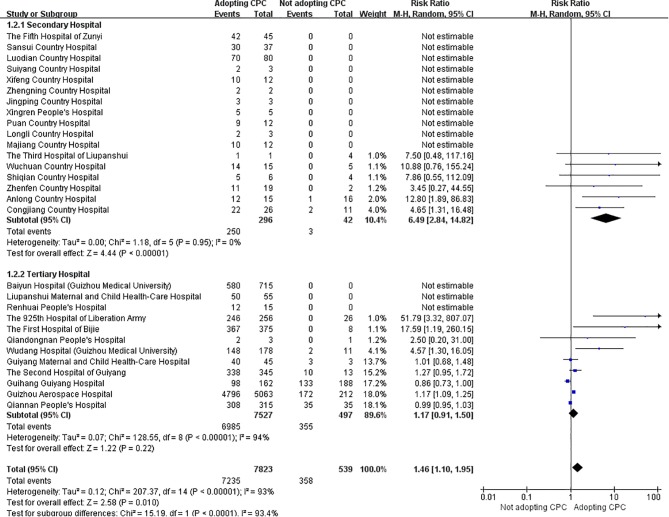
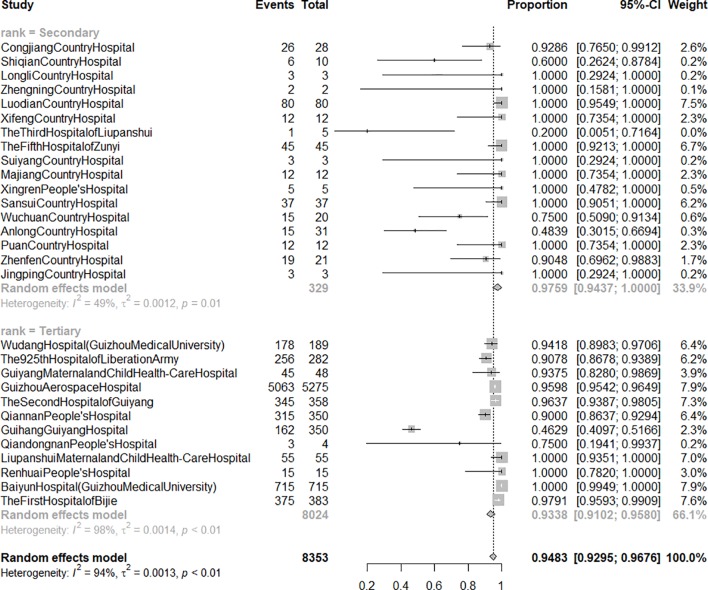
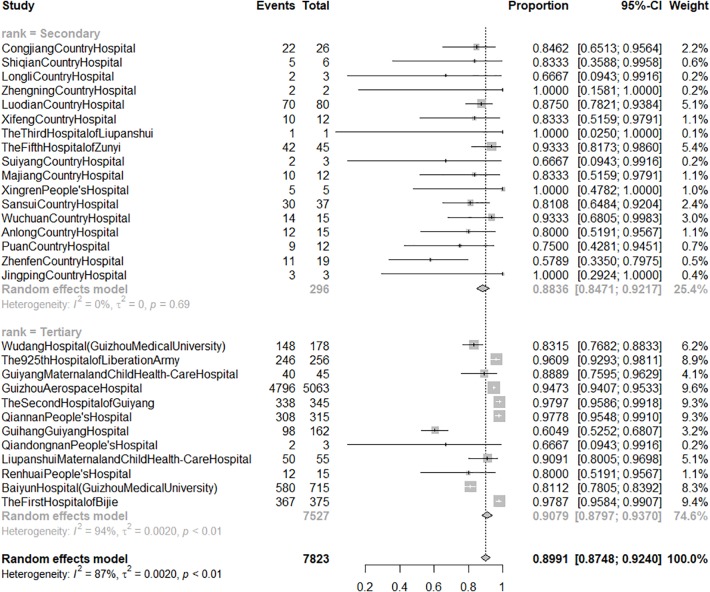
The study was conducted by sending the questionnaire to the directors of hospital pharmacy who were members of Guizhou Province Pharmaceutical Administration Collaboration Network (GPPACN) from April to May 2019. We implemented the Firth's logistic regression model to analyze the factors that influence the implementation of CPC. The acceptance rate of consultation suggestions (ARCS) and effective response rate after acceptance of pharmacists' suggestions (ERRAPS) were pooled by meta-analysis using a random effect model, respectively. A pairwise meta-analysis was performed to compare the effective response rate between patients whose treatment followed the pharmacists' suggestions and those whose treatment did not.
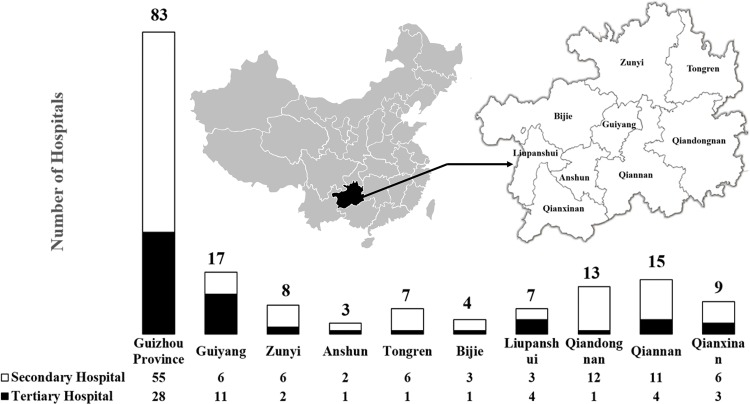
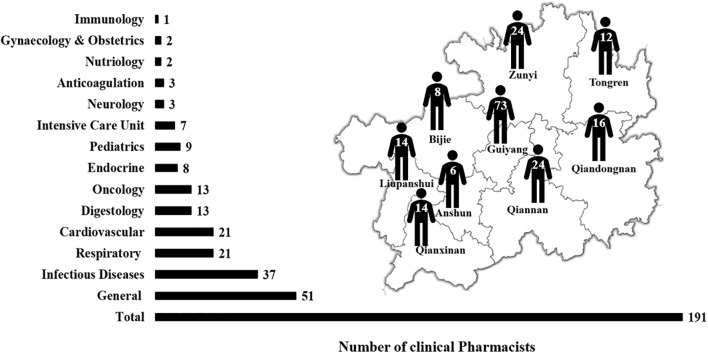
A total of 83 hospitals covering 9 regions in Guizhou Province were included in this survey. The results showed that 50 hospitals (60.24%) developed the CPC for ID. Staffing ID, respiratory, or general clinical pharmacist had a significantly positive effect on the implementation of CPC [adjusted odds ratios = 7.298, 95% (confidence interval): 2.232 to 23.858]. The pooled ARCS and ERRAPS for secondary hospitals were 97.59% (95% : 94.27 to 100.00%) and 88.36% (95% : 84.71 to 92.17%), respectively. Importantly, CPC improved the prognosis of ID patients [risk ratio () = 6.49, 95% : 2.84 to 14.82] in these hospitals.
CPC adoption is gradually increasing among hospitals and will be a promising intervention for ID treatment at grassroots medical institutions in Guizhou Province. Training more clinical pharmacists to specialize in ID, respiratory, or general diseases might be the most practical measure to promote the development of CPC for ID.
随着抗菌药物耐药性对全球公共卫生构成的威胁日益增加,中国开展了由临床药师主导的传染病会诊(CPC)。我们在医院药房进行了一项调查,以调查中国贵州省传染病CPC的现状和潜在决定因素。
该研究于2019年4月至5月通过向贵州省药品管理协作网络(GPPACN)成员的医院药房主任发送问卷进行。我们采用Firth逻辑回归模型分析影响CPC实施的因素。分别使用随机效应模型通过荟萃分析汇总会诊建议接受率(ARCS)和药师建议接受后的有效反应率(ERRAPS)。进行成对荟萃分析以比较遵循药师建议治疗的患者与未遵循药师建议治疗的患者之间的有效反应率。
本次调查共纳入贵州省9个地区的83家医院。结果显示,50家医院(60.24%)开展了传染病CPC。配备传染病、呼吸或普通临床药师对CPC的实施有显著的积极影响[调整比值比 = 7.298,95%(置信区间):2.232至23.858]。二级医院的汇总ARCS和ERRAPS分别为97.59%(95%:94.27至100.00%)和88.36%(95%:84.71至92.17%)。重要的是,在这些医院中,CPC改善了传染病患者的预后[风险比(RR)= 6.49,95%:2.84至14.82]。
CPC在医院中的采用率正在逐渐提高,并且将成为贵州省基层医疗机构传染病治疗的一种有前景的干预措施。培训更多专门从事传染病、呼吸或普通疾病的临床药师可能是促进传染病CPC发展的最切实可行的措施。