Zahedi Hoda, Djalalinia Shirin, Asayesh Hamid, Mansourian Morteza, Esmaeili Abdar Zahra, Mahdavi Gorabi Armita, Ansari Hossein, Noroozi Mehdi, Qorbani Mostafa
Department of Clinical Nutrition, School of Nutritional Sciences and Dietetics, Tehran University of Medical Sciences, Tehran, Iran.
Obesity and Eating Habits Research Center, Endocrinology and Metabolism Molecular-Cellular Sciences Institute, Tehran University of Medical Sciences, Tehran, Iran.
Int J Prev Med. 2020 Feb 17;11:15. doi: 10.4103/ijpvm.IJPVM_332_18. eCollection 2020.
Inflamation is widely known as an adaptive pathophysiological response in a variety of cancers. There is an expanding body of research on the key role of diet in inflammation, a risk factor for all types of cancer. Dietary inflammatory index (DII) was recently develpoed to evalute the inflammatory potential of a diet either as anti-inflammatory or pro-inflammatory. In fact, several studies have shown the association of DII and risk of different cancer types. The aim of this meta-analysis was to investigate the association of DII with risk of incidence and mortality of any cancer types.
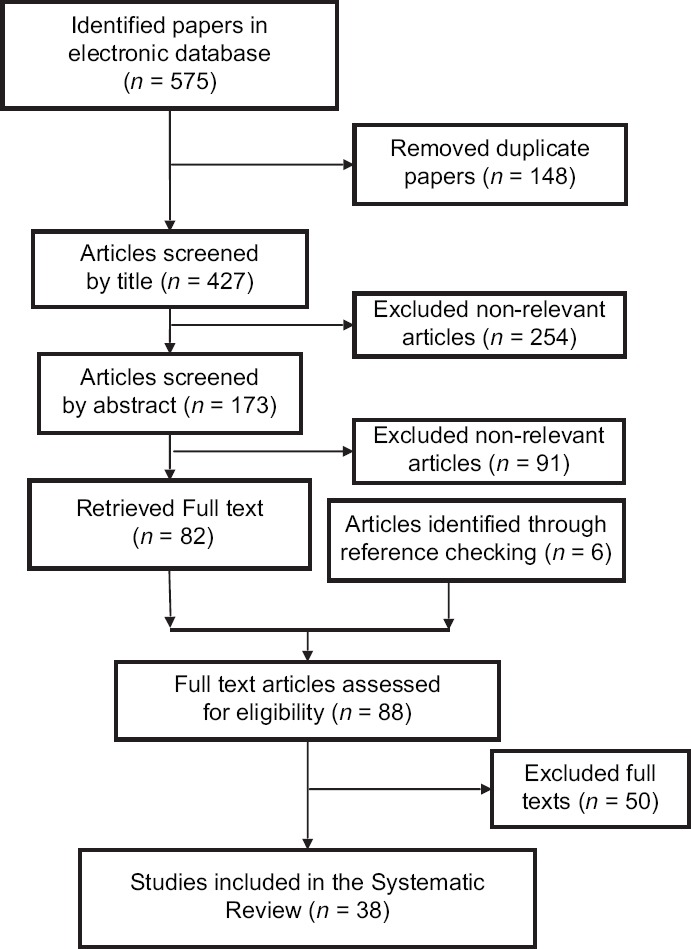
We searched PubMed-Medline, Scopus, and Web of Science databases for pertient studies util January, 2017. All studies conducted to investigate the association of DII and incidence, mortality, and hospitalization of all cancer types were included. According to degree of heterogeneity, fixed- or random-effect model was employed by STATA software.
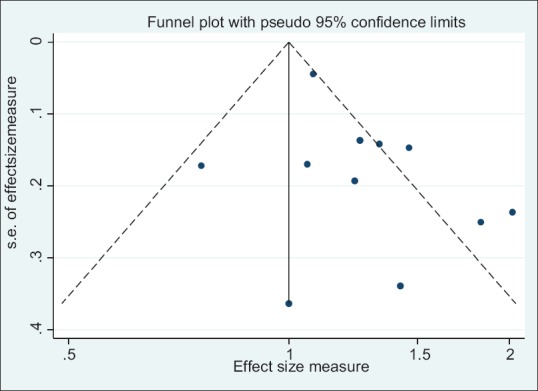
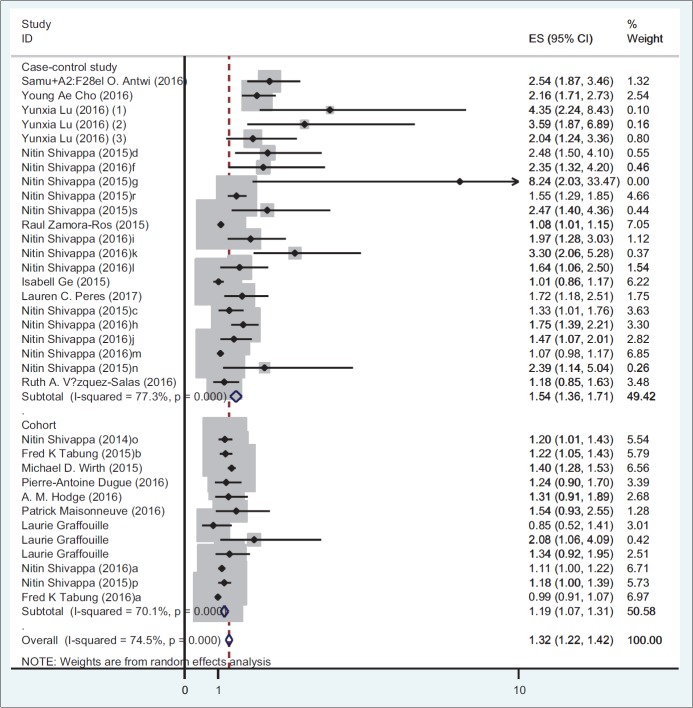
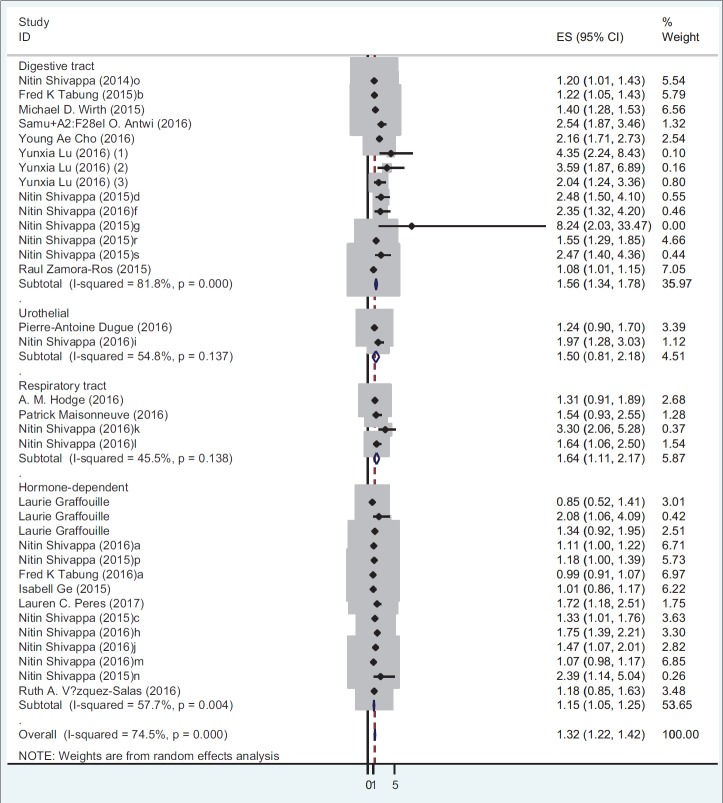
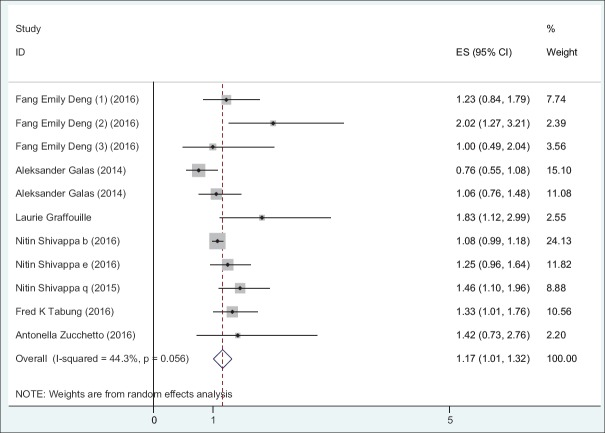
Total 38 studies were eligible for the meta-analysis. The results show that a higher level of DII increases the risk for all cancer types incidence by 32% (OR: 1.32; 95% CI: 1.22-1.42) including digestive tract cancers (OR: 1.55; 95% CI: 1.33-1.78), hormone-dependent cancers (OR: 1.14; 95% CI: 1.04-1.24), respiratory tract cancers (OR: 1.64; 95% CI: 1.11-2.17), and urothelial cancers (OR: 1.36; 95% CI: 1.01-1.73). Moreover, a higher level of DII is in association with a higher risk for mortality caused by all types of cancer by 16% (OR: 1.16; 95% CI: 1.01-1.32). In addition, meta-regression analysis reveals that the design of study can have a significant effect on the association of DII and incidence of all cancer types (slope: 0.54; = 0.05). The stratified meta-analysis shows that the association of DII and incidence of all cancer types in case-control studies (OR: 1.53; 95% CI: 1.36-1.71) were more prominent than cohort studies (OR: 1.18; 95% CI: 1.07-1.30).
This study shows that a higher level of DII is associated with a higher risk of incidence and mortality of all cancer types. The findings of the present study suggest that modifying inflammatory properties of dietary patterns can reduce the risk of incidence and mortality of all cancer types.
炎症在多种癌症中被广泛认为是一种适应性病理生理反应。关于饮食在炎症(所有类型癌症的一个风险因素)中关键作用的研究越来越多。饮食炎症指数(DII)最近被开发出来,用于评估一种饮食的抗炎或促炎炎症潜力。事实上,多项研究已表明DII与不同癌症类型风险之间的关联。本荟萃分析的目的是研究DII与任何癌症类型的发病风险和死亡风险之间的关联。
我们检索了PubMed - Medline、Scopus和Web of Science数据库,查找截至2017年1月的相关研究。纳入所有旨在研究DII与所有癌症类型的发病率、死亡率及住院率之间关联的研究。根据异质性程度,采用STATA软件的固定效应或随机效应模型。
共有38项研究符合荟萃分析的条件。结果显示,较高水平的DII会使所有癌症类型的发病风险增加32%(比值比:1.32;95%置信区间:1.22 - 1.42),包括消化道癌症(比值比:1.55;95%置信区间:1.33 - 1.78)、激素依赖性癌症(比值比:1.14;95%置信区间:1.04 - 1.24)、呼吸道癌症(比值比:1.64;95%置信区间:1.11 - 2.17)和尿路上皮癌(比值比:1.36;95%置信区间:1.01 - 1.73)。此外,较高水平的DII与所有类型癌症导致的死亡风险增加16%相关(比值比:1.16;95%置信区间:1.01 - 1.32)。另外,荟萃回归分析显示研究设计对DII与所有癌症类型发病率之间的关联有显著影响(斜率:0.54;P = 0.05)。分层荟萃分析表明,病例对照研究中DII与所有癌症类型发病率之间的关联(比值比:1.53;95%置信区间:1.36 - 1.71)比队列研究更显著(比值比:1.18;95%置信区间:1.07 - 1.30)。
本研究表明,较高水平的DII与所有癌症类型的发病风险和死亡风险较高相关。本研究结果表明,改变饮食模式的炎症特性可降低所有癌症类型的发病风险和死亡风险。