Kaku Hiroaki, Rothstein Thomas L
Center for Immunobiology, Western Michigan University Homer Stryker M.D. School of Medicine, Kalamazoo, MI, United States.
Department of Biomedical Sciences, Western Michigan University Homer Stryker M.D. School of Medicine, Kalamazoo, MI, United States.
Front Mol Biosci. 2020 Feb 27;7:32. doi: 10.3389/fmolb.2020.00032. eCollection 2020.
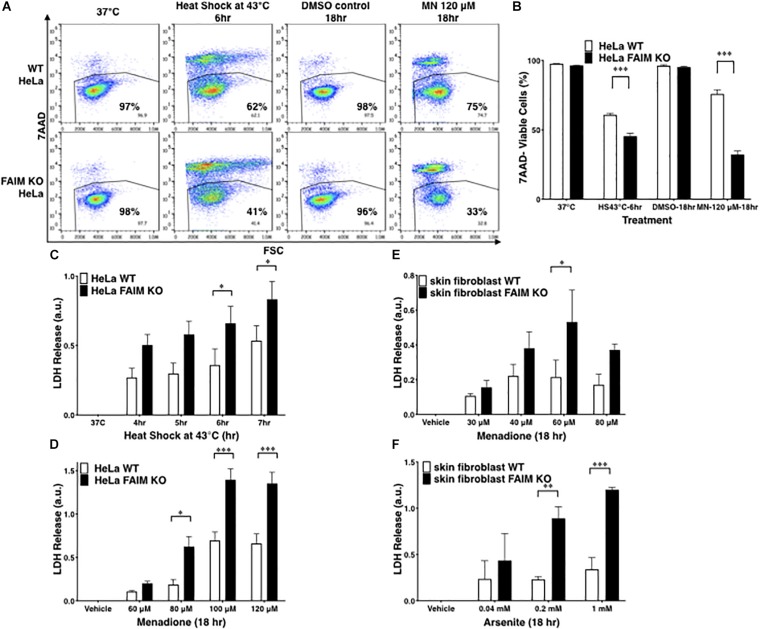
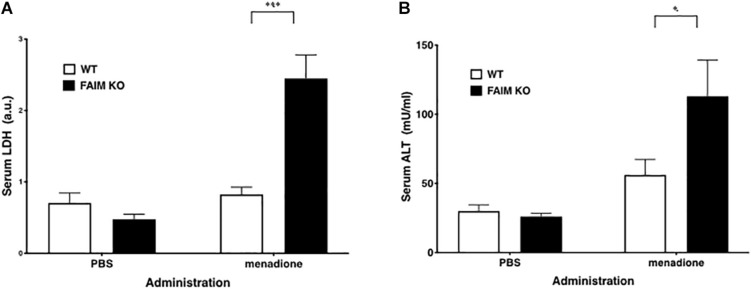
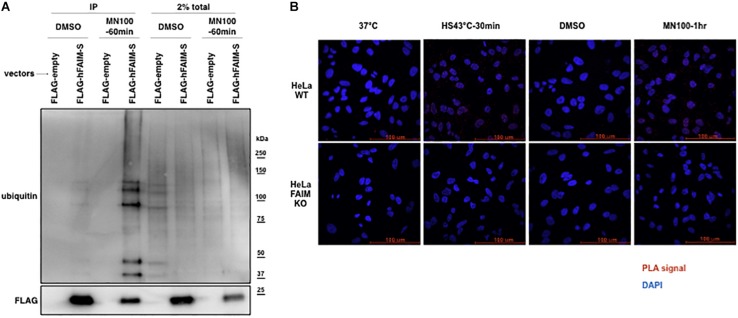
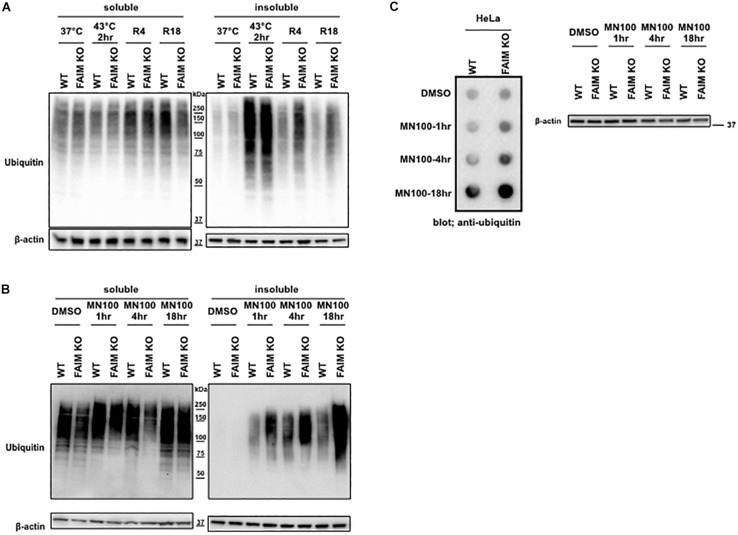
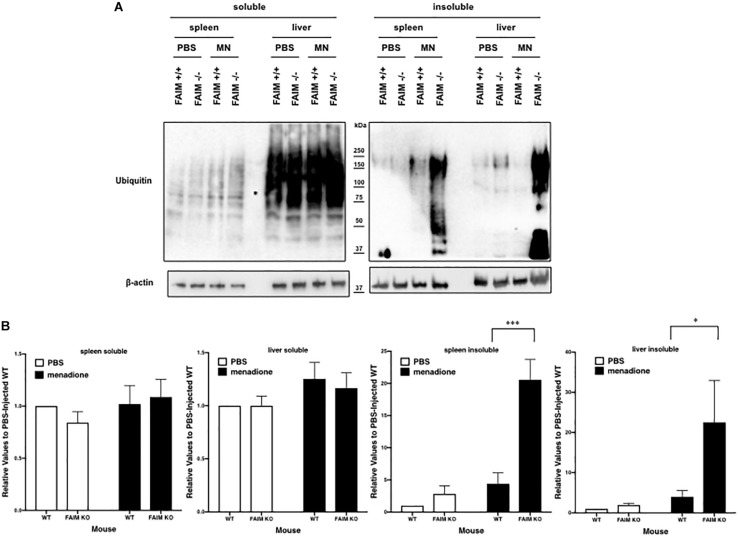
A key element of cellular homeostasis lies in the way in which misfolded and dysfunctional proteins are handled. Cellular pathways that include proteasomal destruction and autophagic disposal are components of normal proteostasis. Here we report a novel molecule that plays a non-redundant role in maintaining homeostasis, Fas Apoptosis Inhibitory Molecule (FAIM). FAIM is highly conserved throughout evolution and bears no homology to any other protein. We found that FAIM counteracts heat and oxidative stress-induced loss of cell viability. FAIM is recruited to ubiquitinated proteins induced by cellular stress and the levels of stress-induced protein aggregates are much greater in FAIM-deficient cell lines. Primary fibroblasts from FAIM-deficient mice showed the same proteostasis deficits as cell lines. Administration of a mediator of oxidative stress to FAIM-deficient animals induced more ubiquitinated protein aggregates and more organ damage as compared to wild type mice. These results identify a completely new actor that protects cells against stress-induced loss of viability by preventing protein aggregation.
细胞稳态的一个关键要素在于处理错误折叠和功能失调蛋白质的方式。包括蛋白酶体破坏和自噬处理在内的细胞途径是正常蛋白质稳态的组成部分。在此,我们报告了一种在维持稳态中发挥非冗余作用的新分子,即Fas凋亡抑制分子(FAIM)。FAIM在整个进化过程中高度保守,与任何其他蛋白质均无同源性。我们发现,FAIM可对抗热和氧化应激诱导的细胞活力丧失。FAIM被募集到细胞应激诱导的泛素化蛋白质上,并且在FAIM缺陷细胞系中,应激诱导的蛋白质聚集体水平要高得多。来自FAIM缺陷小鼠的原代成纤维细胞表现出与细胞系相同的蛋白质稳态缺陷。与野生型小鼠相比,向FAIM缺陷动物施用氧化应激介质会诱导更多的泛素化蛋白质聚集体和更多的器官损伤。这些结果确定了一个全新的因子,它通过防止蛋白质聚集来保护细胞免受应激诱导的活力丧失。