Coccia Elena, Masanas Marc, López-Soriano Joaquín, Segura Miguel F, Comella Joan X, Pérez-García M José
Cell Signaling and Apoptosis Group, Vall d'Hebron Research Institute, Barcelona, Spain.
Centro de Investigación Biomédica en Red sobre Enfermedades Neurodegenerativas (CIBERNED), Madrid, Spain.
Front Cell Dev Biol. 2020 Dec 23;8:584606. doi: 10.3389/fcell.2020.584606. eCollection 2020.
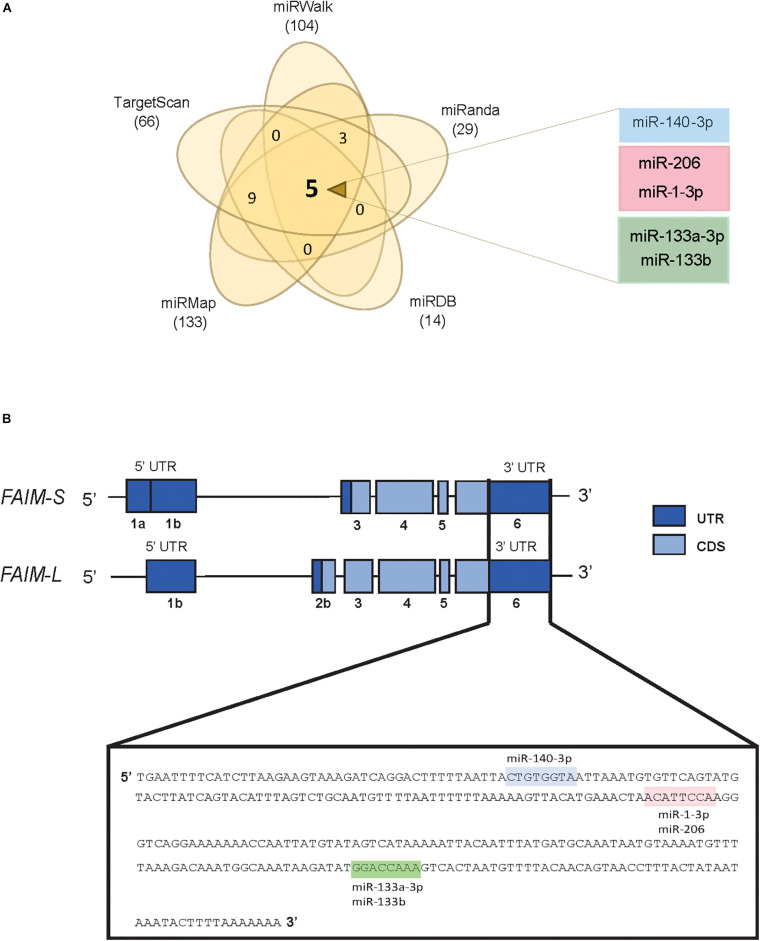
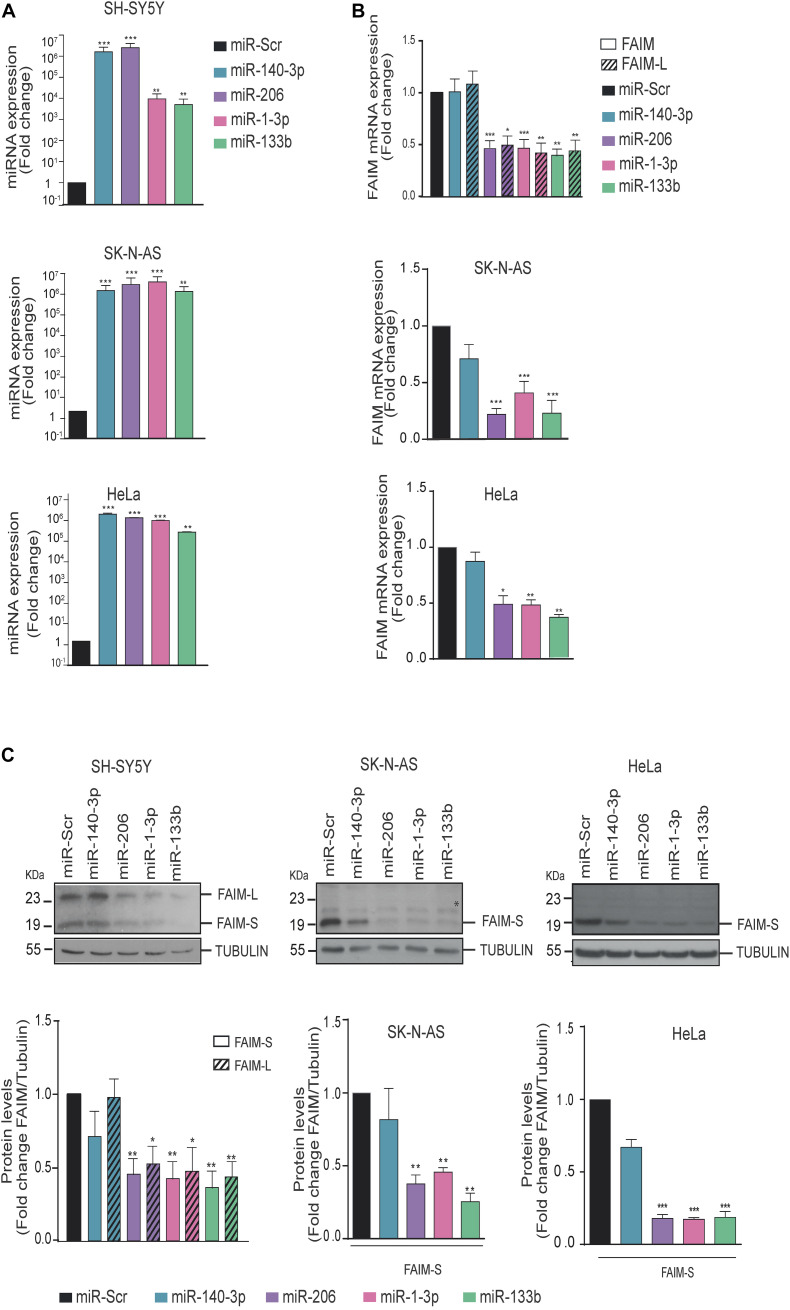
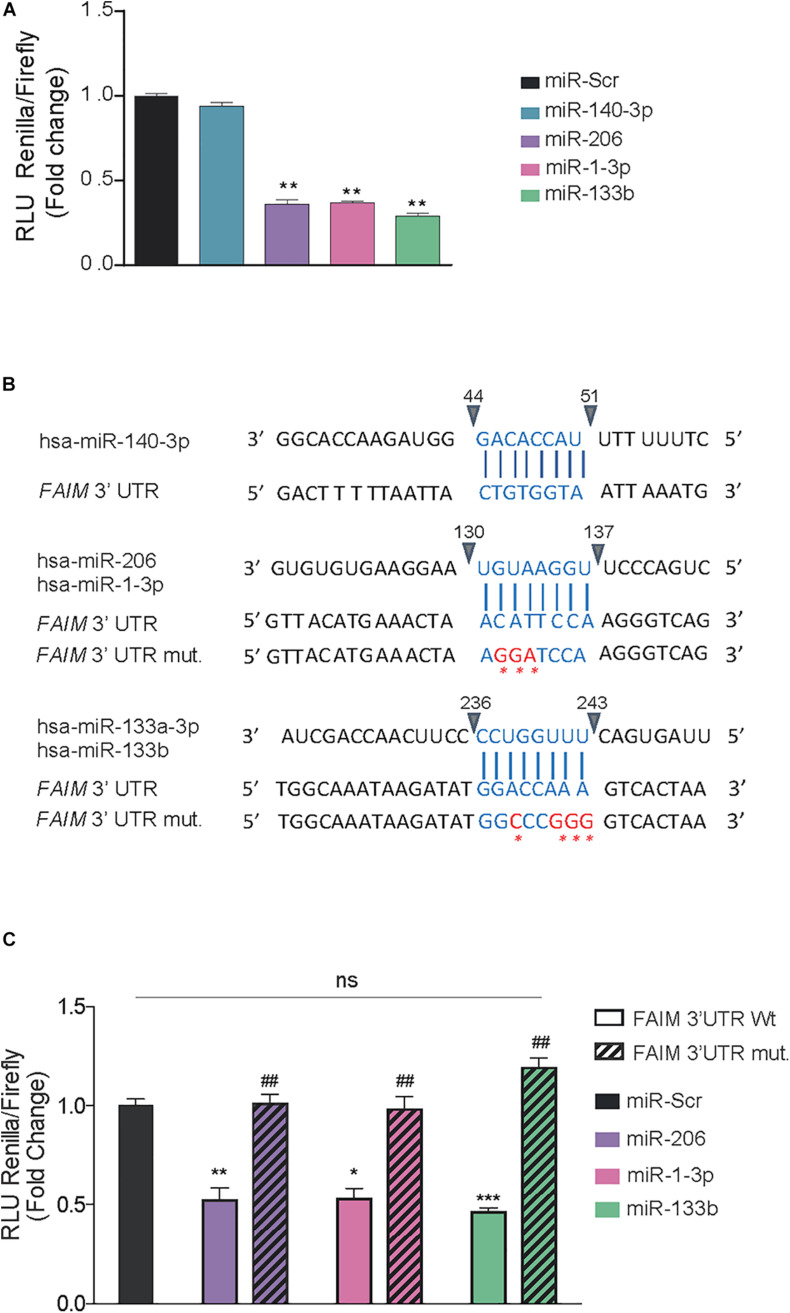
Apoptosis plays an important role during development, control of tissue homeostasis and in pathological contexts. Apoptosis is executed mainly through the intrinsic pathway or the death receptor pathway, i.e., extrinsic pathway. These processes are tightly controlled by positive and negative regulators that dictate pro- or anti-apoptotic death receptor signaling. One of these regulators is the Fas Apoptotic Inhibitory Molecule (FAIM). This death receptor antagonist has two main isoforms, FAIM-S (short) which is the ubiquitously expressed, and a longer isoform, FAIM-L (long), which is mainly expressed in the nervous system. Despite its role as a death receptor antagonist, FAIM also participates in cell death-independent processes such as nerve growth factor-induced neuritogenesis or synaptic transmission. Moreover, FAIM isoforms have been implicated in blocking the formation of protein aggregates under stress conditions or de-regulated in certain pathologies such as Alzheimer's and Parkinson's diseases. Despite the role of FAIM in physiological and pathological processes, little is known about the molecular mechanisms involved in the regulation of its expression. Here, we seek to investigate the post-transcriptional regulation of FAIM isoforms by microRNAs (miRNAs). We found that miR-206, miR-1-3p, and miR-133b are direct regulators of FAIM expression. These findings provide new insights into the regulation of FAIM and may provide new opportunities for therapeutic intervention in diseases in which the expression of FAIM is altered.
细胞凋亡在发育、组织稳态控制及病理情况下均发挥着重要作用。细胞凋亡主要通过内源性途径或死亡受体途径(即外源性途径)来执行。这些过程受到正负调节因子的严格控制,这些调节因子决定了促凋亡或抗凋亡死亡受体信号传导。其中一种调节因子是Fas凋亡抑制分子(FAIM)。这种死亡受体拮抗剂有两种主要的异构体,即普遍表达的FAIM-S(短型)和主要在神经系统中表达的较长异构体FAIM-L(长型)。尽管FAIM作为死亡受体拮抗剂发挥作用,但它也参与细胞死亡非依赖性过程,如神经生长因子诱导的神经突生长或突触传递。此外,FAIM异构体在应激条件下参与阻止蛋白质聚集体的形成,或在某些病理状态(如阿尔茨海默病和帕金森病)中表达失调。尽管FAIM在生理和病理过程中发挥作用,但其表达调控所涉及的分子机制仍知之甚少。在此,我们试图研究微小RNA(miRNA)对FAIM异构体的转录后调控。我们发现miR-206、miR-1-3p和miR-133b是FAIM表达的直接调节因子。这些发现为FAIM的调控提供了新的见解,并可能为FAIM表达改变的疾病治疗干预提供新的机会。