Biodesign Institute, Arizona State University, Tempe, Arizona 87287, United States.
Department of Physics, Arizona State University, Tempe, Arizona 87287, United States.
J Am Chem Soc. 2020 Apr 1;142(13):6432-6438. doi: 10.1021/jacs.0c01805. Epub 2020 Mar 23.
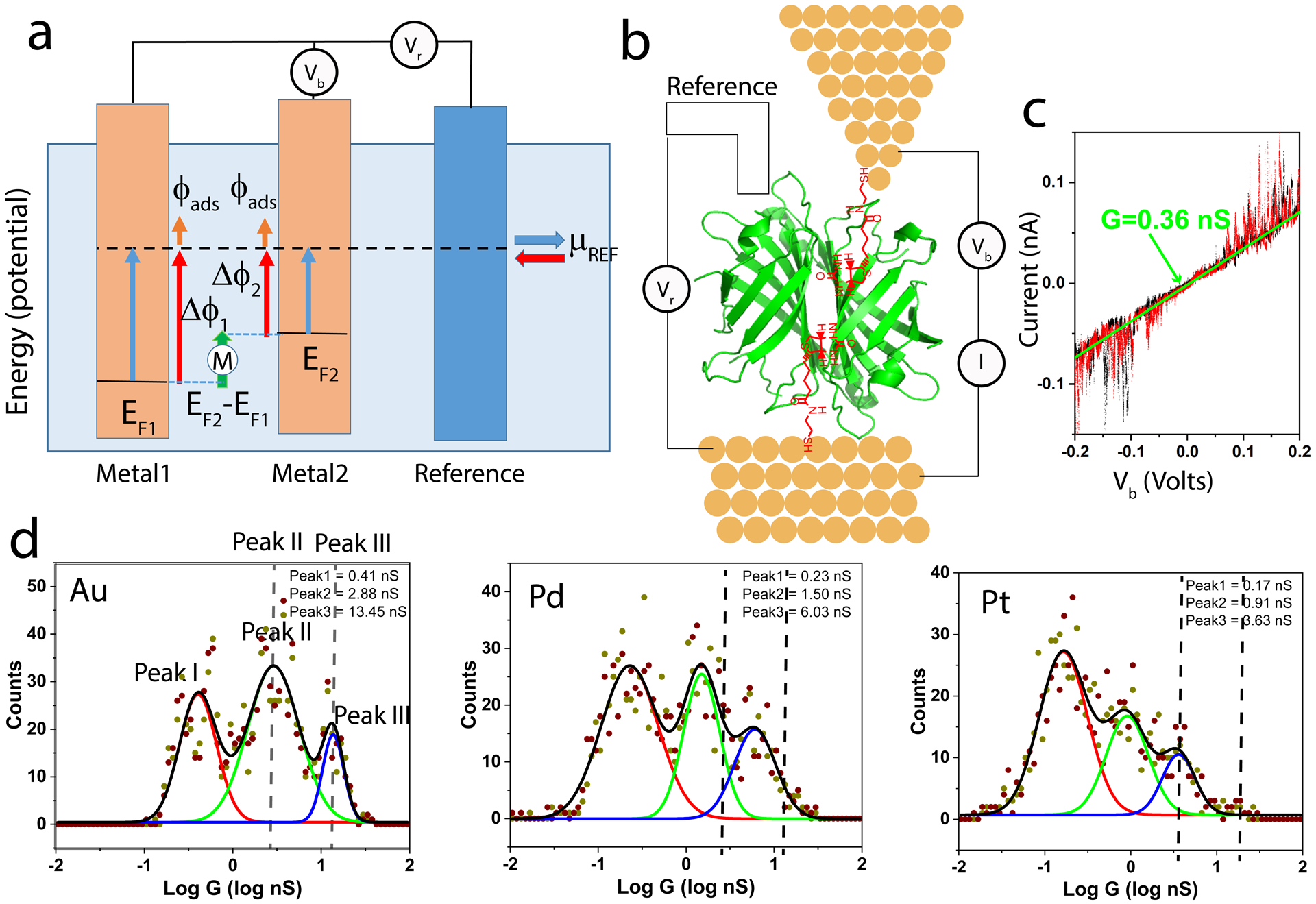
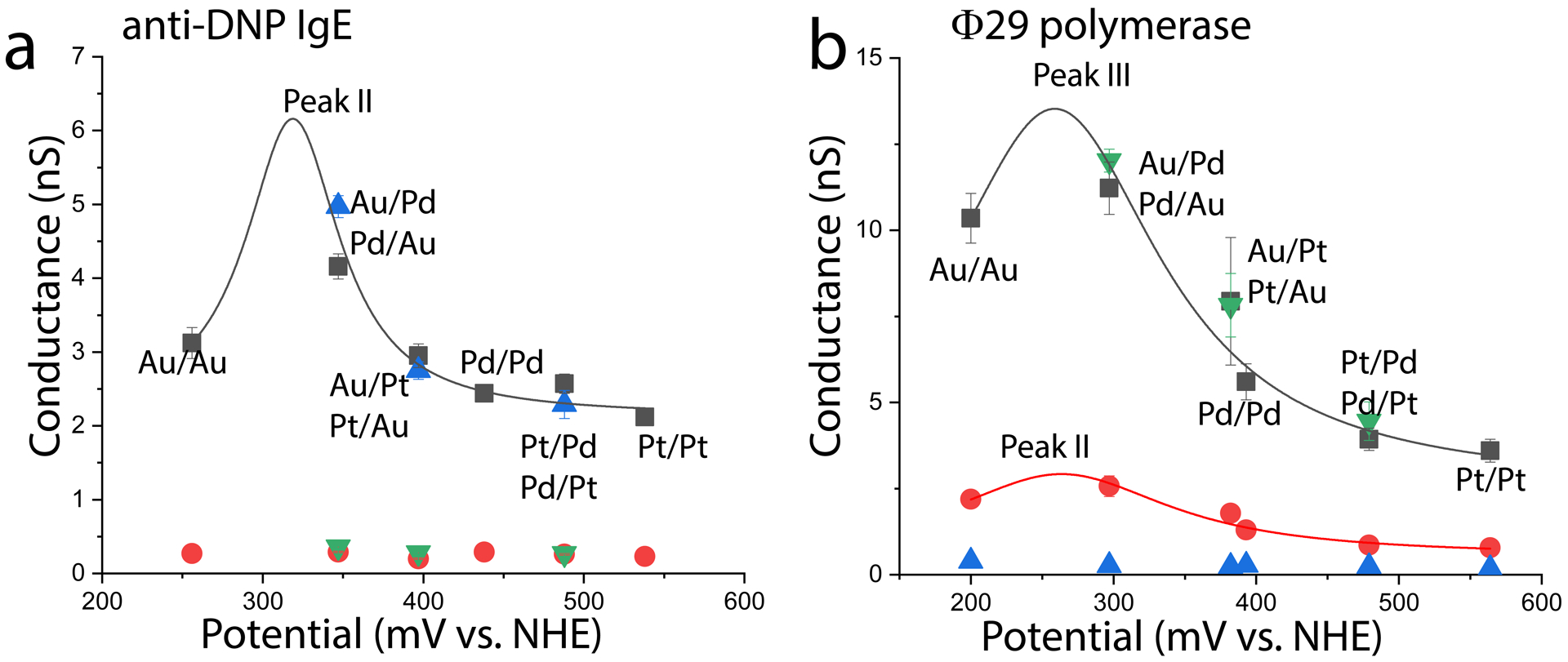
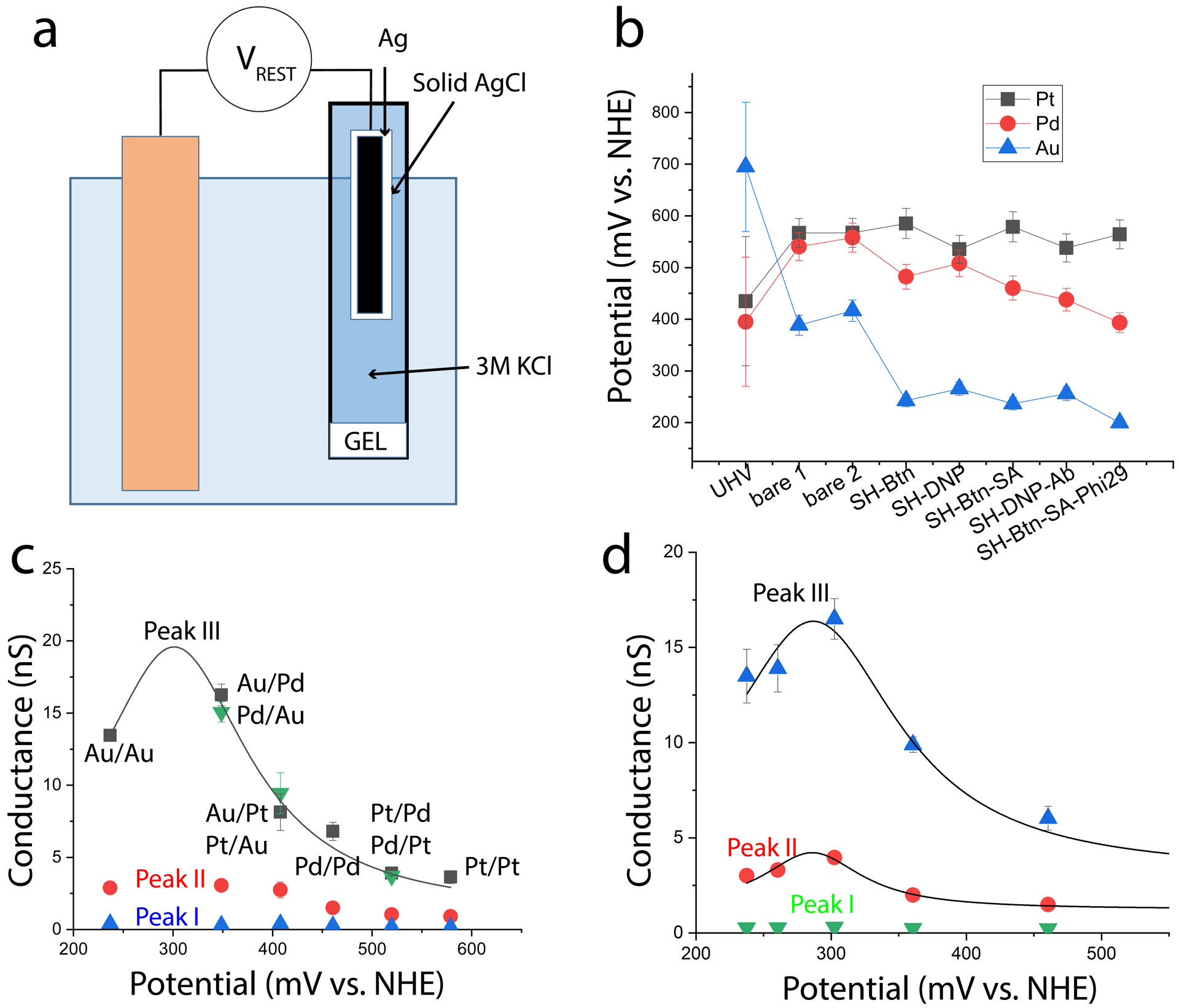
Bioelectronics research has mainly focused on redox-active proteins because of their role in biological charge transport. In these proteins, electronic conductance is a maximum when electrons are injected at the known redox potential of the protein. It has been shown recently that many non-redox-active proteins are good electronic conductors, though the mechanism of conduction is not yet understood. Here, we report single-molecule measurements of the conductance of three non-redox-active proteins, maintained under potential control in solution, as a function of electron injection energy. All three proteins show a conductance resonance at a potential ∼0.7 V removed from the nearest oxidation potential of their constituent amino acids. If this shift reflects a reduction of reorganization energy in the interior of the protein, it would account for the long-range conductance observed when carriers are injected into the interior of a protein.
生物电子学研究主要集中在氧化还原活性蛋白上,因为它们在生物电荷传输中起作用。在这些蛋白质中,当电子以蛋白质的已知氧化还原电位注入时,电子电导率达到最大值。最近已经表明,许多非氧化还原活性蛋白是良好的电子导体,尽管传导机制尚不清楚。在这里,我们报告了在溶液中保持电位控制的三种非氧化还原活性蛋白的电导的单分子测量,作为电子注入能量的函数。所有三种蛋白质都在距其组成氨基酸的最近氧化电位约 0.7 V 的电位处显示出电导共振。如果这种位移反映了蛋白质内部重组能的降低,那么它将解释当载体注入蛋白质内部时观察到的长程电导。