Institute of Polymer and Dye Technology, Faculty of Chemistry, Lodz University of Technology, Stefanowskiego 12/16, 90-924 Lodz, Poland.
Molecules. 2020 Mar 12;25(6):1279. doi: 10.3390/molecules25061279.
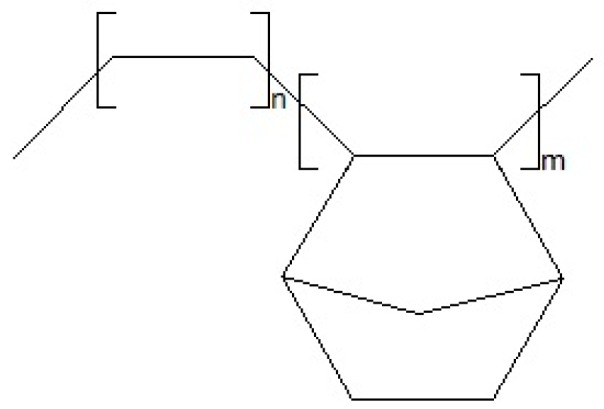
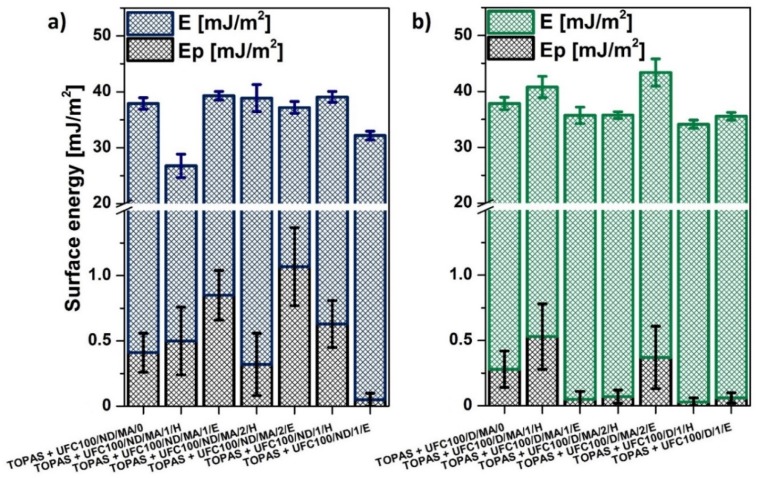
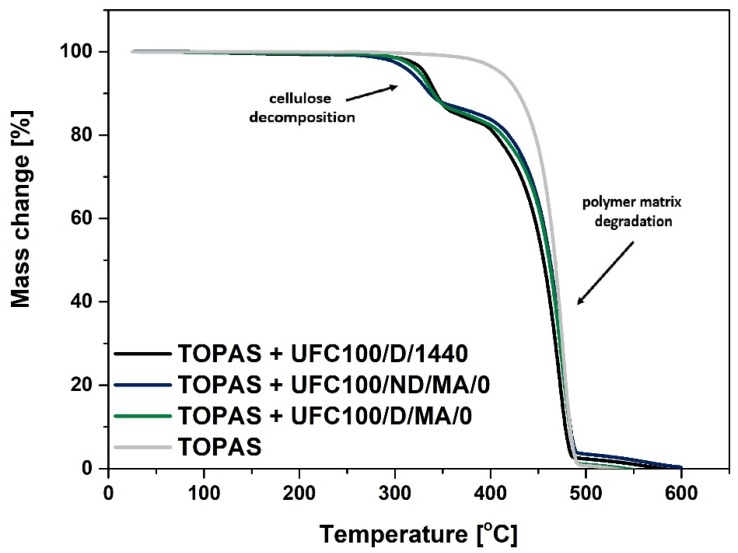
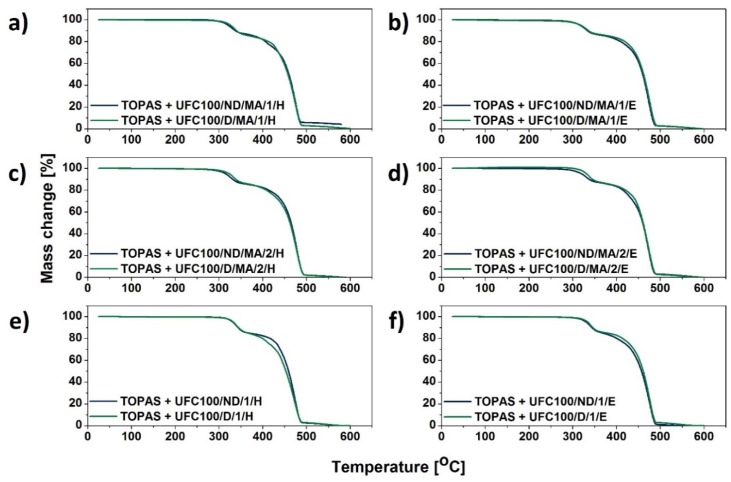
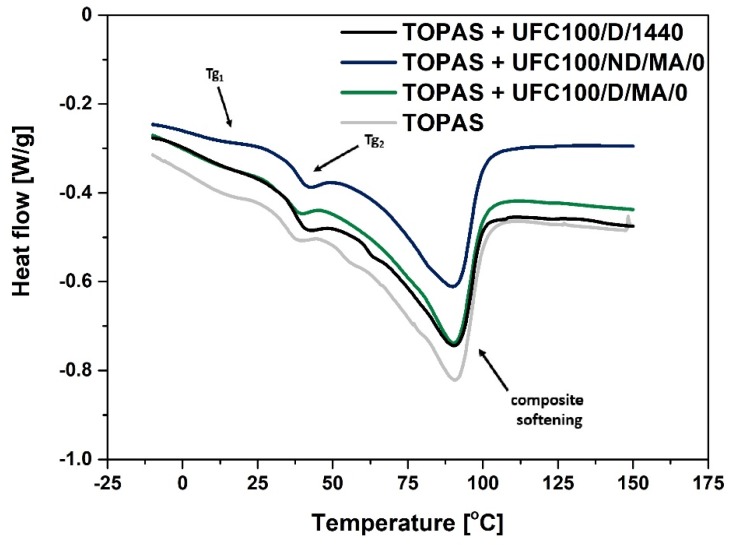
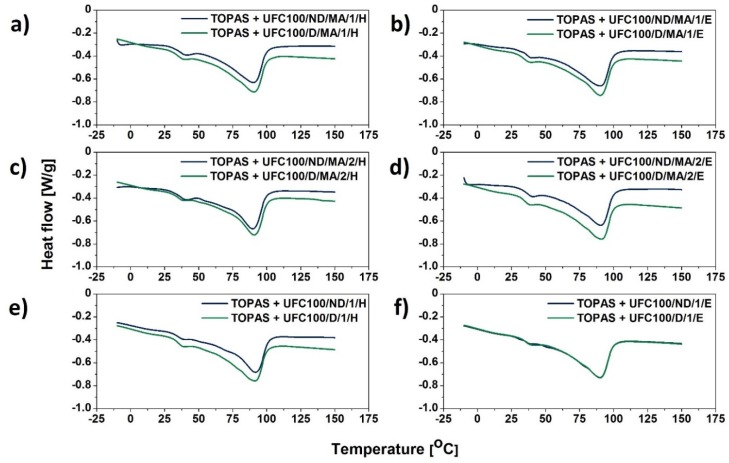
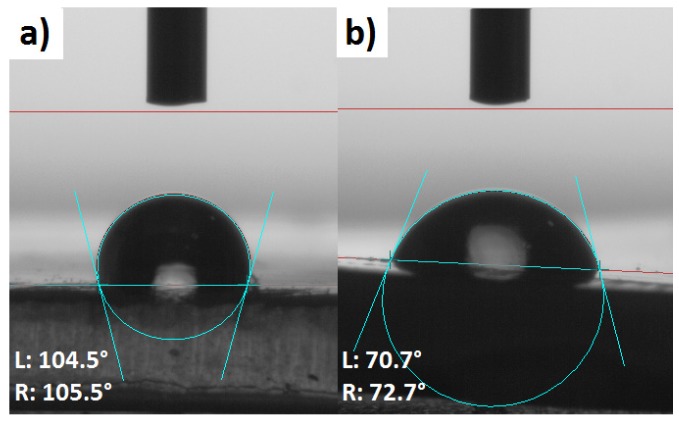
A recently developed cellulose hybrid chemical treatment consists of two steps: solvent exchange (with ethanol or hexane) and chemical grafting of maleic anhydride (MA) on the surface of fibers. It induces a significant decrease in cellulose moisture content and causes some changes in the thermal resistance of analyzed blend samples, as well as surface properties. The thermal characteristics of ethylene-norbornene copolymer (TOPAS) blends filled with hybrid chemically modified cellulose fibers (UFC100) have been widely described on the basis of differential scanning calorimetry and thermogravimetric analysis. Higher thermal stability is observed for the materials filled with the fibers which were dried before any of the treatments carried out. Dried cellulose filled samples start to degrade at approximately 330 °C while undried UFC100 specimens begin to degrade around 320 °C. Interestingly, the most elevated thermal resistance was detected for samples filled with cellulose altered only with solvents (both ethanol and hexane). In order to support the supposed thermal resistance trends of prepared blend materials, apparent activation energies assigned to cellulose degradation (E) and polymer matrix decomposition (E) have been calculated and presented in the article. It may be evidenced that apparent activation energies assigned to the first decomposition step are higher in case of the systems filled with UFC100 dried prior to the modification process. Moreover, the results have been enriched using surface free energy analysis of the polymer blends. The surface free energy polar part (Ep) raises considering samples filled with not dried UFC100. On the other hand, when cellulose fibers are dried prior to the modification process, then the blend sample's dispersive part of surface free energy is increased with respect to that containing unmodified fiber. As polymer blend Ep exhibits higher values reflecting enhanced material degradation potential, the cellulose fibers employment leads to more eco-friendly production and responsible waste management. This is in accordance with the rules of sustainable development.
溶剂交换(用乙醇或己烷)和纤维表面的马来酸酐(MA)的化学接枝。它会导致纤维素水分含量显著降低,并引起分析的共混样品的热阻以及表面性能发生一些变化。基于差示扫描量热法和热重分析,广泛描述了填充有杂化化学改性纤维素纤维(UFC100)的乙烯-降冰片烯共聚物(TOPAS)共混物的热特性。在进行任何处理之前对纤维进行干燥,发现填充有纤维的材料具有更高的热稳定性。干燥的纤维素填充样品在大约 330°C 时开始降解,而未干燥的 UFC100 样品在大约 320°C 时开始降解。有趣的是,仅用溶剂(乙醇和己烷)处理过的纤维素检测到了最高的热阻。为了支持所制备的共混材料的假设热阻趋势,计算并在本文中呈现了分配给纤维素降解(E)和聚合物基质分解(E)的表观活化能。可以证明,在进行改性过程之前对 UFC100 进行干燥的填充系统的第一分解步骤的表观活化能更高。此外,使用聚合物共混物的表面自由能分析对结果进行了补充。考虑到未干燥的 UFC100 填充的样品,表面自由能的极性部分(Ep)增加。另一方面,当纤维素纤维在改性过程之前进行干燥时,相对于含有未改性纤维的共混样品,混合物样品的表面自由能分散部分增加。由于聚合物共混物的 Ep 值较高反映了增强的材料降解潜力,因此纤维素纤维的使用导致更环保的生产和负责任的废物管理。这符合可持续发展的原则。