Hayat Sikandar, Ahmad Husain, Nasir Mubasher, Khan Muhammad Numan, Ali Muhammad, Hayat Kashif, Khan Muhammad Ali, Khan Farmanullah, Ma Yongqing, Cheng Zhihui
College of Horticulture, Northwest A&F University, Yangling 712100, China.
College of Natural Resources and Environment, Northwest A&F University, Yangling 712100, China.
Antioxidants (Basel). 2020 Mar 12;9(3):235. doi: 10.3390/antiox9030235.
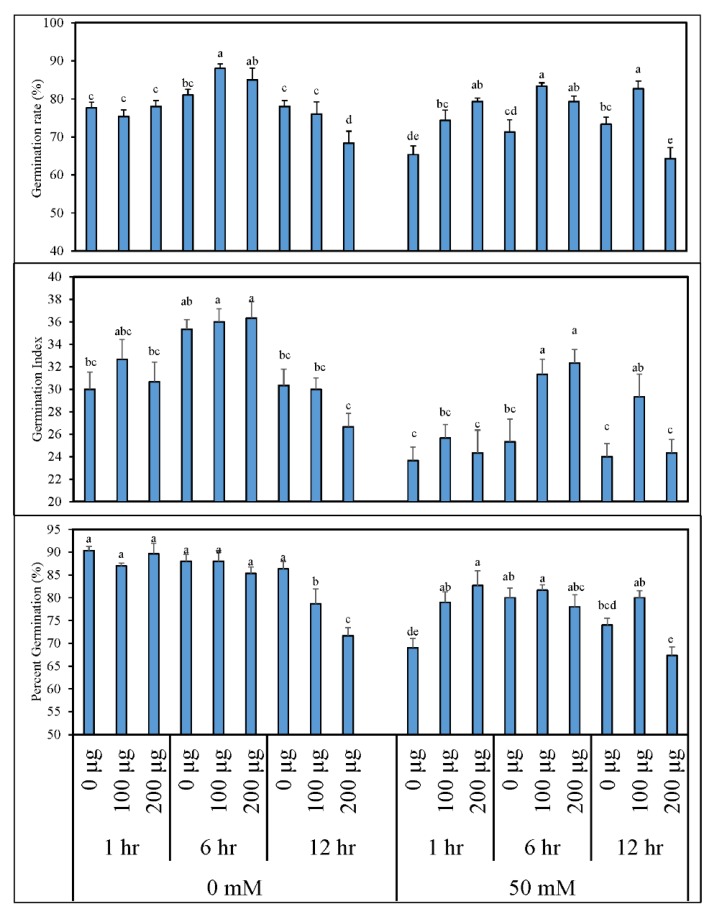
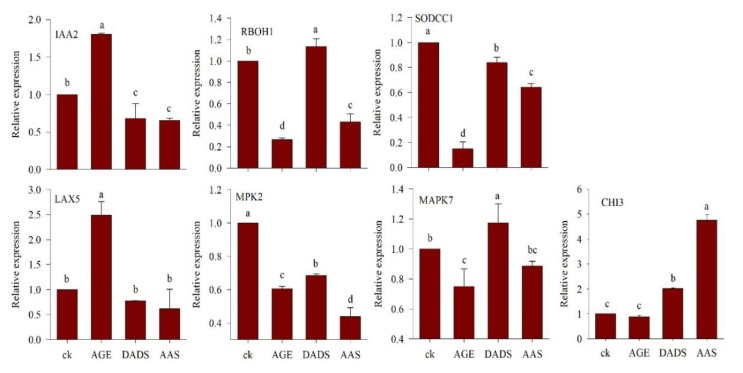
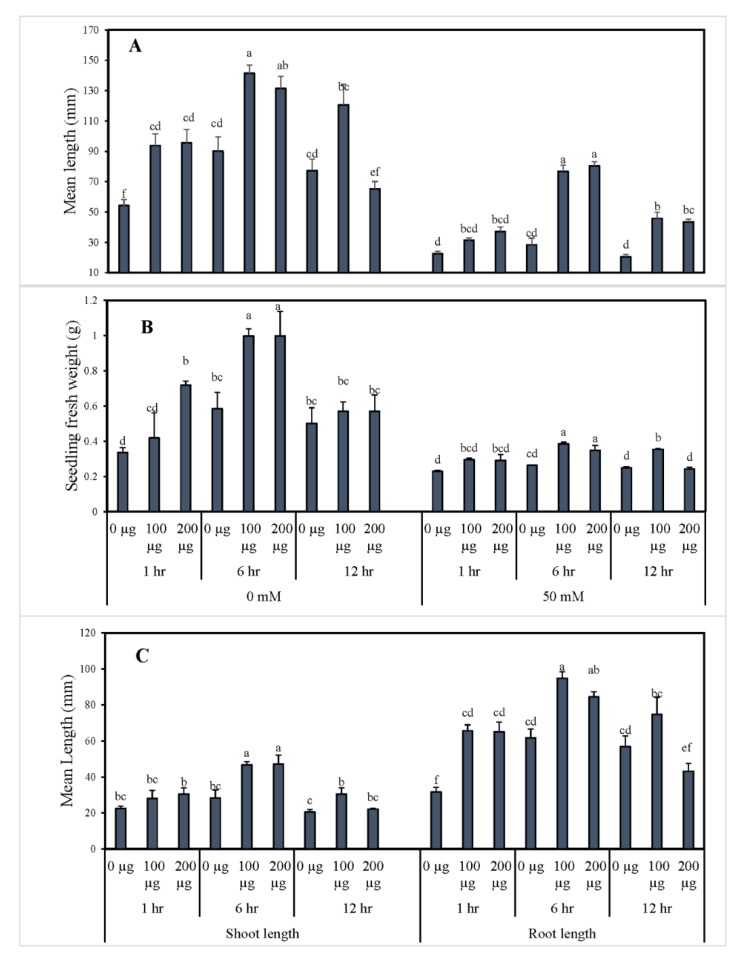
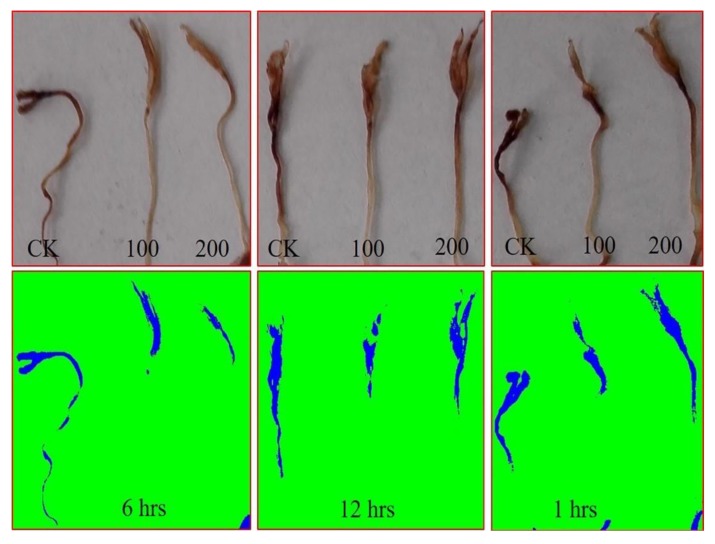
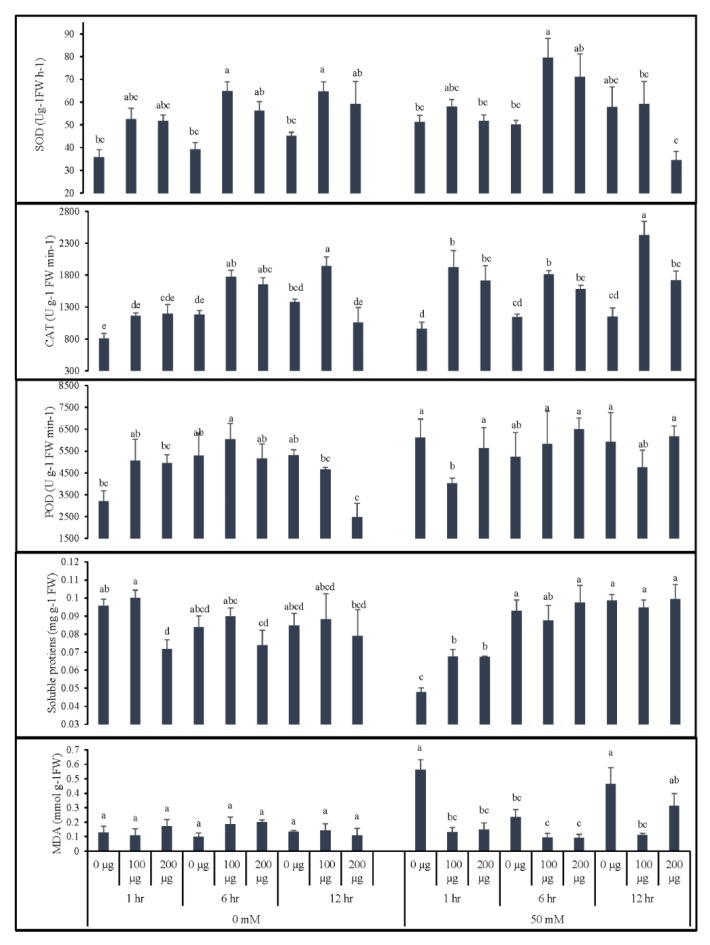
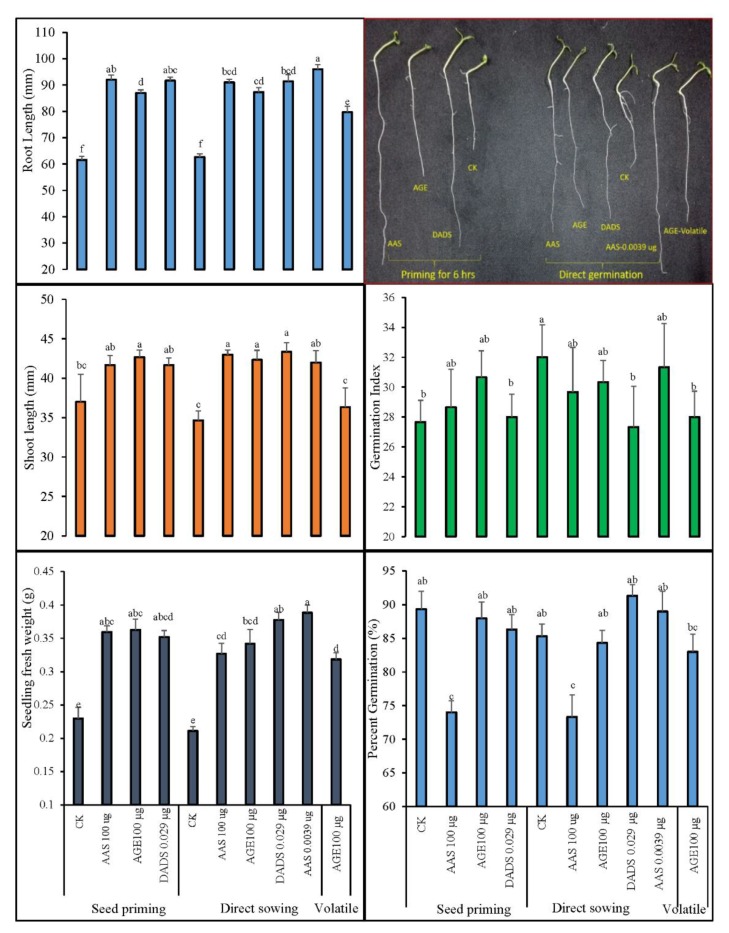
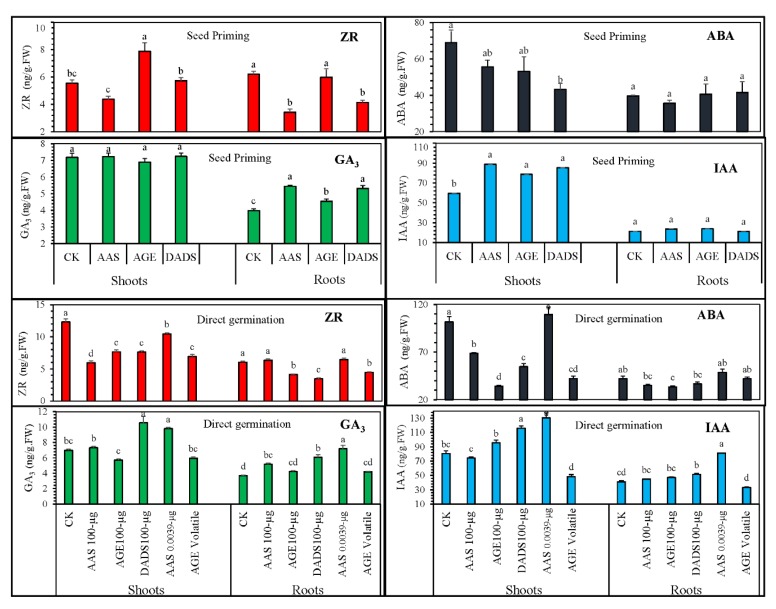
The effects of aqueous garlic extracts (AGEs), diallyl disulfide (DADS), and allicin (AAS) were investigated during seed-to-seedling transition of tomato. Independent bioassays were performed including seed priming with AGE (0, 100, and 200 µg∙mL), germination under the allelochemical influence of AGE, DADS, and AAS, and germination under volatile application of AGE. Noticeable differences in germination indices and seedling growth (particularly root growth and fresh weights) were observed in a dose-dependent manner. When germinated under 50 mM NaCl, seeds primed with AGE exhibited induced defense via antioxidant enzyme activities (superoxide dismutase (SOD), peroxidase (POD), and catalase (CAT)), lipid peroxidation (malondialdehyde content (MDA)), and HO scavenging. Enzyme-linked immunosorbent analysis (ELISA) of the endogenous phytohormones auxin (IAA), abscisic acid (ABA), cytokinin (ZR), and gibberellic acid (GA) in the roots and shoots of the obtained seedlings and the relative expression levels of auxin-responsive protein (IAA2), like-auxin (LAX5), mitogen-activated protein kinase (MAPK7 and MPK2), respiratory burst oxidase homolog (RBOH1), CHI3 and SODCC1 suggested allelopathic functions in stimulating growth responses. Our findings suggest that garlic allelochemicals act as plant biostimulants to enhance auxin biosynthesis and transportation, resulting in root growth promotion. Additionally, the relative expressions of defense-related genes, antioxidant enzymes activities and phytohormonal regulations indicate activation of the defense responses in tomato seedlings resulting in better growth and development. These results, thus, provide a basis to understand the biological functions of garlic allelochemicals from the induced resistance perspective in plants.
研究了大蒜水提取物(AGEs)、二烯丙基二硫醚(DADS)和大蒜素(AAS)在番茄种子到幼苗转变过程中的作用。进行了独立的生物测定,包括用AGE(0、100和200μg∙mL)进行种子引发、在AGE、DADS和AAS的化感物质影响下的萌发以及在AGE挥发性作用下的萌发。在萌发指数和幼苗生长(特别是根生长和鲜重)方面观察到明显的剂量依赖性差异。当在50 mM NaCl下萌发时,用AGE引发的种子通过抗氧化酶活性(超氧化物歧化酶(SOD)、过氧化物酶(POD)和过氧化氢酶(CAT))、脂质过氧化(丙二醛含量(MDA))和HO清除表现出诱导防御。对所得幼苗的根和芽中内源性植物激素生长素(IAA)、脱落酸(ABA)、细胞分裂素(ZR)和赤霉素(GA)进行酶联免疫吸附分析(ELISA),以及生长素响应蛋白(IAA2)、类生长素(LAX5)、丝裂原活化蛋白激酶(MAPK7和MPK2)、呼吸爆发氧化酶同源物(RBOH1)、几丁质酶(CHI3)和SODCC1的相对表达水平表明了其在刺激生长反应中的化感作用。我们的研究结果表明,大蒜化感物质作为植物生物刺激剂,可增强生长素的生物合成和运输,从而促进根生长。此外,防御相关基因的相对表达、抗氧化酶活性和植物激素调节表明番茄幼苗中的防御反应被激活,从而实现更好的生长和发育。因此,这些结果为从植物诱导抗性角度理解大蒜化感物质的生物学功能提供了依据。