Wang Yuanwei, Tang Cheng, Tang Yong, Yin Haiyan, Liu Xiong
College of Food Science, Southwest University, Chongqing, China.
College of Life Science and Technology, Southwest Minzu University, Chengdu, China.
Food Nutr Res. 2020 Feb 19;64. doi: 10.29219/fnr.v64.3525. eCollection 2020.
Capsaicin (CAP) has an anti-obesity effect that has been shown to involve the transient receptor potential vanilloid-1 (TRPV1) channel. Importantly, recent studies in high fat diet (HFD)-fed mice show that CAP also alters gut microbiota composition and causes weight loss in HFD-fed mice. Many studies have suggested that short-chain fatty acids (SCFAs) mediate the links between diet, gut microbiota, and fat storage.
The present study investigated whether CAP exerted its anti-obesity effect through changes in the composition of gut microbiota and SCFAs, and whether the TRPV1 contributes to CAP's effects against obesity in HFD-fed mice.
C57BL/6J (TRPV1+/+) and B6.129X1-Trpv1tm1Jul/J (TRPV1-/-) mice were respectively divided into three groups ( = 6),that is SLD, HFD-fed, and CAP (2 mg/kg, po) +HFD fed and were administered respective treatment for 12 weeks.
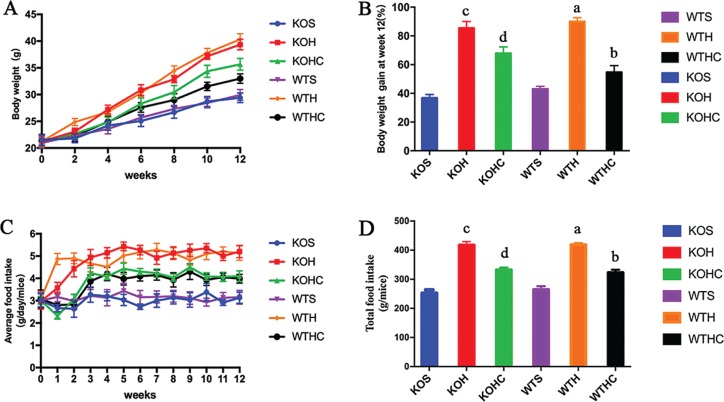
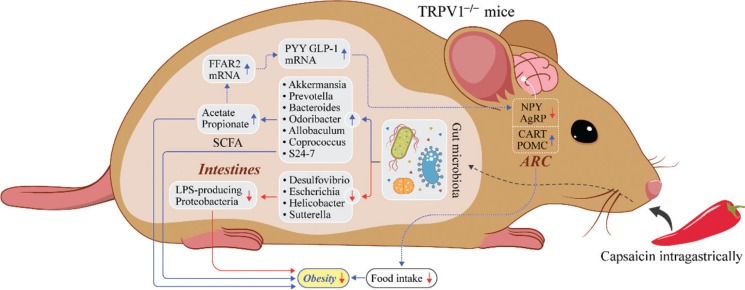
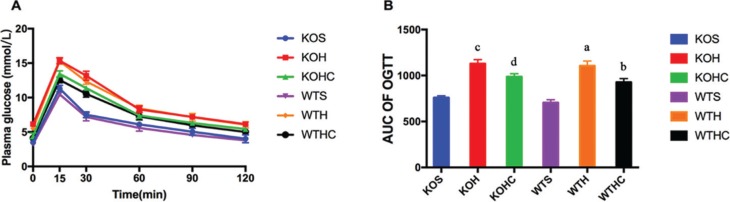
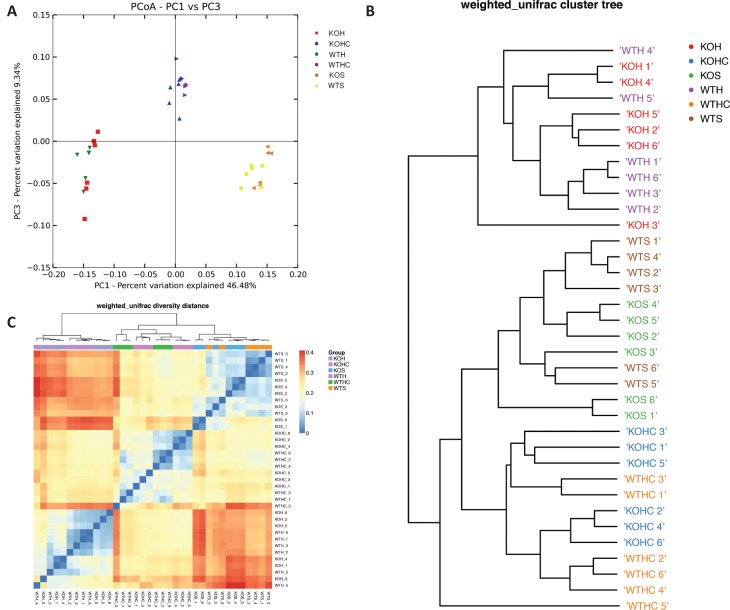
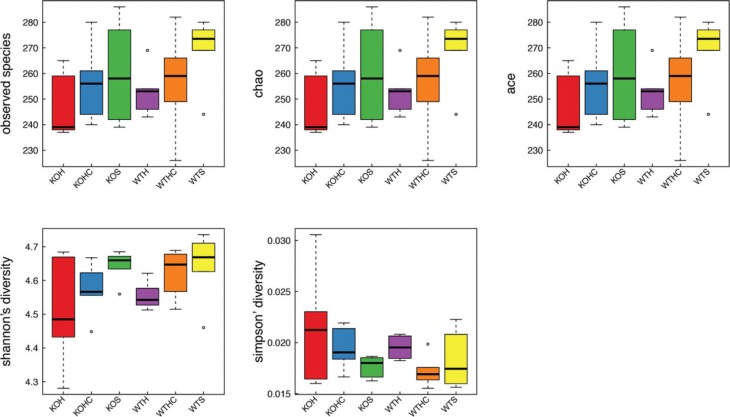
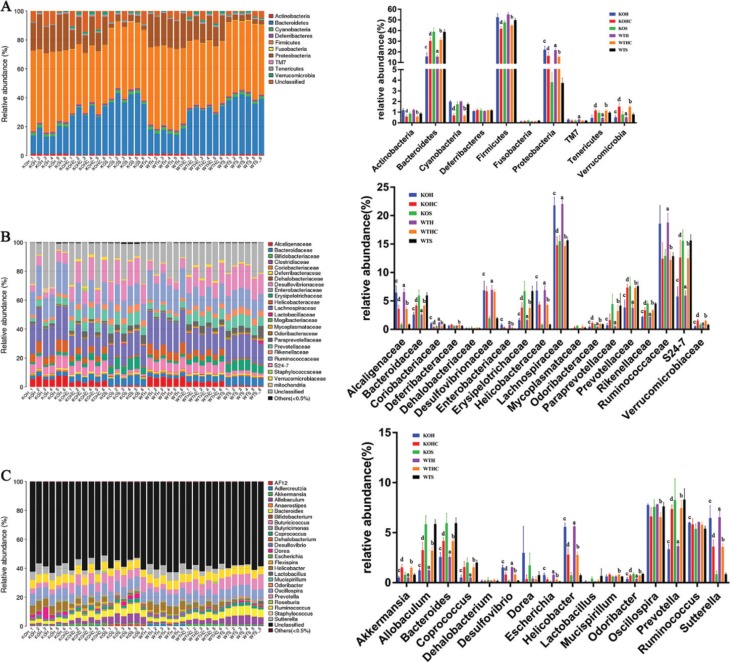
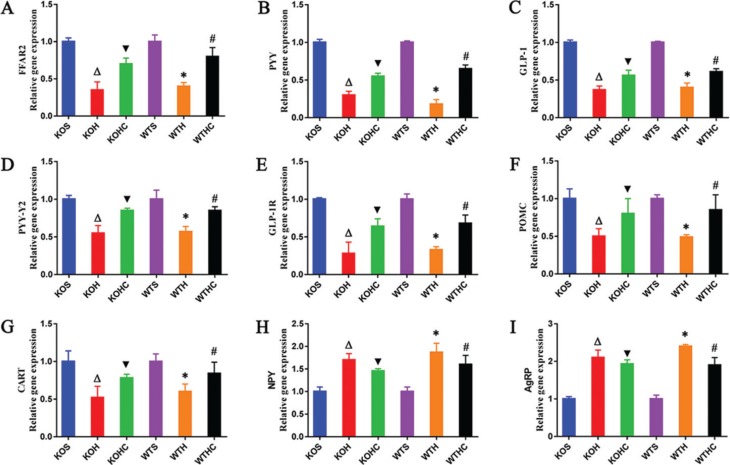
We observed significantly lower weight gain and food intake, triglyceride, cholesterol, glucose, and insulin levels in HFD+CAP-fed TRPV1knockout (KO) mice compared to the HFD-fed KO mice, though this effect was more obvious in wild-type (WT) mice. CAP increased the numbers of , , , and S24-7, and reduced the numbers of , , and in the HFD+CAP-fed WT and KO mice compared with HFD-fed WT and KO mice. CAP increased the relative abundances of SCFAs producing the bacterial species, which increased intestinal acetate and propionate concentrations, which were beneficial in prevention and treatment of obesity.
Results from our study indicate that the reduced food intake and anti-obesity effect of CAP had been observed regardless of TRPV1 channel activation, and which is mediated by changes in the gut microbiota populations and SCFAs concentrations.
辣椒素(CAP)具有抗肥胖作用,已表明其涉及瞬时受体电位香草酸受体1(TRPV1)通道。重要的是,最近对高脂饮食(HFD)喂养小鼠的研究表明,CAP还会改变肠道微生物群组成,并导致HFD喂养小鼠体重减轻。许多研究表明,短链脂肪酸(SCFAs)介导了饮食、肠道微生物群和脂肪储存之间的联系。
本研究调查了CAP是否通过改变肠道微生物群组成和SCFAs发挥其抗肥胖作用,以及TRPV1是否有助于CAP对HFD喂养小鼠的抗肥胖作用。
将C57BL/6J(TRPV1+/+)和B6.129X1-Trpv1tm1Jul/J(TRPV1-/-)小鼠分别分为三组(每组n = 6),即标准低脂饮食组、高脂饮食组和辣椒素(2 mg/kg,口服)+高脂饮食组,并分别给予相应处理12周。
我们观察到,与高脂饮食喂养的TRPV1基因敲除(KO)小鼠相比,高脂饮食+辣椒素喂养的TRPV1基因敲除小鼠体重增加、食物摄入量、甘油三酯、胆固醇、葡萄糖和胰岛素水平显著降低,尽管这种效应在野生型(WT)小鼠中更明显。与高脂饮食喂养的野生型和基因敲除小鼠相比,辣椒素增加了高脂饮食+辣椒素喂养的野生型和基因敲除小鼠中拟杆菌属、双歧杆菌属、阿克曼菌属和S24-7菌属的数量,并减少了瘤胃球菌属、嗜黏蛋白阿克曼菌和脱硫弧菌属的数量。辣椒素增加了产生短链脂肪酸的细菌种类的相对丰度,从而增加了肠道乙酸盐和丙酸盐浓度,这对肥胖的预防和治疗有益。
我们的研究结果表明,无论TRPV1通道是否激活,均观察到辣椒素可减少食物摄入量并具有抗肥胖作用,且这一作用由肠道微生物群数量和短链脂肪酸浓度的变化介导。