Deva Chetan R, Urban Milan O, Challinor Andrew J, Falloon Pete, Svitákova Lenka
Climate Impacts Group, Institute for Climate and Atmospheric Science, School of Earth and Environment, University of Leeds, Leeds, United Kingdom.
The International Center for Tropical Agriculture (CIAT), Cali, Colombia.
Front Plant Sci. 2020 Feb 28;11:19. doi: 10.3389/fpls.2020.00019. eCollection 2020.
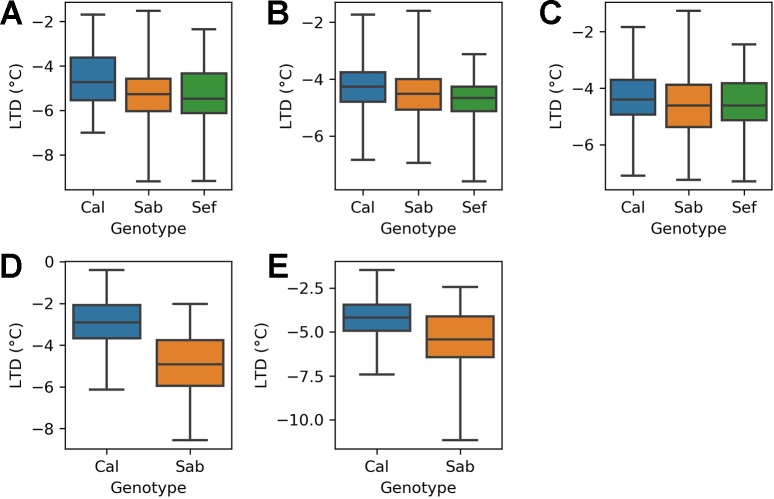
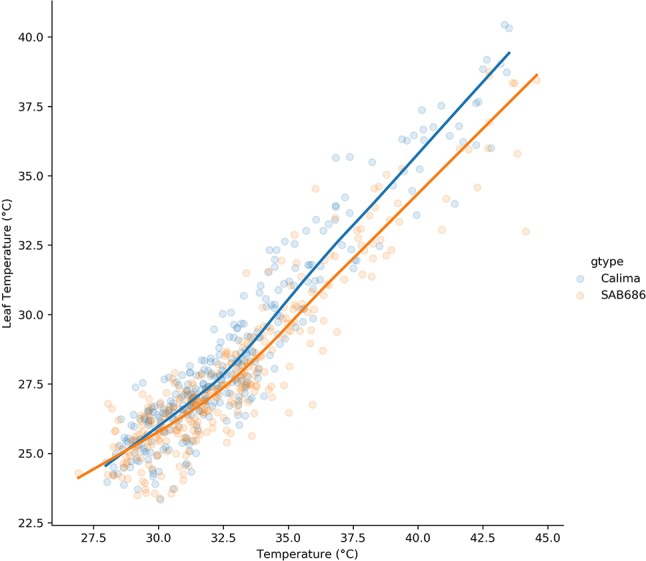
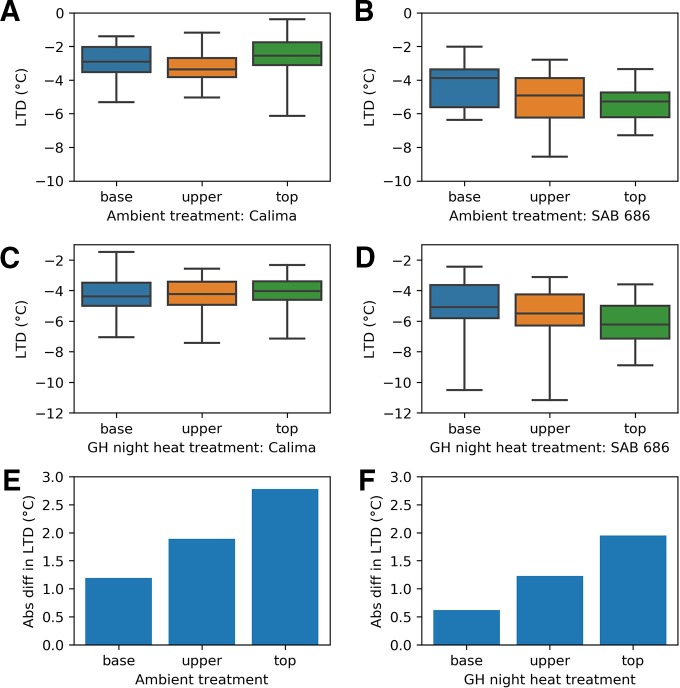
Common bean is the most consumed legume in the world and an important source of protein in Latin America, Eastern, and Southern Africa. It is grown in a variety of environments with mean air temperatures of between 14°C and 35°C and is more sensitive to high temperatures than other legumes. As global heating continues, breeding for heat tolerance in common bean is an urgent priority. Transpirational cooling has been shown to be an important mechanism for heat avoidance in many crops, and leaf cooling traits have been used to breed for both drought and heat tolerance. As yet, little is known about the magnitude of leaf cooling in common bean, nor whether this trait is functionally linked to heat tolerance. Accordingly, we explore the extent and genotypic variation of transpirational cooling in common bean. Our results show that leaf cooling is an important heat avoidance mechanism in common bean. On average, leaf temperatures are 5°C cooler than air temperatures, and can range from between 13°C cooler and 2°C warmer. We show that the magnitude of leaf cooling keeps leaf temperatures within a photosynthetically functional range. Heat tolerant genotypes cool more than heat sensitive genotypes and the magnitude of this difference increases at elevated temperatures. Furthermore, we find that differences in leaf cooling are largest at the top of the canopy where determinate bush beans are most sensitive to the impact of high temperatures during the flowering period. Our results suggest that heat tolerant genotypes cool more than heat sensitive genotypes as a result of higher stomatal conductance and enhanced transpirational cooling. We demonstrate that it is possible to accurately simulate the temperature of the leaf by genotype using only air temperature and relative humidity. Our work suggests that greater leaf cooling is a pathway to heat tolerance. Bean breeders can use the difference between air and leaf temperature to screen for genotypes with enhanced capacity for heat avoidance. Once evaluated for a particular target population of environments, breeders can use our model for modeling leaf temperatures by genotype to assess the value of selecting for cooler beans.
普通菜豆是世界上食用最多的豆类,也是拉丁美洲、东非和南非重要的蛋白质来源。它生长在各种环境中,平均气温在14°C至35°C之间,比其他豆类对高温更敏感。随着全球变暖的持续,培育普通菜豆的耐热性已成为当务之急。蒸腾冷却已被证明是许多作物避免高温的重要机制,叶片冷却特性已被用于培育耐旱和耐热品种。然而,对于普通菜豆叶片冷却的程度以及该特性是否与耐热性存在功能联系,人们知之甚少。因此,我们探究了普通菜豆蒸腾冷却的程度和基因型变异。我们的结果表明,叶片冷却在普通菜豆中是一种重要的避热机制。平均而言,叶片温度比气温低5°C,范围可从低13°C到高2°C。我们表明,叶片冷却的程度使叶片温度保持在光合功能范围内。耐热基因型比热敏感基因型冷却得更多,且这种差异的幅度在高温下会增大。此外,我们发现叶片冷却的差异在冠层顶部最大,在那里有限生长型矮生菜豆在花期对高温影响最为敏感。我们的结果表明,耐热基因型比热敏感基因型冷却得更多是由于更高的气孔导度和增强的蒸腾冷却。我们证明,仅使用气温和相对湿度就可以通过基因型准确模拟叶片温度。我们的研究表明,更大的叶片冷却能力是实现耐热性的一条途径。菜豆育种者可以利用气温和叶片温度的差异来筛选具有更强避热能力的基因型。一旦针对特定目标环境群体进行评估,育种者可以使用我们的模型通过基因型对叶片温度进行建模,以评估选择更凉爽菜豆的价值。